A U-Line ice maker maintenance routine is simpler than the routine for a crescent or clear ice machine, because a standard ice maker unit is a smaller, single-purpose appliance without the extended clear-ice freeze cycle or the crescent machine’s larger reservoir and harvest mechanism. That simplicity does not mean it can be ignored, though — the water supply, the bin, and the door switch on a U-Line ice maker still need regular attention, and neglecting any of the three is the most common reason an otherwise healthy unit starts producing less ice or ice that tastes off.
What is actually different about maintaining a plain ice maker versus a crescent or clear ice machine?
A crescent ice machine and a clear ice machine both run longer freeze cycles and more complex water-circulation systems to produce their specific ice shapes, which is why their maintenance guides focus heavily on the water reservoir and the harvest mechanism. A standard U-Line ice maker produces conventional ice cubes on a simpler cycle, with a smaller water reservoir and no extended clear-ice freeze process to manage. The maintenance routine reflects that simplicity: fewer components to inspect, but the same basic principle that water quality and a clean bin matter more than anything mechanical inside the unit. Owners who have previously maintained a crescent or clear ice machine sometimes over-complicate a plain ice maker’s care routine by carrying over habits that were built for a more complex system, when a simpler schedule is genuinely enough here.
How often should the water filter actually be replaced?
Follow the interval printed in your specific model’s manual rather than a generic rule of thumb, since usage and local water hardness both affect how quickly a filter reaches the end of its useful life. Running a filter well past its rated interval is the single most common cause of cloudy or off-tasting ice on an otherwise mechanically healthy unit — replacing it is a five-minute task that solves a problem people often assume needs a technician. If your water supply is naturally hard, expect to replace the filter somewhat more often than the printed interval to keep ice quality consistent.
Why does the ice bin need attention even if it looks fine?
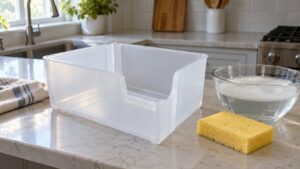
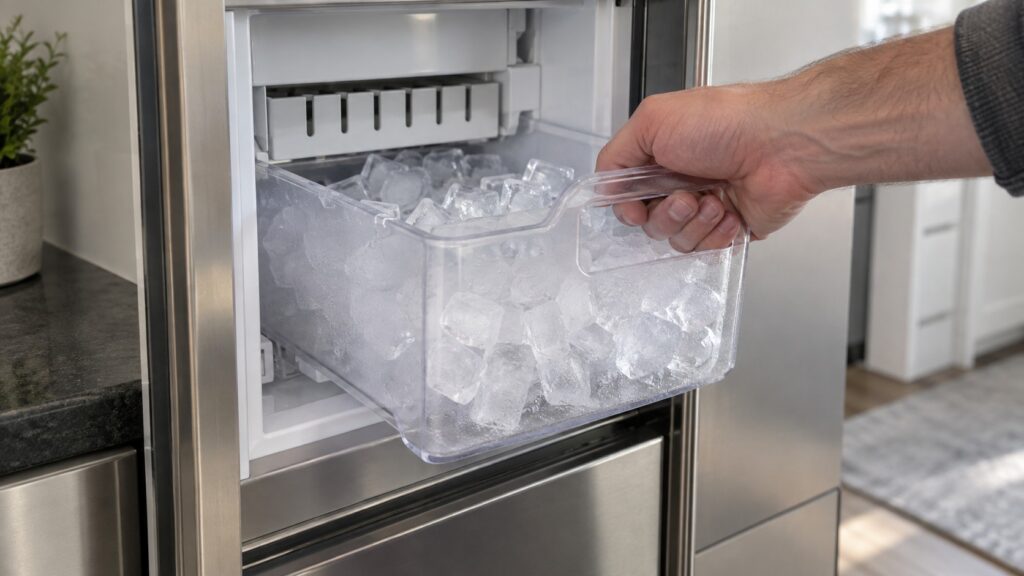
Ice sitting in the bin gradually loses moisture to the surrounding air and can partially melt and refreeze into a clumped mass, especially if the unit is producing faster than the household is using ice. Emptying and wiping down the bin every few weeks — even when it looks clean — clears out any partially melted ice before it clumps and also gives you a chance to notice any unusual smell or residue that would be easy to miss otherwise. This is a habit-level task rather than a deep clean, and it takes only a minute or two. Households that use ice heavily on some days and barely at all on others benefit most from this habit, since uneven usage is exactly the pattern that leaves ice sitting long enough to start clumping between busier stretches.
What should a seasonal deep clean actually cover?
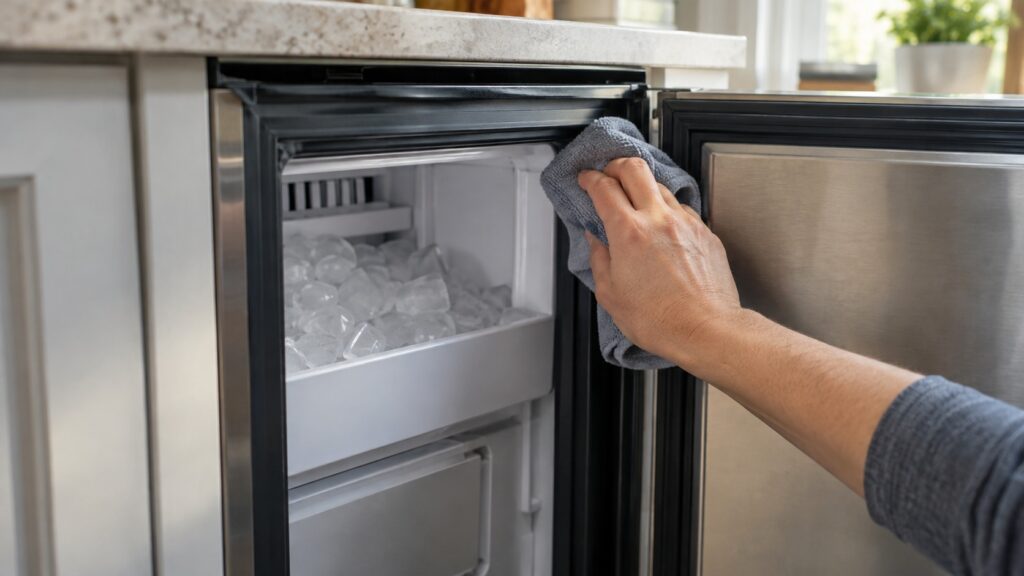
A deep clean every three to six months should cover the parts a quick weekly wipe-down does not reach: the interior walls of the ice compartment, the door gasket’s full perimeter rather than just the visible front edge, and the front grille or vents where dust tends to accumulate over months. Unplugging the unit before a deep clean, letting any remaining ice fully melt and drain, and using a mild, appliance-safe cleaner rather than anything abrasive protects the interior surfaces from scratches that would otherwise trap dirt and bacteria in future cycles.
Give the unit time to fully dry before restarting it, especially around the door gasket and any interior corners where moisture likes to sit. Restarting a still-damp unit is not dangerous, but it does mean the first batch or two of ice after a deep clean may pick up a faint smell from residual moisture mixing with the cleaner, which usually clears after a cycle or two once the compartment is running normally again.
Does hard water change the maintenance schedule?
Yes, meaningfully. A household on notably hard water will see mineral buildup inside the water lines and on the ice-making components faster than a household on softer water, even with the same usage pattern. If ice quality declines noticeably before the next scheduled filter change, or if a deep clean reveals visible mineral scale on interior surfaces, it is worth shortening the maintenance interval rather than sticking to a generic schedule that assumes average water hardness. A basic water hardness test, available cheaply from most hardware stores, can settle the question if you are not sure how hard your local supply actually is.
What is worth checking regularly to catch a problem early?
- Ice output pace — a gradual slowdown over weeks points at water supply or filter issues before it becomes a full stoppage.
- Bin odor — a smell in the bin that a fresh wipe-down does not clear may point at something in the surrounding freezer compartment, not the ice maker itself.
- Door seal feel — a gasket that feels sticky or looks cracked should be cleaned or flagged for replacement before it causes a full seal failure.
- Vent and grille cleanliness — dust buildup restricts airflow gradually, so check it on a routine schedule rather than waiting for a visible problem.
If output has slowed noticeably despite regular maintenance, our ice maker water supply guide covers the next troubleshooting steps, and our no ice production guide is the place to start if output has stopped entirely. For the water-quality side specifically, see our tips for clear, odor-free ice. You can schedule a visit if maintenance alone has not resolved a persistent issue.