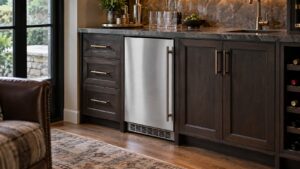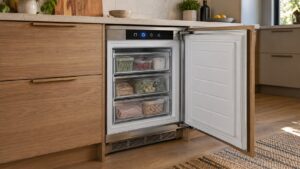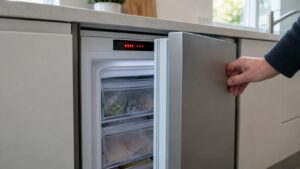
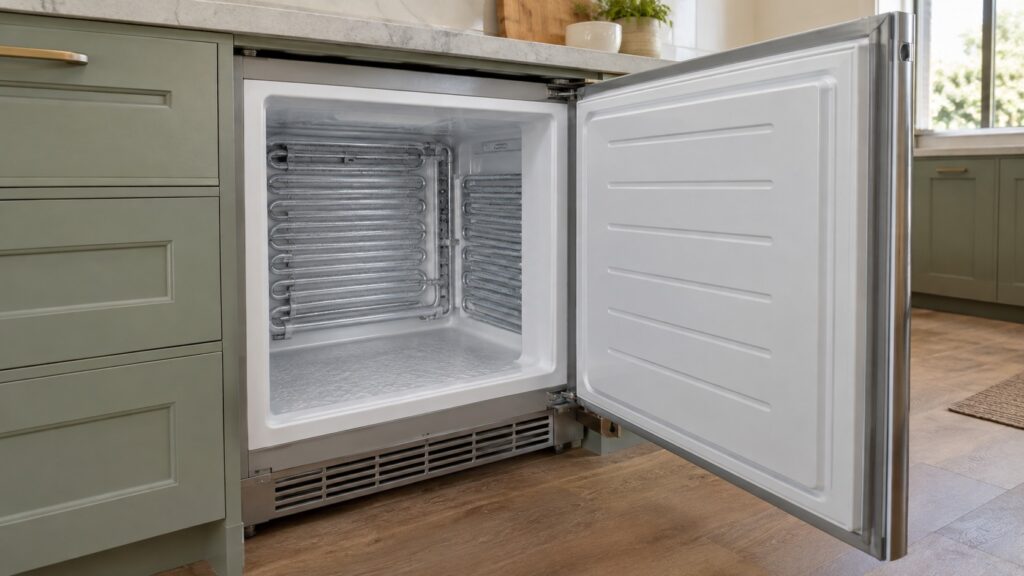
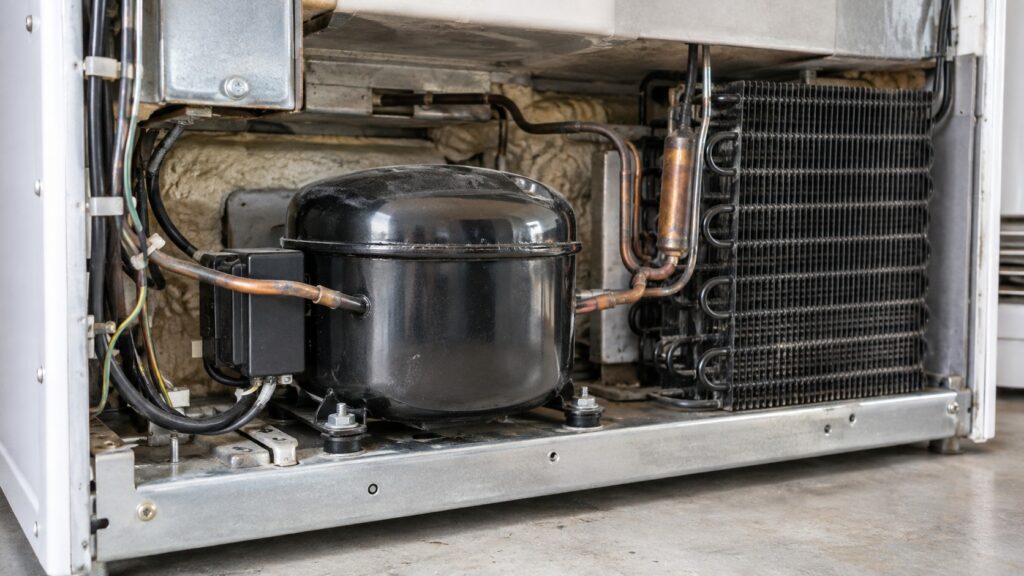
How a U-Line convertible freezer switches modes comes down to the control board reprogramming the compressor’s target temperature and cycling pattern for the whole cabinet, rather than by physically splitting the unit into two zones. When you select refrigerator mode instead of freezer mode, the control board simply tells the compressor and thermostat to aim for a warmer target — the same coils, the same compressor, and the same single compartment do the work either way. Understanding that single mechanism explains both what the feature can do and why it cannot run two temperatures inside the same cabinet at once.
What actually happens inside the unit when you switch modes?
Selecting a new mode on the control panel changes the target temperature the thermostat is programmed to reach and hold. The compressor then runs through a transition cycle, pulling the compartment toward the new target rather than simply flipping a switch — a freezer-to-refrigerator switch means the compressor backs off and the compartment gradually warms toward the new target, while a refrigerator-to-freezer switch means the compressor runs harder and longer until the compartment reaches genuine freezer temperature. Neither transition is instant, and the compartment’s air temperature during the transition period sits somewhere between the old and new targets until it settles.
Why can’t part of the cabinet stay cold while another part warms up?
Because there is only one set of coils and one air circulation path serving the entire compartment, there is no internal barrier creating separate thermal zones the way a dual-zone wine refrigerator’s internal baffling does. Air inside a single compartment mixes and equalizes toward whatever temperature the coils are currently producing, so the whole cabinet moves together rather than in sections. This is the direct mechanical reason a convertible freezer cannot offer split-zone storage — the feature was built around changing one setting over time, not running two settings simultaneously, and adding that capability would require a fundamentally different internal design with a divider and a second cooling path. That is also the reason a convertible freezer and a dual-zone wine refrigerator are built as two separate product lines rather than one flexible model — the internal architecture needed for a permanent zone split is different enough from a single-compartment mode switch that combining both features into one cabinet would add cost and complexity most buyers do not need.
Does the defrost cycle change between modes?
Yes, and this is one of the more overlooked mechanical differences. In freezer mode, ice naturally builds up on the coils over time, so the control board runs a periodic defrost cycle to clear it, briefly warming the coils before returning to freezer temperature. In refrigerator mode, coil temperatures generally stay above the point where ice builds up meaningfully, so a defrost cycle is often unnecessary or runs far less frequently. If a unit has recently been switched from freezer to refrigerator mode and still seems to be running frequent defrost cycles, that can be a sign the control board has not fully registered the mode change, which is worth mentioning to a technician if other settings also seem stuck.
How does the control board know which mode is currently selected?
The mode selection is stored in the control board’s memory, not just displayed on the panel, so the unit continues running its selected mode correctly even through a brief power interruption. After a longer power outage, most units resume the last mode that was set before power was lost, though it is worth confirming the display after any outage rather than assuming — a board that failed to save the setting correctly will default to a factory mode instead, which is a control-board symptom worth flagging to a technician rather than something to just reset manually every time.
This memory function is also why repeated power cycling is not a reliable way to “fix” a mode that seems stuck. Unplugging and replugging a convertible freezer will restart its cooling cycle, but it reads the mode setting back from the same memory that may already be corrupted, so a genuine control-board fault will simply reappear once the unit powers back up. If a mode issue persists across more than one power cycle, that is a stronger signal of a real board problem than of a simple glitch.
Does opening the door often slow down a mode transition?
Yes, noticeably. Every time the door opens during a transition, warm room air replaces some of the colder air inside, and the compressor has to work through that added heat load before it can keep making progress toward the new target temperature. This is why a unit that is opened frequently while switching modes — someone checking whether it has changed yet, or loading items in gradually rather than all at once — can seem to take much longer to settle than the same unit left closed. Loading everything at once and then leaving the door shut for the bulk of the transition period is the fastest way to let the compressor actually reach the new target.
What does this mean for troubleshooting a mode that won’t hold?
Because switching modes only changes a target temperature and a cycling pattern rather than any physical hardware, a unit that will not reach or hold its selected mode’s temperature is very likely a compressor, sensor, or control-board issue rather than a problem with the conversion feature itself. Confirming the display actually shows the mode you selected — rather than assuming it is correct — is the fastest first check, since a control board occasionally reverts to a previous mode after a firmware hiccup or a power event. It is also worth timing how long a transition has actually run before concluding anything is wrong — a full swing from freezer to refrigerator temperature, or the reverse, genuinely takes longer than most people expect on a fully loaded compartment, since the food or drinks inside have to change temperature along with the air around them.
For the maintenance habits that keep mode switching reliable over years, see our convertible freezer maintenance guide, and for the plain definition of the feature itself, see our convertible freezer glossary entry. If a unit will not reach or hold its selected temperature after a mode change, our freezer not holding temperature guide covers the next diagnostic steps, and you can schedule a visit for a hands-on check.