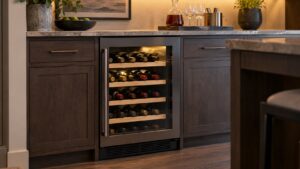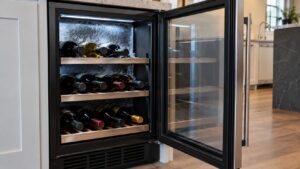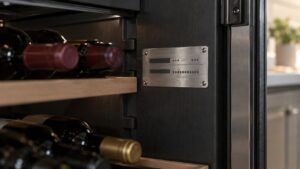
This guide covers U-Line Wine Cooler Storage Zone with practical, technician-backed advice.
When a U-Line wine cooler’s storage zone won’t hold its set temperature, the wine inside is at risk of the temperature swings that accelerate aging in the wrong direction. Wine coolers are more sensitive to small deviations than a standard refrigerator, so a zone running even a few degrees warm is worth investigating right away rather than waiting to see if it corrects itself.
Understanding the U-Line Wine Cooler Storage Zone
Below, our specialists break down everything you need to know about the U-Line Wine Cooler Storage Zone.
Likely causes of a warm storage zone in a U-Line wine cooler
- Door seal wear — a soft-close door depends on a tight gasket, and any gap lets warm room air infiltrate the cabinet continuously.
- Condenser airflow restriction — dust and lint on the front or bottom grille reduce the unit’s ability to reject heat, which shows up first as a slowly rising interior temperature.
- Installation clearance issues — built-in wine coolers need the airflow clearance specified in the installation guide, and a boxed-in cabinet opening can trap heat around the compressor.
- Overloading the zone — packing bottles too tightly blocks the internal air circulation that keeps temperature even throughout the cabinet.
- Ambient room temperature — a wine cooler installed near a heat source, in direct sunlight, or in a warm room will have a harder time reaching its set point even when it’s functioning correctly.
- Variable speed compressor or control issue — a problem in how the compressor ramps to meet demand can leave it running below the speed the zone actually needs.
What you can check yourself
- Unplug the wine cooler before inspecting the door seal, grille, or interior for any physical cause.
- Test the door gasket by closing it on a slip of paper at several points around the frame and checking for spots where it pulls free easily.
- Vacuum the front or bottom grille to clear dust buildup that restricts airflow to the condenser.
- Confirm the cabinet opening provides the clearance called for in the installation manual, particularly at the back and top of the unit.
- Rearrange bottles so they aren’t blocking the interior vents, especially in dual-zone units where airflow between zones matters.
- Check the digital touch pad for any E-series error code, and note the exact code if one is displayed before contacting a technician.
- Give the unit 24 hours after any adjustment to stabilize, since wine cooler compressors cycle gently and temperature correction is gradual by design.
When to call a technician
If the seal is intact, airflow is clear, and clearance meets specification but the zone still won’t hold temperature, the cause is likely in the sealed refrigeration system, the compressor’s speed control, or a zone sensor reporting an inaccurate reading to the board. These are not owner-serviceable repairs. A technician can verify the sensor’s actual reading against the displayed temperature, check refrigerant charge, and confirm the compressor is responding correctly to the load. Because wine can be damaged by extended warm exposure, it’s worth relocating bottles to a stable environment while you wait for service if the zone stays above the intended range for more than a day or two.
Distinguishing a slow drift from a sudden change
How the warming happened matters almost as much as the fact that it happened. A zone that has crept gradually warmer over weeks or months more often points toward a slowly failing gasket, a condenser that’s accumulated dust over time, or a compressor that’s beginning to struggle with demand. A zone that jumped to a noticeably warmer temperature suddenly, especially alongside an error code on the touch pad, points more toward a sensor or control issue than a mechanical decline, since sealed-system problems typically show up gradually rather than overnight.
It’s worth noting the outdoor or room temperature conditions when the warming was first noticed too, particularly if the wine cooler shares a room with equipment that generates heat, like a range or oven that runs frequently. A zone that only struggles during unusually warm weather or after extended cooking sessions nearby may simply be working at the edge of its capacity given ambient conditions, which is a different situation from a zone that stays warm regardless of what’s happening in the room around it. Sharing these details with a technician up front helps them prioritize what to check first.
It’s also reasonable to check whether other zones or compartments in the same unit, if it has more than one, are behaving normally while the affected zone struggles. A problem isolated to a single zone points more clearly toward something local to that section, such as its dedicated sensor or airflow path, while a broader issue affecting the whole cabinet suggests a shared component like the compressor or main control board is more likely involved.
U-Line wine coolers are built and documented by the manufacturer in Milwaukee. Manufacturer specifications and use-and-care guides are published at u-line.com.