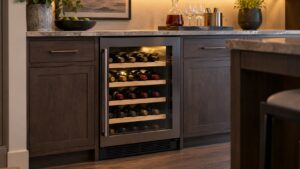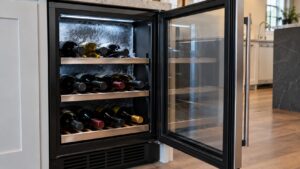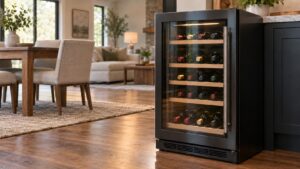
A U-Line model number is not a serial number and it is not decoration. Read UHWC524-SG01A from left to right and it tells you that the cabinet is built in rather than outdoor, that it is a Wine Captain wine cooler, that it belongs to the 5 Class collection, that it is 24 inches wide, that it came with a stainless frame and a glass door, and which revision of that build you own. That last group is the one that matters when a part is ordered, and it is the one people leave off when they read the string over the phone.
Where is the U-Line model number written?
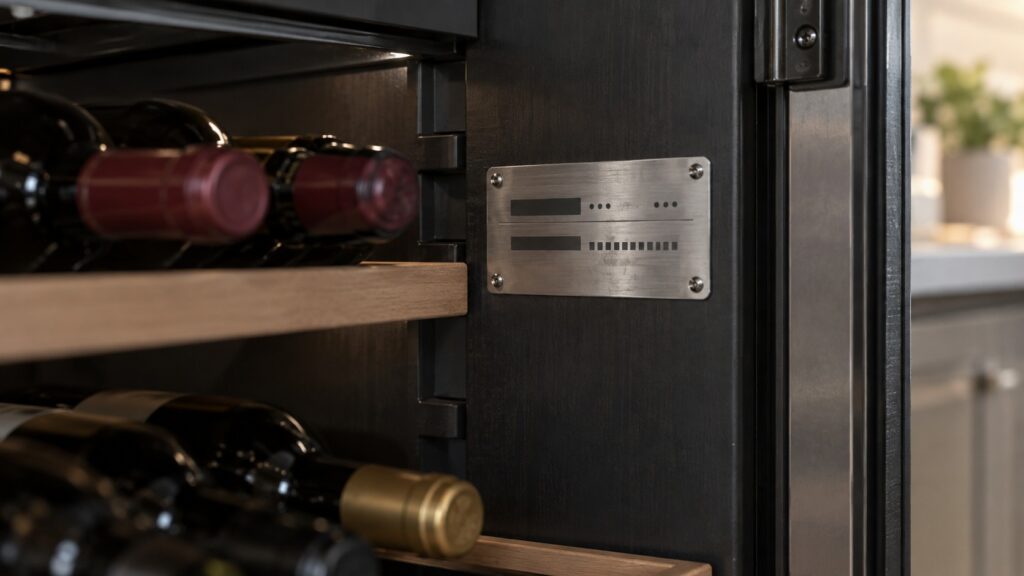
On the rating plate, and on a built-in cabinet that plate is inside rather than on the back. Open the door and look along the interior side wall, under the lowest shelf or rack, or behind the toe grille at the base. The string you want is the long one with letters and digits together, not the shorter serial number beside it. Write down every character including the group after the dash, because the dash group is the part that decides which of two nearly identical cabinets you have.
If the plate has been painted over or worn off, the model pages on this site are the next best route: each one prints the width, the collection and the type in plain language, so a cabinet can often be identified from what it is rather than from what it says.
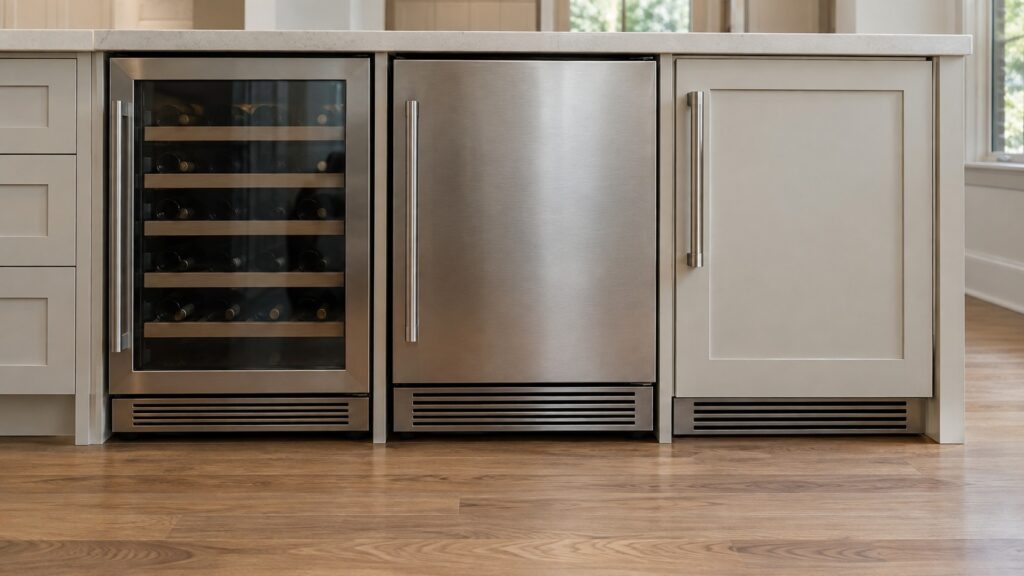
What does the letter after the U tell you?
Where the cabinet is meant to live, and it changes the hardware rather than the trim. An outdoor unit is sealed and finished for weather; an ADA unit is built to a lower overall height so the counter above it meets accessibility requirements. The nugget machines make the pattern obvious: UHNB115-SS01A, UONB115-SS01B and UANB115-SS01A are the same machine as an indoor built-in, an outdoor unit and an ADA-height unit.
This letter is worth checking before anything is moved between openings. An outdoor cabinet will run happily indoors, but an indoor cabinet in an outdoor kitchen is a different proposition entirely, which is why the outdoor collection buying guide starts from that letter rather than from the price list.
What do the two product letters mean?
They name what the cabinet does, and one pair of them carries a detail that matters for service. UHCP115-SS01A is listed on this site as a 15-inch clear ice machine with pump; UHCL115-SS01A is the same width and class without one. One letter apart, and the difference is a whole component with its own error code. If you are not sure which you own, our guide to gravity versus pump drains describes what each installation looks like from outside.
The same logic runs through the rest of the range. RE and RF separate a straight refrigerator from a cabinet with a freezer section. CR and CL separate crescent ice from clear ice, which are different mechanisms rather than different cube shapes — the refrigeration and ice-making glossary sets out what each one produces. WC covers the Wine Captain wine cabinets, where the same letters sit in front of both single-zone and dual-zone builds, so the letters alone will not tell you how many zones you have.
Why does the class digit matter for repair?
Because the collections are engineered differently, not just priced differently. A 5 Class cabinet and a 1 Class cabinet of the same width and the same product letters can carry different controls, different door hardware and different cooling arrangements. A technician who knows the class before arriving knows which of those to expect, and a part looked up against the wrong class is a return.
What the digit does not tell you is condition or age. A 1 Class cabinet installed last year is newer than a 5 Class cabinet from a decade ago in every way that affects a repair. If you are weighing collections as a buyer rather than as an owner, 1 Class versus 3 Class versus 5 Class compares what each tier includes; this page is only about reading the string you already have.
What is the group after the dash for?
It is the finish plus the revision, and it is the half of the model number most often dropped. SS, SG and IS describe the door and the front: solid stainless, stainless frame with glass, or a panel-ready front made to disappear into cabinetry. The digits and letter that follow mark the build revision. UHWC124-SG01A and UHWC124-SG31A are the same 1 Class 24-inch Wine Captain on paper, and a door gasket, a control board or a hinge set can still be listed separately for each.
The practical rule is simple: when you call about a part, read the entire string including everything after the dash. A model number given as “the 24-inch Wine Captain” narrows a parts search to a dozen possibilities. The full string narrows it to one.
Which U-Line numbers do not follow the pattern?
The legacy cabinets, and there are enough of them still working to matter. The 2000 Series strings put the width at the end of the digits instead of the class at the front: U-2218WCS-00B is an 18-inch wine refrigerator, U-2224WCINT-00A is 24 inches, U-3018WCOL-00B is 18 inches and U-3036RRINT-00B is 36 inches. The letters that follow still describe the build — INT for an integrated front, GLS or the S in WCS for the door treatment — but the leading pair is a generation marker rather than a class.
Older still, and the scheme disappears altogether: 2175RCG is a 15-inch glass-door refrigerator whose digits do not decode at all, and RCC115 is a 15-inch craft clear ice machine that skips the placement letter. ACR014-SS01A sits at 14 inches where the rest of the ADA crescent line sits at 15. When a string does not decode, stop decoding it — the model pages print the width, the collection and the type for every unit we service, and a cabinet identified by its plate never needs to be identified by inference.
We are an independent repair company and not a factory service arm. Pricing starts from a diagnostic visit and we confirm the estimate before any work begins. Bring the full string from the plate and wine cooler repair or any other service starts from the right parts list. You can schedule a visit once you have read the plate.