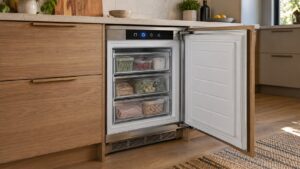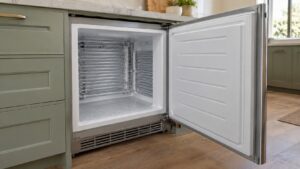

This guide covers U-Line Freezer Heavy Frost Buildup with practical, technician-backed advice.
A U-Line freezer that develops a thick layer of frost on the interior walls, gasket area, or evaporator cover is telling you that moist air is getting in and freezing somewhere it shouldn’t. Heavy frost buildup in a U-Line freezer is one of the more common complaints owners bring up, and while a little frost is normal in a manual-defrost unit, a rapidly growing layer usually points to a specific mechanical cause rather than random bad luck.
Understanding the U-Line Freezer Heavy Frost Buildup
Below, our specialists break down everything you need to know about the U-Line Freezer Heavy Frost Buildup.
Likely causes of frost buildup in a U-Line freezer
Frost forms when warm, humid air reaches a cold surface inside the cabinet. In most built-in freezer units, that happens for one of a handful of reasons:
- Door seal failure. A gasket that has hardened, torn, or pulled away from the door frame lets outside air leak in continuously, and that air’s moisture condenses and freezes on the nearest cold surface.
- Door left ajar or not fully latching. Even a slightly misaligned door, or one held open too long during loading, introduces enough humid air to trigger visible frosting within a day or two.
- Defrost system malfunction. Units with an automatic defrost cycle rely on a defrost heater, timer or control board, and thermostat working together. If any one of those fails, frost that should melt off periodically instead keeps accumulating on the evaporator coil and surrounding panels.
- Frequent or long door openings. Every time the freezer door opens, humid room air enters and settles as frost once it cools. High kitchen humidity, especially in summer, accelerates this.
- Blocked air circulation. Food packages pressed against the rear or side panels can restrict airflow, creating cold spots where moisture collects and freezes unevenly.
What you can check yourself
Before assuming the worst, unplug the freezer and let it warm up enough that you can safely inspect the interior without contacting a live electrical component or a very cold evaporator surface.
- Run a hand or a piece of paper around the entire door gasket while the door is closed; if you can pull the paper out easily at any point, the seal is not making full contact there.
- Examine the gasket itself for cracks, flattened sections, or areas that no longer spring back after being pressed.
- Check that the freezer is sitting level — an unlevel cabinet can prevent the door from closing squarely against the seal.
- Make sure nothing inside is blocking the door from closing completely, including tall containers or overstuffed bins.
- Clear stored food away from the rear interior wall and vents so air can circulate freely once the unit is back in service.
- Note how often the frost returns after a manual defrost — a unit that refrosts heavily within a day or two suggests a persistent air leak rather than a one-time event.
Why frost matters beyond appearance
Heavy frost isn’t just a cosmetic nuisance in a U-Line freezer. A thick coating on the evaporator coil or interior walls acts as insulation, making it harder for the unit to transfer cold air efficiently into the storage compartment. Over time, that forces the compressor to run longer and more often just to maintain the set temperature, which adds unnecessary wear to a component that’s expensive and involved to replace. Frost buildup around the door area can also interfere with a proper seal going forward, since ice can prevent the gasket from compressing evenly against the frame the next time the door closes, creating a cycle where the original air leak gets progressively worse.
When to call a technician
If the gasket looks intact and the door closes and latches properly, yet frost keeps building rapidly, the issue is likely inside the defrost system or with a sensor that a technician needs to diagnose with proper tools. Evaporator coils, defrost heaters, timers, and control boards involve refrigerant lines and electrical components that should not be opened or tested by anyone other than a qualified appliance repair professional. A tech can also confirm whether a warped door, a bent hinge, or a failing thermostat is the true root cause rather than a symptom you’re seeing downstream.
In the meantime, keeping the freezer as full as practical, avoiding long door-open periods, and manually clearing frost when it becomes noticeable will limit strain on the compressor until the underlying cause is addressed. A freezer that’s allowed to keep accumulating frost without any intervention will typically see the problem compound rather than resolve on its own, so addressing it sooner rather than later tends to be the more cost-effective path.
U-Line freezers are built and documented by the manufacturer in Milwaukee. For official specifications and owner documentation, visit the manufacturer at u-line.com.