
This guide covers U-Line Ice Maker Door Open with practical, technician-backed advice.
When a U-Line ice maker displays or signals that the door has been open too long, it’s flagging a seal or sensing issue rather than a problem with ice production itself. Built-in U-Line ice makers depend on a properly seated door to hold internal temperature steady enough for consistent ice formation, so a lingering door-open condition can eventually affect how much ice the unit makes even if the compressor and ice-making components are working fine. Here’s how to work through the most common causes before assuming a major repair is needed.
Understanding the U-Line Ice Maker Door Open
Below, our specialists break down everything you need to know about the U-Line Ice Maker Door Open.
Likely causes behind a U-Line ice maker door-open signal
Most door-open alerts trace back to one of these situations:
- Compromised door gasket — a gasket that has hardened, cracked, or pulled away from the door frame won’t create the tight contact the door switch needs to register “closed.”
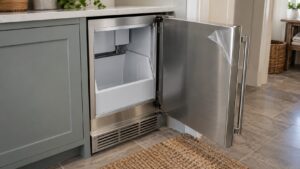
- Door slightly out of alignment — hinge wear or a soft-close mechanism that has loosened over time can leave the door sitting a fraction of an inch out of true, which is often invisible to the eye but enough to trigger the sensor.
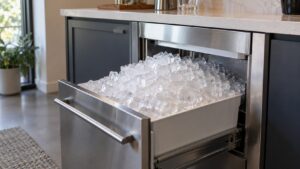
- Ice bin or basket interference — an overfilled ice bin, or one that has shifted on its rails, can prevent the door from swinging all the way shut.
- Unit not level — an ice maker that isn’t sitting level can develop an uneven gap along one edge of the door.
- Door switch malfunction — the magnetic or mechanical switch that detects door position can fail or work loose from its mounting, sending a false signal regardless of actual door position.
What you can check yourself
Unplug the ice maker before doing any hands-on inspection, then work through these steps:
- Examine the door gasket closely for stiffness, cracking, or separation from the door panel, paying particular attention to the corners where wear shows up first.
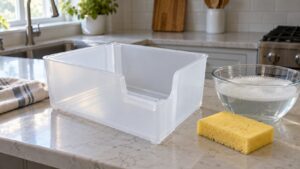
- Remove the ice bin, empty it if it’s overfilled, and confirm it slides back into place fully without catching or tilting.
- Close the door and press firmly along its edges to feel for any spots where it doesn’t seat evenly against the cabinet.
- Check the unit’s level side-to-side and front-to-back with a bubble level, adjusting the leveling legs as needed.
- Open and close the door a few times, watching the soft-close action to see if it pulls evenly or hangs up on one side.
- Look for any visible wiring near the door switch that appears loose, pinched, or disconnected — without removing panels or attempting repairs.
When to call a technician
If the gasket, bin fit, and leveling all check out but the door-open condition continues, the door switch or its wiring is the most likely remaining cause, and that’s a job for a professional. Diagnosing a sensor failure typically requires testing the switch with a multimeter and may involve accessing wiring behind the door liner, which risks further damage if attempted without the right tools and experience. A technician can also assess whether the hinge or soft-close hardware needs adjustment or replacement versus a simple gasket swap. Leaving a chronic door-open problem unresolved can slow ice production and shorten cycle consistency over time, so it’s best addressed once basic checks rule out the easy fixes.
It’s also worth paying attention to timing patterns. If the alert consistently appears only after the bin has been accessed several times in a row, that points toward the ice bin’s fit and seating rather than a hardware problem. If it happens randomly, even right after the door was confirmed closed and untouched, that’s a stronger signal pointing toward the door switch itself rather than anything mechanical about how the door sits.
Before scheduling service, it can also help to note whether the alert coincides with any other symptoms, such as slower ice production, unusual frost buildup around the door frame, or a change in the sound the unit makes when the door closes. Sharing these details with a technician up front often shortens the diagnostic process, since it helps them prioritize which component to check first rather than starting from scratch.
Owners sometimes assume a door-open alert automatically means the ice maker has stopped producing ice altogether, but that’s not always the case. Depending on how the unit is designed, it may continue attempting to run its cycle while also sounding the alert, which can mask the underlying issue if you only glance at ice output without checking for the alert itself. Get in the habit of periodically checking the control panel or display for any active alerts, even if ice production still seems roughly normal, so a developing door issue doesn’t go unnoticed for weeks.
U-Line ice machines are built and documented by the manufacturer in Milwaukee. Original documentation for these units is available from the manufacturer, u-line.com.