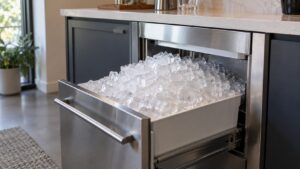
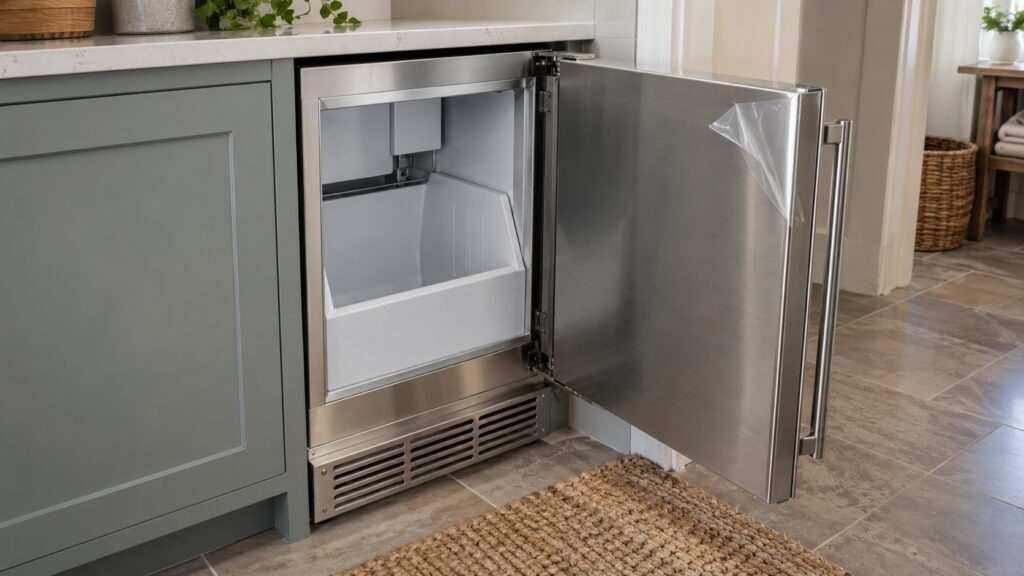
A new unit does not hand you perfect ice right away, so the question behind “u line new ice maker first batch” is what to check before power goes on and what to expect afterward. This guide gives a safe, general first-start routine for a U-Line ice machine and points to the pages on our site that cover installation in depth. The exact first-start sequence, any initial rinse or clean cycle, and the start-up button steps differ by model, so your owner’s manual leads and this page backs it up. We do not give timings or quantities for the first batches, because those are model specific.
What should you check before you power on a new ice machine?
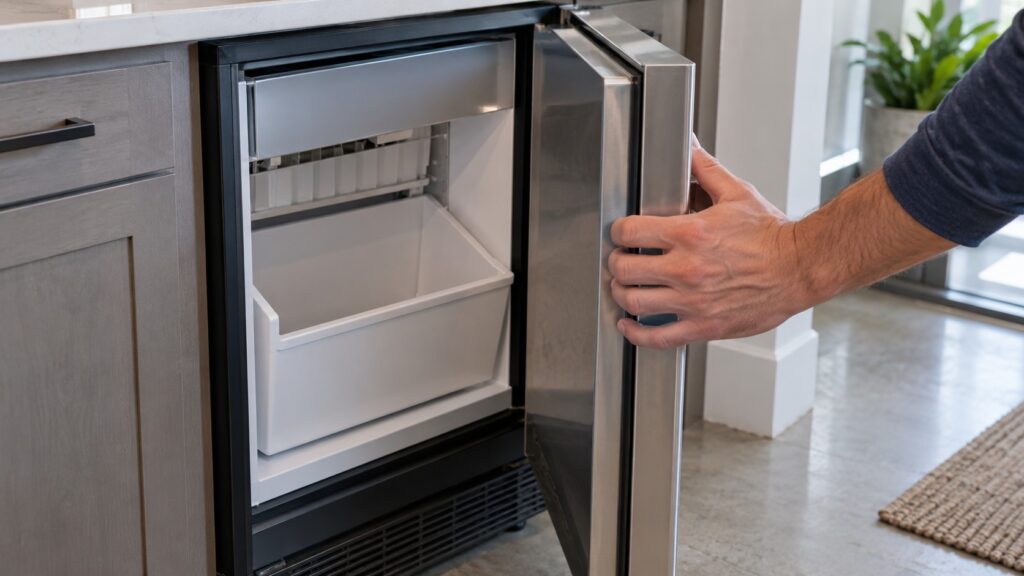
Do the physical checks first, with the machine still off. Remove all shipping film, tape and packing from the cabinet and the bin. Confirm it sits level front to back and side to side; our installation level problem guide shows how a machine that is not level misbehaves from the first cycle. Confirm that the front of the machine has the ventilation clearance the manual specifies, because a built-in machine needs the airflow its manual describes. Confirm the door closes fully and the gasket sits flat. If any of this is wrong, fix it now rather than watching a first batch go badly.
Is the water and drain ready?
Open the water supply valve slowly and look at the connections you can see for drips. Check that the supply tube is not kinked behind the unit. Then confirm the drain: a gravity-drain machine depends on a sloping line to a drain point lower than the unit, and a machine with a drain pump depends on the pump and its electrical connection. Our gravity drain versus drain pump guide explains the difference, and our UHCR115-SS01A page lists “no drain required”, so some crescent models need no drain connection, and your manual says which applies to your model. Some manuals ask for the new water line to be flushed or the first rinse to be run before ice is used. Whether yours does is stated in the manual, not here. A machine with a filter may need it installed or conditioned first, again as the manual describes.
What happens when you start it for the first time?
When power goes on, a new machine begins its normal sequence: it fills, freezes and harvests, and the cabinet has to cool down from room temperature first. That means the early cycles are the least typical ones. Do not stand over the machine. Instead, check back for the first sign of ice in the bin, then look again for a code on the display. If a code appears, write it down and look it up before you do anything else; our door code guide and the thermistor code guide explain what the common ones mean. A door that is not fully closed during start-up is a common reason a new unit throws an early code.
Why are the first batches not perfect?
The first ice can come out small, uneven or with a faint taste for ordinary reasons: the machine is still settling into steady operation, there may be residue from manufacturing or from a rinse, and new plumbing can carry sediment. Our nugget cleaning guide advises discarding the first batch or two of ice after a cleaning cycle for the same reason, and the practice is sensible after a first start as well. Do not use the early ice in drinks until it looks and tastes clean. If cubes stay small or thin long after the machine has settled, look at small crescent cubes or, for a clear machine, cubes too thin.
How should you record the start-up?
Write down the date you started the machine, what the display showed, and whether you noticed any drips or noises. Take a photo of the model label before the unit is pushed into the cabinet, because it can be hard to read afterward. That record makes a later service call faster, and our model number guide shows where the number is used. If the machine behaves oddly in the first cycles, the notes help a technician see whether it is an installation issue or a unit issue.
What should you leave for a technician?
Water at a connection you cannot tighten by hand, a drain pump that will not run, a code that returns after a restart, or a machine that makes no ice after the start-up period in your manual should go to a technician. Do not open panels to look for the problem; that work involves live wiring and the water circuit. If water ever reaches an outlet or the cord, switch the breaker off at the panel while standing on a dry floor, and never pull a plug from a wet outlet. Our ice maker maintenance guide then covers the habits that keep a new machine healthy, and U-Line ice maker repair explains how a visit works.