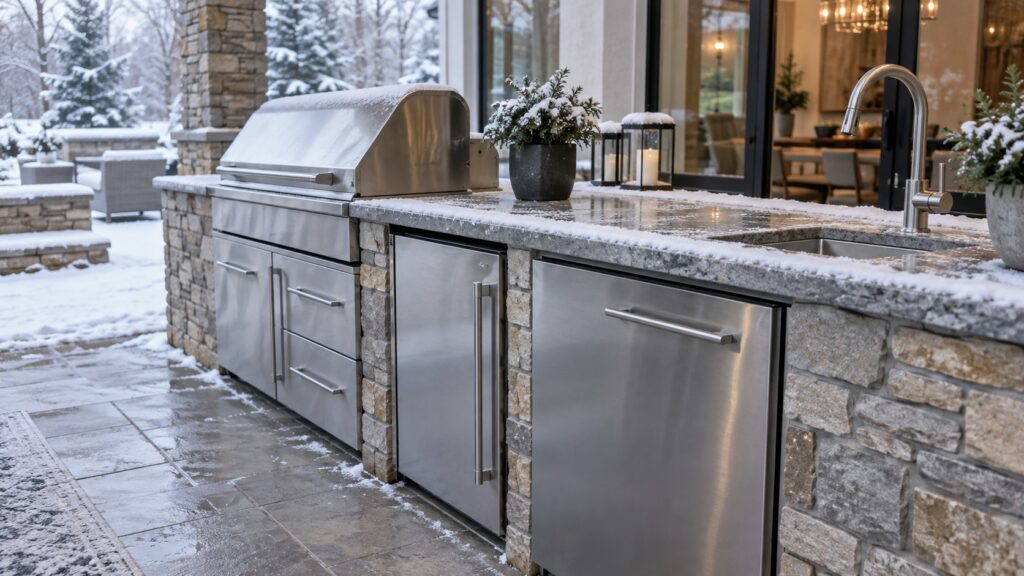
Outdoor appliances fail in spring, not in winter. The damage is done in December by water that was left where it could freeze, and it shows up in April when the ice maker is switched back on. U-line winterizing outdoor units is a short job done once, and it is the difference between an appliance that lasts fifteen years and one that needs a sealed system repair after four.
Know whether you need to do this at all
If your outdoor kitchen is somewhere with genuinely mild winters, and the appliance is rated down to those temperatures, the sensible answer may be to leave it running. A unit that runs all year avoids the shutdown risks entirely, and its own operation keeps the internals dry.
The decision comes down to two facts: whether temperatures will reach freezing where the appliance and its water lines sit, and whether the model’s rated ambient range covers the winter low. If either answer says no, winterize.
A unit running below its rated ambient is not simply inefficient. The control may stop calling for cooling while the sealed system behaves in ways it was not designed for, and that is a slow form of damage rather than an obvious one.
Ice makers, where almost all the damage happens
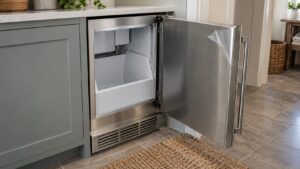
An ice maker holds water in more places than people expect: the supply line, an inlet valve, a reservoir or sump, the ice mold itself, the drain line, and on some installations a drain pump. Every one of those splits if the water in it freezes.
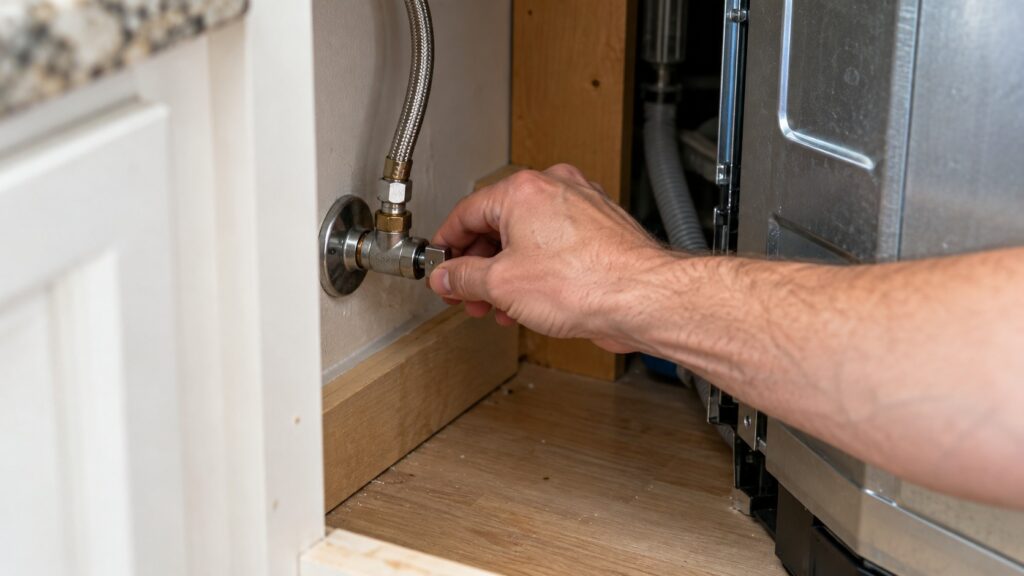
- Turn off the water supply at the shutoff valve, and confirm it is actually closed rather than stiff.
- Run the unit through a harvest so the mold empties, then switch off ice production.
- Empty the bin completely. Ice left to melt is water left in the drain.
- Drain the reservoir according to the model’s procedure — most have a drain point at the base.
- Clear the drain line. If there is a pump, run it dry briefly so the chamber empties.
- Disconnect the supply line at the unit and let it drain, then leave it disconnected.
- Dry the interior with a cloth and leave the door ajar so nothing condenses inside.
- Cut power at the breaker once everything is dry.
Our drain setup guide covers how your particular drain arrangement empties, because a gravity run and a pumped run need different treatment.
Refrigerators and wine cabinets
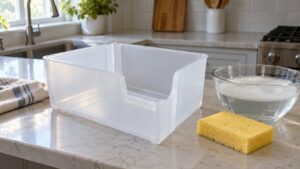
These are simpler because there is usually no plumbing, but the door matters more. Empty the cabinet completely, wash the interior with a mild solution, and dry it thoroughly — anything left inside a sealed, unpowered cabinet for months becomes mold.
Then prop the door slightly open. A closed, unpowered cabinet holds damp air against the gasket all winter, and you will open it in April to a smell that takes weeks to clear. A folded cloth or a purpose-made prop is enough.
Clean the condenser behind the grille while you are there. It is easier to do with an empty, switched-off appliance than at any other time of year, and it means the unit starts the season clean.
The water line outside the appliance
Winterizing the unit and leaving the supply line full is a common half-job. Whatever feeds the ice maker also runs outdoors, and if it is not below the frost line or inside conditioned space, it needs draining too.
Ideally there is a shutoff inside the building and a drain point outside it, so the run between them can be emptied. If there is not, that is worth adding — it is a plumber’s afternoon and it removes the problem permanently.
Bringing it back in spring
- Inspect before powering. Look for split lines, cracked fittings and evidence of nesting animals behind the unit.
- Reconnect the water and check every joint for leaks before walking away.
- Restore power and let it cool empty before loading anything.
- Discard the first several batches of ice. Lines that sat dry all winter need flushing.
- Clean the condenser again if the unit has been open to the weather.
- Watch it for a week. A problem from the winter usually shows itself in the first few days of running.
Our clear ice machine maintenance guide and the crescent maintenance guide cover the cleaning that belongs at the start of a season.
A note on covers
Appliance covers are sold for outdoor kitchens and they are useful for keeping debris out of a grille, but they are not a substitute for any of the above and they carry one risk of their own. A cover fitted over a damp cabinet traps the moisture against the stainless and against the gasket, which is exactly the condition that corrodes fasteners and breeds mold.
So dry everything first, prop the door, then cover. And choose a cover that breathes rather than a sealed plastic bag, for the same reason.
What a missed winterizing looks like
The classic pattern: the unit runs in spring, makes ice for a day, and then water appears under the cabinet. A split fitting or a cracked reservoir leaks only under pressure, so it passes a visual inspection and fails in service.
Another is an ice maker that runs but produces nothing, because the inlet valve was damaged by ice and no longer opens. And a third is a drain pump that hums without pumping, its chamber cracked over the winter.
All three are repairs rather than disasters, but all three were avoidable in twenty minutes the previous autumn.
When to call
Call in spring for leaks that appear once the unit is running, for an ice maker that will not fill, for a pump that runs dry, or for any appliance that went through a winter unprotected and is behaving differently since.
We are an independent repair company and not a factory service arm. Pricing starts from a diagnostic visit and we confirm the estimate before any work begins. U-Line ice maker repair covers valves, pumps, drains and controls, and you can schedule a visit online.