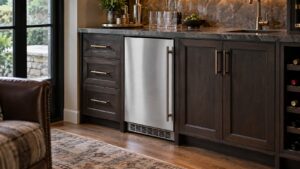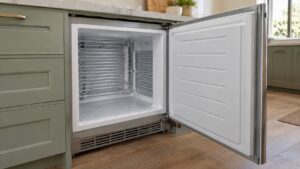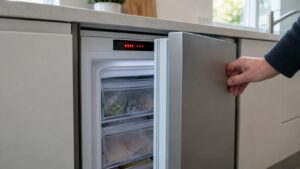
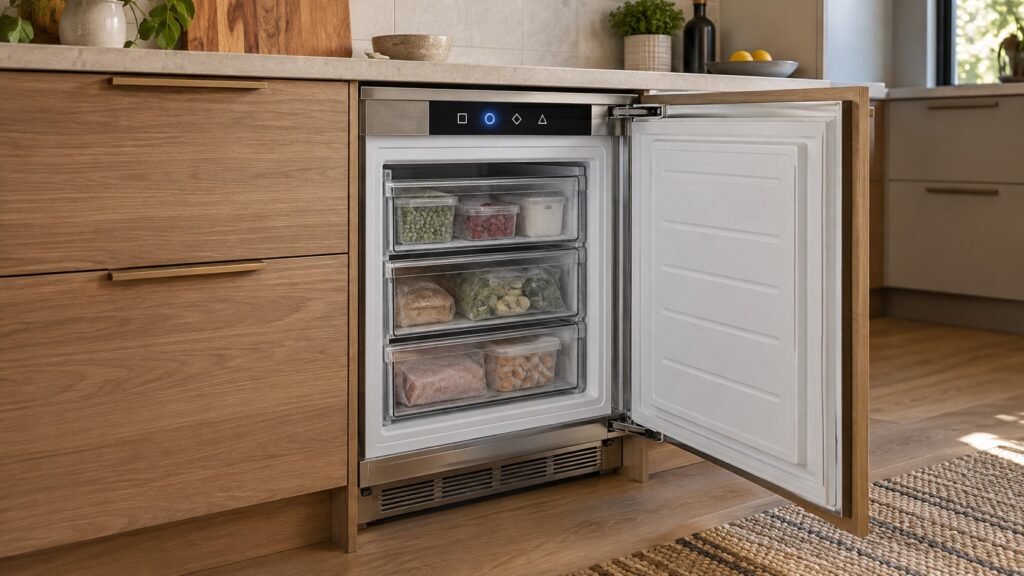
A U-Line convertible freezer meaning is exactly what it sounds like: a built-in freezer unit that can be switched between true freezer temperatures and warmer refrigerator temperatures, so the same cabinet can serve either job depending on what a household needs at a given time. It is not a hybrid that runs both temperatures at once, and it is not the same thing as a two-zone wine cooler — a convertible freezer runs one single compartment at whichever mode you have selected, and switching modes takes time because the whole cabinet has to settle at a new target temperature.
Why would a freezer need to convert to a refrigerator at all?
The appeal is flexibility in a fixed footprint. A household that hosts large gatherings a few times a year but otherwise only needs modest freezer space can run the unit as a refrigerator for overflow beverage and food storage most of the time, then switch it to freezer mode ahead of a holiday when frozen storage briefly matters more. Someone who moves seasonally between a primary home and a second property can do the same thing in reverse — running the unit as a freezer during the months it is stocked for long-term storage, then switching it to refrigerator mode if the space serves a different purpose the rest of the year. Either way, the point of a convertible freezer is not having to choose permanently between the two jobs when the cabinet was installed.
This also matters at the planning stage, before a unit is even purchased. Someone renovating a kitchen or finishing a basement bar sometimes cannot predict exactly how a secondary refrigeration zone will end up being used years down the line — a convertible freezer removes some of that guesswork by letting the decision be revisited later instead of locked in permanently at installation.
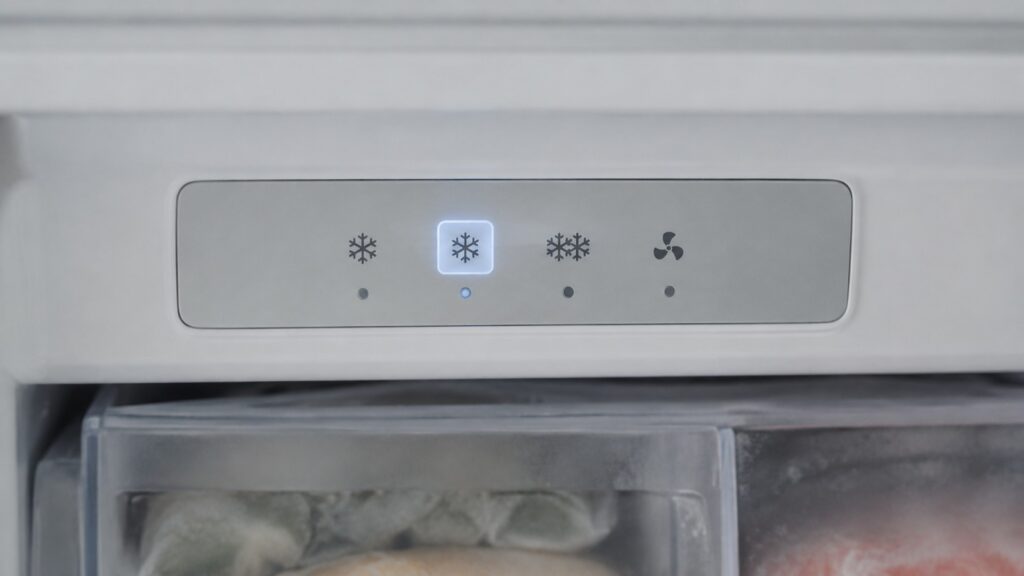
Is a convertible freezer as cold as a dedicated freezer?
In freezer mode, yes — a convertible unit is built to reach genuine freezer temperatures, not a compromise between the two. The tradeoff is not coldness but flexibility itself: because the same compartment and the same set of coils handle both modes, you cannot run part of the cabinet cold and part of it warm the way a true two-zone appliance would. It is one setting for the entire interior at any given time, which is the main practical limit worth understanding before buying one expecting zone-by-zone flexibility.
How is this different from a dual-zone wine refrigerator?
A dual-zone wine refrigerator runs two genuinely separate compartments at two different temperatures at the same time, using internal baffling to keep the zones from mixing — that is a permanent split built into the cabinet’s design. A convertible freezer has no such internal split; it is a single compartment that changes its one target temperature when you switch modes. The two features solve different problems: dual-zone wine storage is about running two temperatures simultaneously, while a convertible freezer is about changing one temperature setting over time as your needs change.
It is worth checking your specific model’s spec sheet if the two features matter to your decision, since neither term is interchangeable with the other on U-Line’s lineup. A unit marketed as convertible will not offer split zones no matter which mode it is set to, and a dual-zone wine refrigerator will not convert its zones into freezer temperatures no matter how its controls are adjusted — the two are built around different internal designs from the start, not different settings on the same hardware.
How does the compressor handle switching between modes?
The compressor and refrigerant system inside a convertible freezer are built to operate across the wider range needed for both freezer and refrigerator temperatures, which is part of what makes the conversion possible in the first place — a standard single-purpose freezer’s compressor and controls are tuned more narrowly around freezer temperatures alone. When you switch modes, the control board adjusts the compressor’s cycling pattern to bring the cabinet to its new target temperature, then settles into a steadier cycle once that temperature is reached. This is a normal part of the unit’s designed operation, not a strain on the compressor, even if you switch modes several times a year.
What should you check before switching modes?
- Empty or plan around the contents first. Switching from freezer to refrigerator mode will thaw anything left inside as the cabinet warms.
- Give the unit time to stabilize at its new target temperature before relying on it for sensitive storage.
- Check the control panel’s mode indicator rather than assuming — some units show the current mode clearly, others require checking a settings menu.
- Note that switching modes frequently is fine mechanically, but planning ahead avoids the thawed-food surprise that comes from switching without checking what is inside first.
What if the unit won’t hold the mode you selected?
If a convertible freezer seems stuck between modes, or is not reaching the temperature its selected mode should produce, that is a mechanical or control-board issue rather than a normal limit of the feature itself — a healthy unit reaches and holds its selected mode’s target temperature reliably. Before assuming a fault, though, confirm how long the unit has actually had to settle: a full swing from one mode to the other can genuinely take several hours on a fully loaded compartment, and checking the temperature too soon after switching modes is a common reason people report a “stuck” unit that was simply still in transition. Our convertible freezer maintenance guide covers the upkeep that keeps mode switching reliable over years, and our freezer not holding temperature guide covers troubleshooting if a specific mode will not hold steady. Our dual-zone cooling explainer is worth a look too if you were weighing a convertible freezer against a wine refrigerator before you settled on this one. You can schedule a visit if a convertible unit is not switching or holding temperature as expected.