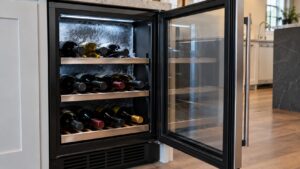
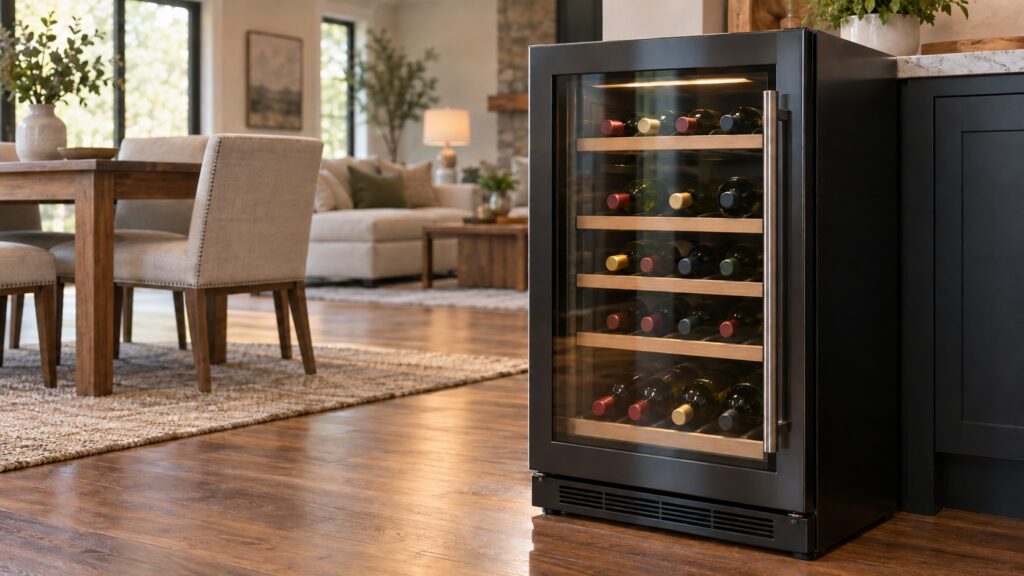
A glass-door wine cabinet has a problem an ordinary refrigerator does not: it is a cold surface facing a warm room, and cold surfaces collect condensation. The u-line door heater is the quiet solution to that, and because it is a heater inside a refrigerator, it is also one of the most misunderstood components in the appliance. This is what it does and why the cabinet is designed that way.
Dew point, in one paragraph
Air holds water vapor, and how much it can hold depends on its temperature. Cool a parcel of air enough and it reaches the point where it cannot hold what it has, and the excess condenses onto whatever surface cooled it. That temperature is the dew point, and it moves with the humidity of the room.
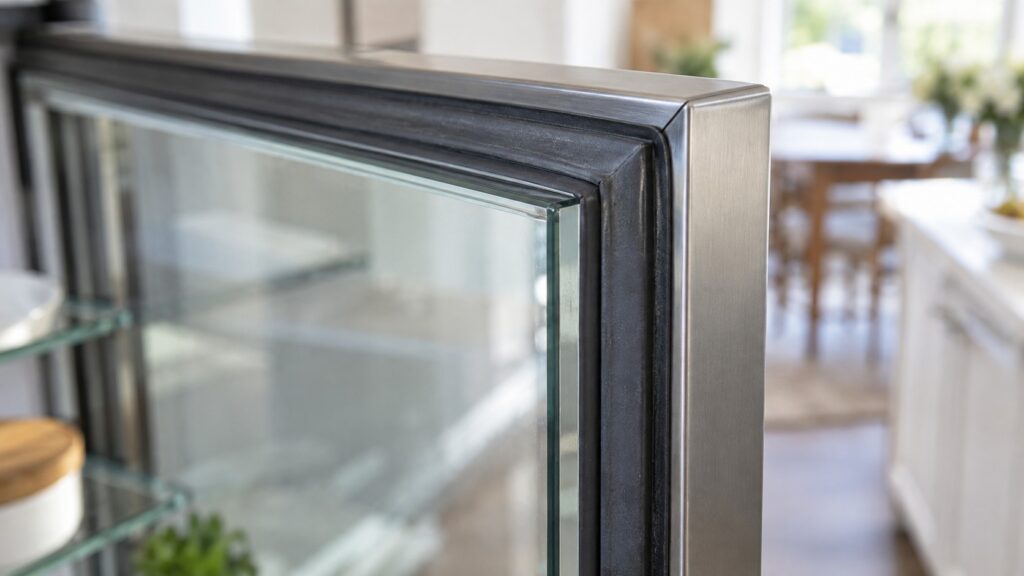
A wine cabinet’s door glass sits between a cold interior and a warm room. Left alone, its outer surface drops below the dew point on a humid day and the glass fogs. Around the frame, where the gasket meets metal, the same thing happens out of sight — and that is the version that causes damage.
What the heater actually does
A low-power element runs around the door frame, or along the edge of the glass on some designs. It raises that surface a few degrees — just enough to stay above the dew point — without meaningfully warming the cabinet interior, because the insulation and the glass unit sit between the two.
On many cabinets it runs continuously at low power. On others a control varies it with conditions. Either way it is doing something counterintuitive but efficient: spending a small amount of energy to prevent a problem that would otherwise cost far more, in gasket damage, in mold, and in the humidity control the cabinet is trying to maintain.
Why condensation matters more in a wine cabinet
A wine cabinet is deliberately run damper than a kitchen refrigerator, because corks need humidity. That makes the interior side of the equation worse and it makes the gasket area more vulnerable.
Persistent moisture at the door seal does three things over time. It breeds mold along the gasket, which is unpleasant and hard to remove permanently. It degrades the gasket itself, so the door seals less well, which admits more warm air and produces more condensation — a loop that accelerates. And on a cabinet installed in cabinetry, the water eventually reaches the surrounding woodwork.
Our door sealing guide covers what a failing gasket looks like before it gets that far.
When you see condensation anyway
Some condensation on a very humid day is normal and it clears. Persistent condensation is telling you something, and the causes are worth working through in order.
- Room humidity is very high. A basement bar in summer, or a room with a spa or laundry nearby, can exceed what any door heater is designed for.
- The door is not sealing. Warm, damp air entering the cabinet condenses inside and the glass fogs from within, which looks similar and is not.
- The door is being opened often, or left ajar, which does the same thing more quickly.
- The heater circuit has failed. Possible, and worth checking after the others rather than before.
- Setting far colder than needed. A colder glass surface is a wetter one; a cabinet set to freezer temperatures will fog on days a properly set one would not.
The distinction between fogging inside the glass and wetness on the outside is the most useful observation you can make, because it separates a sealing problem from a dew point problem.
Reducing the load on it
The door heater handles the dew point at the boundary. Everything that reduces how hard it has to work makes the cabinet quieter, more efficient and longer-lived, and all of it is under your control.
Keep the room within the cabinet’s rated ambient, and dehumidify a basement bar if the air is genuinely damp — a dehumidifier in that room does more for the appliance than any setting on it. Do not set the cabinet colder than the wine needs; storage temperature is warmer than most people assume, and each degree colder makes the glass surface a better condenser.
Open the door deliberately rather than browsing with it ajar, and check nothing inside is holding it fractionally open — a bottle sitting proud on a shelf is enough. And keep the gasket clean and supple, because a gasket that seals is the first line of defense and the heater is the second.
What not to do about it
Do not disable the heater to save energy. It is a small load and removing it produces exactly the damage described above, usually in a place you will not see until the gasket has gone.
Do not treat a warm door frame as a fault. A cabinet whose frame feels slightly warm to the touch is doing what it is designed to do, and it is a sign the system is working rather than failing.
And do not wipe condensation away and consider it handled if it returns daily. The wiping is fine; the daily return is the information.
Related systems worth understanding
A wine cabinet’s temperature stability, its humidity and its condensation behavior are one system rather than three. A door that seals well keeps all three in range. A cabinet in a room within its rated ambient does not have to fight for any of them.
Vibration is the fourth member of that family — not related to condensation, but part of the same design conversation about what a wine cabinet is for. Our vibration guide covers it, and our maintenance guide covers the routine that keeps the gasket and the condenser in good order.
When to call
Call when condensation persists in a room of normal humidity with a well-sealing door, when moisture is collecting inside the cabinet rather than on the glass, when the gasket has mold that returns after cleaning, or when the door frame is noticeably hot rather than slightly warm.
We are an independent repair company and not a factory service arm. Pricing starts from a diagnostic visit and we confirm the estimate before any work begins. U-Line wine cooler repair covers doors, seals, heaters, controls and cooling, and you can schedule a visit online.