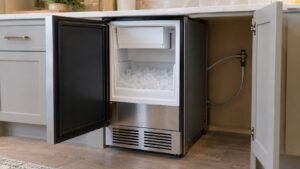
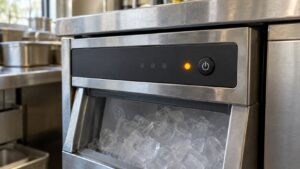
A U-Line crescent ice machine is a built-in undercounter unit that produces the classic curved crescent-shaped cube long associated with restaurant soda fountains, roughly half an inch by three-quarters of an inch by two and a quarter inches in size. Unlike U-Line’s clear ice machines, crescent units generally do not require a drain connection, which makes them a popular choice for installations where running a dedicated drain line is impractical. This is independent, brand-neutral consumer information and is not affiliated with U-Line.
About U-Line crescent ice machines
Crescent ice machines freeze water directly in curved cube molds on a vertical or horizontal evaporator plate, then release the finished cubes into the storage bin using a warm-gas harvest cycle. Because the process doesn’t rely on a continuous recirculating water bath the way clear ice production does, most crescent machines operate without a reject-water drain pump, simplifying installation in cabinetry where plumbing access is limited. Crescent machines are generally known for higher ice output per cycle and quieter operation than clear ice units, since they skip the constant water-pump circulation that clear ice production requires, though the resulting cubes are translucent rather than fully clear.
This makes crescent ice a practical middle ground for households that want a real ice-machine cabinet without the plumbing demands of a drain-connected clear ice unit or the specialized extrusion hardware of a nugget machine. It’s also the closest built-in equivalent to the ice many people grew up drinking from soda fountains and older refrigerator door dispensers, which is part of why it remains a steady seller even as clear ice has become fashionable for cocktail service. Because the mechanism is comparatively simple — freeze, harvest, drop — crescent machines also tend to be more forgiving of average water quality than clear ice units, though they are not entirely immune to scale-related slowdowns.
Signature features & technology
- Classic crescent-cube molding for the familiar curved, soda-fountain-style ice shape
- Drain-free operation on most models, since crescent freezing doesn’t require the continuous water circulation clear ice needs
- Higher typical ice output and quieter cycle noise compared with U-Line’s clear ice machines, due to the simpler freeze process
- BrightShield antimicrobial LED lighting in the ice storage bin
- Digital touch pad control with a cleaning-cycle reminder
- U-Select or U-Choose interface on select models for adjusting ice production settings
Common problems
- Reduced ice output or thin, undersized crescents, often the result of scale buildup on the evaporator plate from hard water
- Cubes fusing together in the storage bin, usually caused by a bin thermostat that isn’t cycling correctly or excessive humidity in the cabinet space
- Harvest cycle failing to release cubes cleanly, which can point to a worn harvest valve or a freezing plate that has developed scale unevenly
- Machine running continuously without producing ice, frequently traced to a clogged water inlet filter or a frozen supply line
- Musty odor from the bin, generally a sign the cleaning cycle has been skipped for an extended period
- Compressor short-cycling or failing to reach a full freeze, which can indicate a refrigerant issue or a fan obstruction
Maintenance tips
- Run the recommended cleaning cycle on schedule to keep the evaporator plate free of mineral scale, which affects crescent output faster than most owners expect
- Replace the water inlet filter on the manufacturer’s interval, particularly in areas with hard or mineral-heavy water
- Keep the storage bin door closed as much as possible to limit humidity intrusion that can cause cubes to clump
- Vacuum the front condenser grille periodically since restricted airflow slows freeze cycles and reduces total output
- Scoop and rotate ice regularly rather than letting it sit for extended periods, since crescent cubes stored too long can fuse into a solid mass
- Verify the unit is level, since an uneven cabinet can affect how evenly cubes release from the freezing plate
- Track roughly how much ice the machine produces per day so a gradual decline is noticeable early rather than only becoming obvious once output has dropped sharply
When to call a technician
If output drops noticeably despite a recent cleaning and filter change, if cubes won’t release from the plate during harvest, or if the compressor is cycling unusually, a qualified appliance repair technician should inspect the unit. Evaporator descaling, harvest valve replacement, and refrigerant diagnostics require training and tools beyond routine home upkeep. Getting a professional opinion early is especially worthwhile if the machine is a household’s primary ice source for entertaining, since a small drop in output often signals a larger mechanical issue building in the background rather than a one-time fluke.
U-Line crescent ice makers are built and documented by the manufacturer in Milwaukee. Manufacturer specifications and use-and-care guides are published at u-line.com.