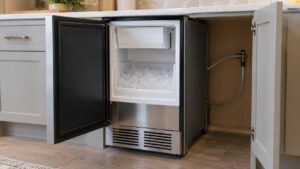
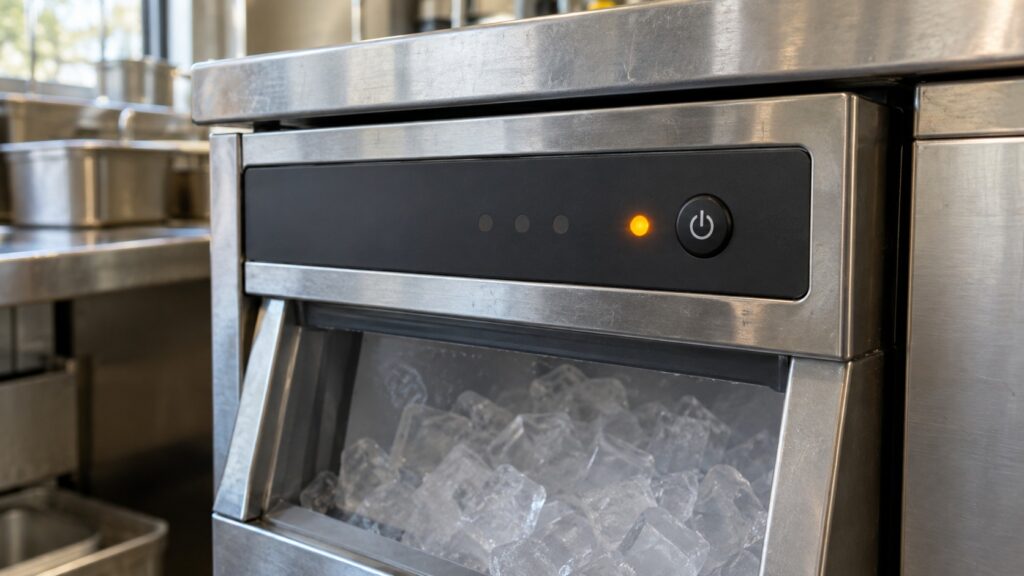
The U-Line clean code is the one entry on this brand’s code list that is not reporting a failure. The code page states it in four words: clean-cycle reminder. The machine has decided enough time or enough production has passed that the ice-making surfaces should be washed, and it has said so on the display. Nothing is broken, nothing has been measured in the water, and the machine will usually keep making ice while the reminder sits there. What confuses owners is what happens next: the reminder does not always go away when the cleaning does.
Is the U-Line clean code a fault or a reminder?
A reminder, and the difference changes how urgently you should treat it. A fault code describes something the machine has detected and cannot work around. A reminder is a calendar. It arrives on schedule whether the machine has been making ice for a household of six on hard well water or sitting in a vacation house running one batch a week. The prompt does not know which of those it is attached to, and the machine’s ice is the only evidence that tells you.
That has a practical consequence in both directions. A machine on soft filtered water may show the reminder long before it needs anything. A machine on hard water may need cleaning well before the reminder appears. Treat the code as a prompt to look, not as a verdict.
Why does the clean code stay on after the machine has been cleaned?
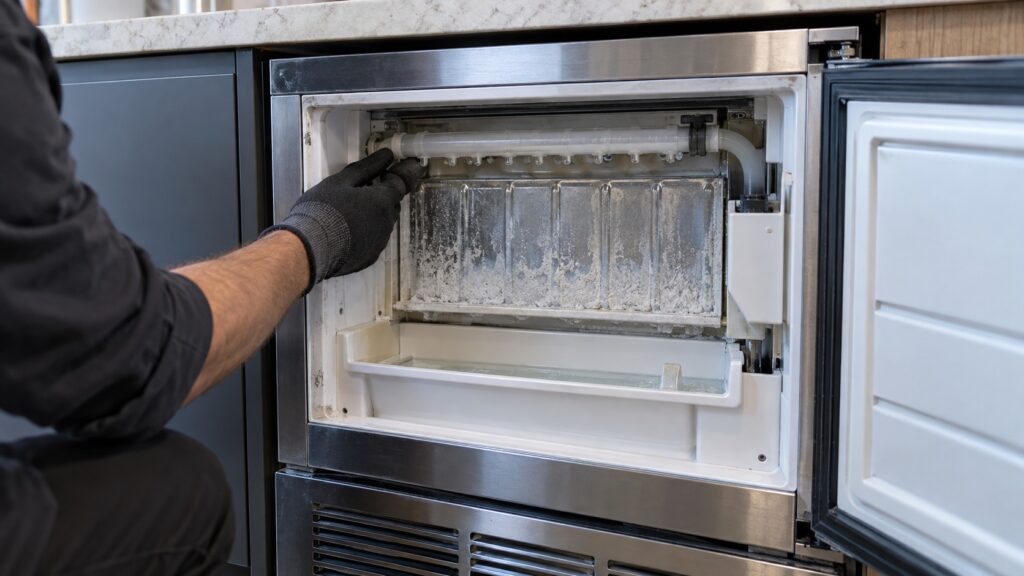
Because the machine has no way to inspect itself. Scale is thin, transparent, and sits on surfaces no sensor watches. What the control can do is count: time in service, cycles run, or both. When that count reaches its limit the prompt appears, and the only thing that resets the count is the cleaning routine being completed on the machine’s terms — run through its own cleaning mode to the end, rather than a bucket of solution poured into the reservoir and a door closed afterward.
This is where most calls about the code come from. The owner cleans the machine thoroughly by hand, the reminder stays lit, and the machine looks broken when it is simply still counting. The routine for a given model is in the owner documentation, and the general shape of it is covered in our crescent ice machine routine maintenance guide. If the prompt survives a completed cleaning cycle and a power cycle, that is the point where it stops being a reminder and becomes something to look at.
What happens if you just reset it?
The prompt goes away and the scale stays. That is the trade, and it is worth naming plainly because it is the most common way an ice machine is quietly damaged. Mineral film on an evaporator is an insulator. A surface that used to give up its heat quickly now gives it up slowly, so the freeze portion of the cycle gets longer, the harvest gets less reliable, and the cubes arrive thin or hollow. None of that appears as a code. It appears as a machine that makes less ice than it used to and works harder doing it.
Left long enough, the same film reaches the water distribution parts, and a partly blocked distributor produces uneven cubes that look like a completely different fault. If your machine is already making small or hollow ice, the reminder is not the story — read small cubes and low ice production, which cover what that film has already done.
How often does a machine really need it?
More often than the reminder in hard-water areas, and no more often than the reminder in soft ones. The honest answer is that water decides. A machine fed through a filter that is changed on schedule, in a house with municipal water, can meet the prompt comfortably. A machine on well water with visible mineral in the kettle will grow film in a fraction of that time, and the ice will tell you long before the display does.
Two habits do more than any schedule. Change the water filter at the interval the model asks for, because a filter that has stopped working is invisible from outside. And look at the ice once a week: size, clarity and whether the bin fills at the rate it used to. The same discipline applies across the ice family, and the descaling guide covers why the solution used matters and why household products do not belong in a machine that makes something you eat.
When is the clean code hiding an actual fault?
When it comes back quickly. A reminder that reappears weeks after a completed cleaning cycle is not a reminder any more — either the reset is not taking, which points at the control, or the machine is running many more cycles than the household is using, which points at ice being made and melted rather than made and kept. A bin that is warm because a door is not sealing will do exactly that.
Take some care with the cleaning itself, too. Descaling solutions are acids, the ice-making compartment has sharp edges and moving parts, and the water circuit is under supply pressure. Cut the water and the power before anything is opened, and stop at any panel that needs a tool to remove.
When should you call instead of cleaning again?
If a completed cleaning cycle does not clear the prompt, if the prompt returns within a month, or if ice quality has already dropped, the machine needs eyes on it rather than another round of solution. Scale that has been in place for a year does not always come off chemically, and at that point the question is which parts have to come out to be cleaned properly.
We are an independent repair company and not a factory service arm. Pricing starts from a diagnostic visit and we confirm the estimate before any work begins. The clean code page carries the short definition, crescent ice machine repair is the service to ask for, and you can schedule a visit once you know what the ice has been doing.