
This guide covers U-Line Compressor And Sealed-System Repair with practical, technician-backed advice.
Compressor and sealed-system issues are among the more involved repairs a U-Line refrigeration or ice-making unit can need, and understanding what drives the cost of this kind of work helps set realistic expectations before a technician even arrives. Because the sealed system is a closed loop of refrigerant, tubing, and components, repairs here require specialized tools and certification that go well beyond a typical parts swap, and that’s reflected in how the job is priced.
Understanding the U-Line Compressor And Sealed-System Repair
Below, our specialists break down everything you need to know about the U-Line Compressor And Sealed-System Repair.
What makes sealed-system work different
Unlike replacing a gasket or a fan motor, sealed-system repair means opening a pressurized, closed refrigerant loop, which legally requires an EPA-certified technician and specialized recovery equipment regardless of the appliance brand. This isn’t a matter of preference — it’s a regulatory requirement tied to how refrigerants are handled, and it’s one of the main reasons sealed-system repairs cost more than component-level fixes elsewhere in the unit.
Diagnostic time
Before any repair begins, a technician has to isolate whether the problem is actually in the sealed system or is being caused by something else entirely, such as a failing sensor, a control board issue, or an airflow restriction that mimics reduced cooling capacity. This diagnostic step often involves pressure testing, checking for leaks, and monitoring compressor behavior under load, all of which takes time and expertise that factors into the overall cost before any parts are even ordered.
Component cost and availability
- Compressor type — U-Line’s variable speed compressors are more sophisticated than fixed-speed units, and that added complexity generally carries through to the cost of the part itself.
- Part sourcing — availability of the specific compressor or sealed-system components for a given model affects both cost and how long the repair takes to complete.
- Refrigerant type and quantity — the sealed system needs to be evacuated and recharged with the correct refrigerant in the correct amount, and refrigerant cost and handling requirements vary.
Labor complexity and access
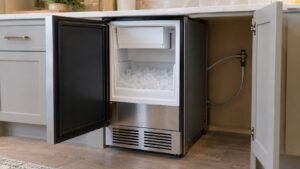
Built-in units present their own access challenges compared with freestanding appliances — a technician may need to partially pull the unit from cabinetry to reach the compressor compartment safely, which adds labor time beyond the sealed-system work itself. The complexity of brazing new connections into the refrigerant lines, evacuating the system properly, and recharging it to specification also adds to labor time relative to simpler repairs elsewhere in the appliance.
Repair vs. replacement considerations
For an older unit, or one where the sealed-system leak is in a hard-to-access location, a technician may discuss whether the cost of the repair makes sense relative to the age and remaining service life of the appliance. This is a conversation worth having upfront, since sealed-system repairs represent a significant investment of specialized labor and it’s reasonable to weigh that against how much useful life is left in the rest of the unit.
Getting an accurate assessment
Because sealed-system symptoms can overlap with other, far simpler issues — a dirty condenser coil or a failing door seal can look a lot like a refrigerant problem at first glance — it’s worth having a qualified technician properly diagnose the cause before assuming the sealed system itself is responsible. An accurate diagnosis upfront is the best way to make sure whatever repair investment you make is actually addressing the real problem.
Questions worth asking before committing to sealed-system work
Because this category of repair represents a significant commitment relative to most other appliance fixes, it’s reasonable to ask a technician several questions before authorizing the work. Understanding exactly what testing was done to confirm the sealed system is the actual source of the problem, rather than a symptom of something else, is a fair starting point. It’s also reasonable to ask what warranty, if any, applies to the specific parts and labor involved, since sealed-system work varies in how it’s covered compared with simpler component replacements.
Getting a written explanation of what the diagnostic process found, not just a verbal summary, gives you something concrete to reference and compare if you’re weighing quotes or deciding whether repair still makes sense for an older unit. A technician who’s confident in their diagnosis should have no issue walking through what they found in the pressure test or leak check and why it points specifically to the compressor or another sealed-system component rather than somewhere else in the appliance.
U-Line built-in refrigeration are built and documented by the manufacturer in Milwaukee. For the latest product information, see the manufacturer at u-line.com.