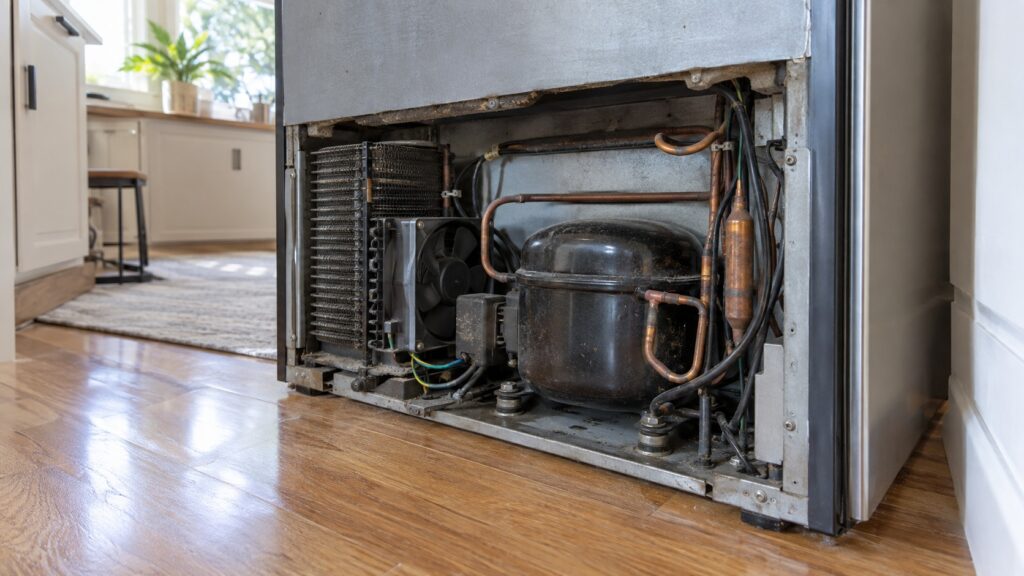
Most faults in an undercounter appliance are a part: a fan, a thermistor, a control, a gasket. A u-line compressor failure is the one that changes the conversation, because it is the heart of the sealed system and sealed system work sits in a different category from everything else — different skills, different tools, different cost, and a different answer about whether it is worth doing.
What actually gets called a compressor failure
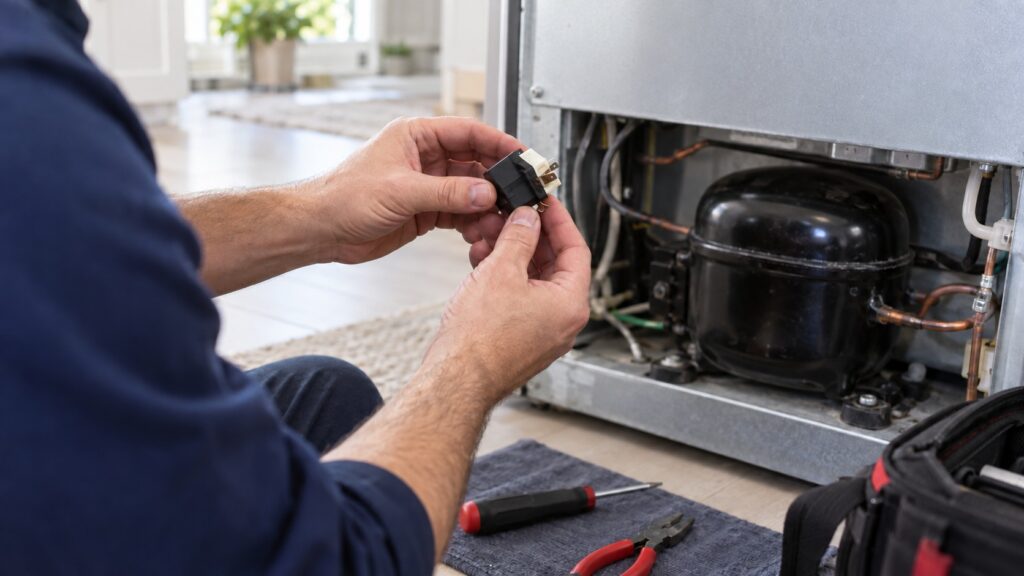
A compressor that will not start is usually not a failed compressor. The starting circuit around it — a relay, a start capacitor on some designs, and an overload protector — is what fails first, and all three are comparatively inexpensive parts.
The symptom pattern is distinctive. A compressor trying and failing to start typically clicks, hums for a few seconds and then clicks off as the overload trips, and it repeats that every few minutes. That is a starting circuit report, not an obituary.
A genuinely seized compressor behaves the same way to a listener, which is exactly why it needs testing rather than guessing. This is the single most important reason to get a diagnosis before making a decision — the two cases sit at opposite ends of the cost range and sound identical from the kitchen.
What else produces the same complaint
A cabinet that will not get cold sends people straight to the compressor, and there are several cheaper explanations that should be ruled out first.
- A choked condenser. On a built-in unit the grille is the only air path, and a clogged condenser makes a healthy system look terminal.
- A stopped condenser fan. Same effect, different cause. The compressor runs and the heat has nowhere to go.
- A thermistor reporting wrong. The control acts faithfully on a bad number and the cabinet behaves strangely.
- Ambient out of range. The unit is doing its best against a room it was never rated for.
- A control board that never calls for cooling. The compressor is fine and is simply not being asked.
Our cabinet not cold enough guide works through that list in order, and the condenser cleaning guide covers the first and cheapest of them.
Refrigerant loss, and why it is a different answer
A sealed system holds a fixed charge of refrigerant. If that charge is low, it is because it has leaked, and adding more without finding the leak simply spends the same money again in a year.
Where the leak is decides everything. A leak at an accessible joint or a serviceable component is repairable. A leak inside the evaporator, buried in the cabinet insulation, is usually not economically repairable in an undercounter unit, because reaching it means dismantling the cabinet.
That is why a firm diagnosis matters here more than anywhere else: “low on refrigerant” is not a diagnosis, it is a symptom. Our sealed system cost factors guide covers what drives the difference.
Weighing it on a built-in appliance
Undercounter units are not like a freestanding refrigerator you wheel out and swap. Replacement means the opening has to accept the new model, and cabinet openings built years ago do not always match what is available now. In an outdoor kitchen that can mean masonry work.
So the comparison is not repair against the price of a new appliance. It is repair against the price of a new appliance plus removal, plus fitting, plus any cabinetry — and against the disruption, which in a built-in installation is real.
That arithmetic pushes the sensible line further toward repair than it would for a freestanding machine. A sealed system repair that would be marginal on a portable unit is often clearly worth doing on one built into a counter.
Age and history, used honestly
A unit in the first half of its life with a starting circuit fault is a repair without discussion. Past a decade, count what has already been replaced rather than the years alone — a cabinet on its first fault at twelve years has been reliable, while one that has had a control board and a fan and now wants a compressor is telling you where it is going.
Ask about parts availability at the same time. A compressor still in production is a different proposition from one that exists only as a salvage part. Our built-in repair against replace guide covers the wider decision.
What not to do
Do not keep power-cycling an appliance whose compressor is trying and failing to start. Each attempt is a start against a stalled motor, and repeated attempts turn a starting circuit fault into a real compressor failure.
Do not let anyone add refrigerant without identifying a leak, and do not accept “it was low” as an explanation on its own. And do not decide anything before the condenser has been cleaned and the fans confirmed running, because those two checks resolve a surprising share of these calls.
What a good diagnosis should tell you
Before deciding, you should have four answers, and any of them being vague is a reason to ask again. Which component actually failed, tested rather than inferred. Whether the sealed system holds its charge. Whether the part is available and how long it takes. And what else on the unit is close to the end of its life.
With those four, the decision usually makes itself, and it takes about as long as the coin-flip version but produces a result you can defend a year later.
When to call
Call when the compressor clicks and hums without starting, when it runs continuously with a clean condenser and the cabinet stays warm, when it is silent altogether, or when frost patterns suggest an uneven refrigerant charge.
We are an independent repair company and not a factory service arm. Pricing starts from a diagnostic visit and we confirm the estimate before any work begins — including telling you when replacing makes more sense than repairing. U-Line ice maker repair and our refrigeration service cover sealed systems, controls and fans, and you can schedule a visit online.