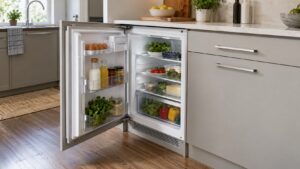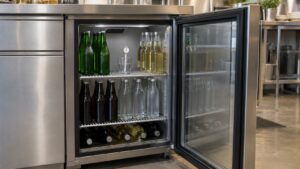
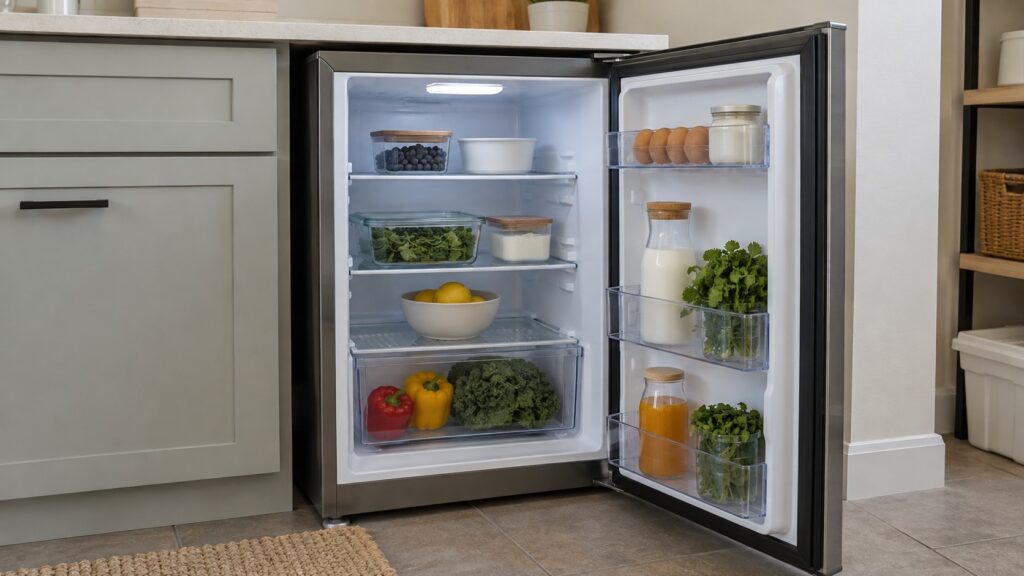
How a U-Line refrigerator controls temperature is a simple loop: a thermistor measures the air in the cabinet, the control board compares that reading with the setpoint you chose, and the board switches the compressor and fans on or off to pull the temperature back. Nearly every cooling symptom you will see, from a cabinet that runs warm to a compressor that never stops, comes from a break somewhere in that loop.
What does the thermistor do in a U-Line refrigerator?
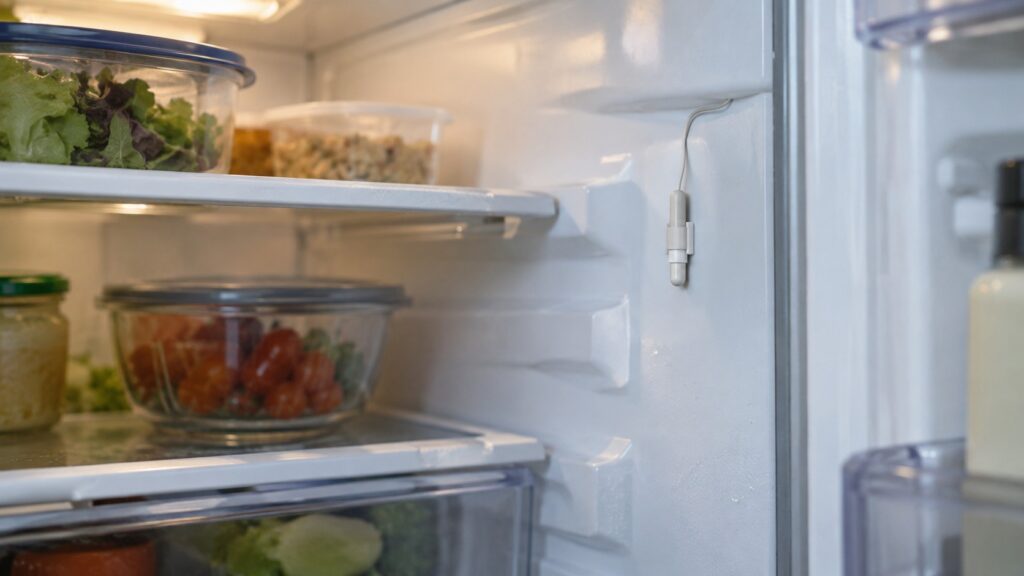
A thermistor is a small sensor whose electrical resistance changes with temperature. The control board sends a tiny current through it and reads how much resistance it meets, then converts that number into a temperature. U-Line refrigerators place a thermistor where it can read the air that matters, and models with more than one compartment or zone use more than one. Because the reading is just a resistance, a damaged wire or a loose connector can mimic a temperature that is far too high or too low, which is why a sensor circuit fault produces a code rather than a quiet failure. Our guides to the cabinet thermistor error codes and the zone thermistor error codes explain how those codes relate to the sensors.
How does the control board decide when to cool?
The board holds your setpoint and a small tolerance band around it. When the sensor reports a temperature above the top of the band, the board starts the compressor. When the reading falls to the bottom of the band, the board stops it. That cycle repeats all day. A healthy refrigerator runs for a stretch, rests for a stretch and repeats, and the proportion of run time rises when the room is warm or the door opens often. This on-and-off pattern is normal. A compressor that runs without ever resting, or one that starts and stops every minute, is not.
Some models use a variable-speed compressor, which changes its speed to match the load instead of switching fully on and off. That design gives steadier temperatures and quieter running, and it is described in our guide to convection cooling and the variable-speed compressor.
Where do the fans and the condenser fit in?
Cooling a cabinet means moving heat out of it. The evaporator absorbs heat inside, the compressor pumps it along, and the condenser releases it to the room. A fan pushes air across the condenser, and on some models another fan circulates air inside the cabinet so that the temperature stays even from shelf to shelf. The loop depends on all of these parts working together. A condenser covered in dust cannot shed heat, so the compressor runs longer and the cabinet may drift warm. Our guide to a U-Line refrigerator condenser that needs cleaning shows the signs.
Why does the cabinet sometimes run warmer than the setpoint?
The setpoint is a target, not a promise. Several ordinary conditions push the cabinet away from it. A warm kitchen, a door that was open for a while, a freshly loaded batch of warm drinks or a blocked front grille will all raise the temperature, and the loop will correct it given time. If the cabinet does not recover after a few hours, look for a cause. Check that the door closes fully, that the gasket seals, that the grille is clear and that the setpoint has not been changed. Our refrigerator cabinet not cold enough guide walks through the checks in order.
What about heaters and condensation control?
Some U-Line models include small door heaters that keep the glass or frame above the dew point so water does not form on the outside. They are separate from the temperature loop but share the board, and they matter on outdoor and glass-door units. Our guide on how U-Line door heaters prevent condensation explains the idea.
How can you help the loop work well?
- Leave the clearances the installation sheet requires around the unit.
- Keep the front grille free of dust, pet hair and stored items.
- Do not set the temperature lower than you need, since the compressor works harder.
- Allow warm items to cool before loading them.
- Do not crowd the shelves against the back wall where the sensor sits.
If you follow these habits, the loop stays in its comfortable range and the compressor lasts longer, as our tips for extending the life of a U-Line compressor describe. When a symptom persists, a technician can test the sensor, the board and the compressor in turn. See our refrigerator repair page for how a visit works.
What happens when the loop breaks?
Each part of the loop fails in a recognizable way. A sensor that reads wrong makes the board act on false information, so the cabinet may run too cold or too warm while the compressor itself is healthy. A board that stops sending the start signal leaves a compressor that never runs, and a cabinet that slowly warms. A fan that stops leaves heat trapped at the condenser, and the compressor runs long and hot. A compressor that cannot pump leaves everything else working but the cabinet warm. Knowing which part of the loop is suspect helps you describe the symptom clearly, which in turn speeds up a diagnosis.
When you describe the problem, say what the display shows, how long the compressor runs, whether the fans turn, and whether the cabinet feels warm at the back. Those four facts narrow the field quickly and are what a technician will ask first.