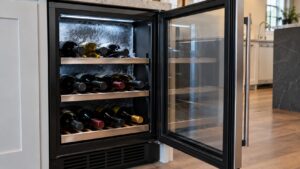
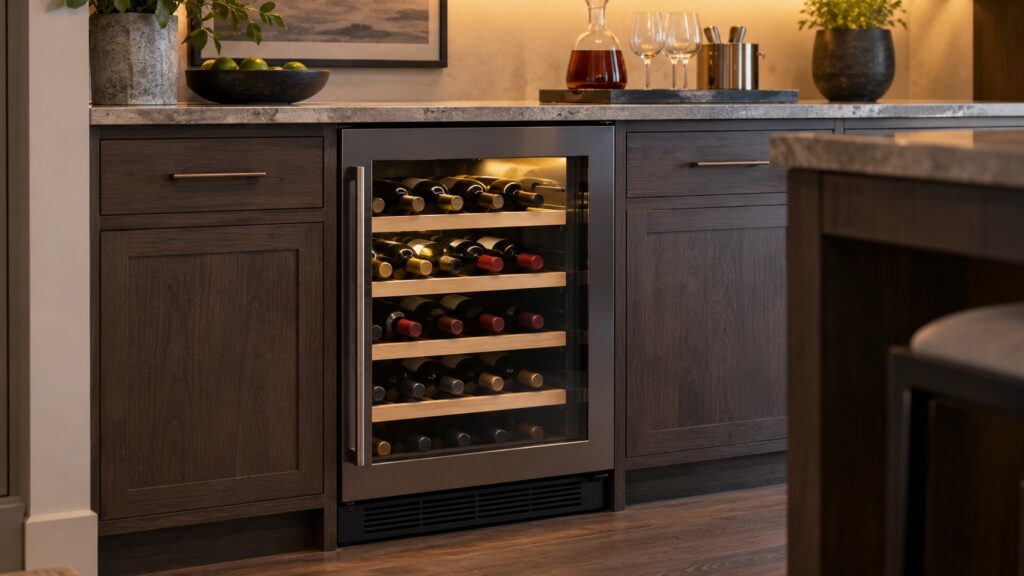
The safest way to care for a U-Line wine cooler glass door is to wipe it with a soft cloth dampened with warm water and a drop of mild dish soap, dry it with a clean microfiber cloth, and keep sprays, abrasive pads and ammonia away from the glass and the gasket. Spray the cloth, never the door. A glass door shows every fingerprint, and it also reveals condensation, so a little routine attention keeps it clear and helps you notice a seal problem early.
How do you clean a U-Line glass door without streaks or damage?
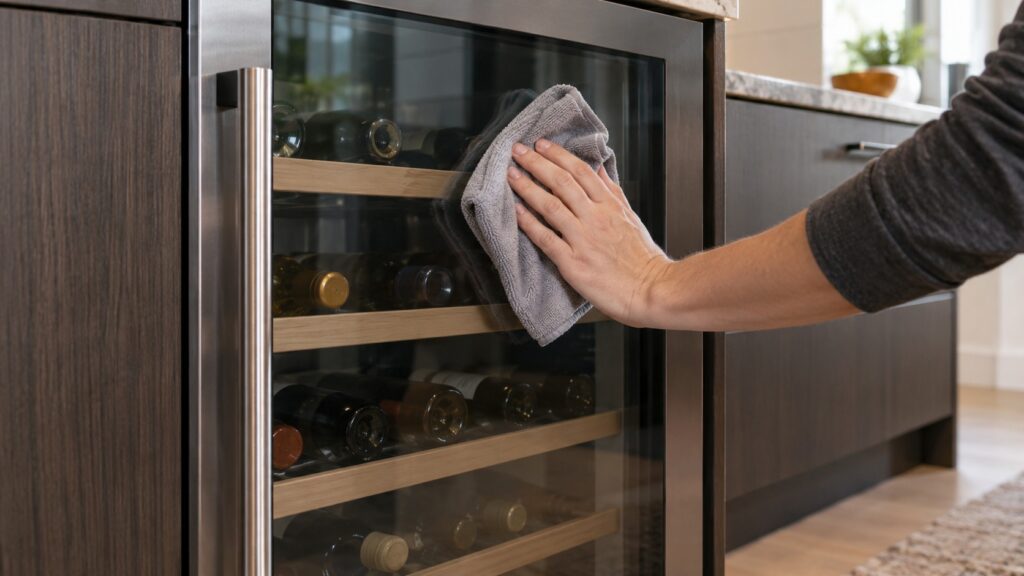
Start with the cabinet closed and cool. Dampen a soft cloth with warm water and a drop of mild dish soap, wring it nearly dry, and wipe the glass from top to bottom. Switch to a second cloth dampened with plain water to remove soap, then dry with a clean microfiber cloth in long, even strokes. Leave the door open for a minute afterward so the gasket edge dries too. Streaks usually come from too much soap or a cloth that is not clean, not from the glass itself.
Spray cleaners are tempting, but they run down the face of the door and into the gasket, the hinge and the edge seal. Ammonia and bleach attack the rubber of the gasket and the coating on the frame, and over time they leave it brittle. If a fingerprint will not budge, use a slightly stronger soap solution rather than a stronger chemical. Our wine cooler maintenance guide covers the rest of the routine.
Why is there condensation on the outside of the door?
Condensation on the room side of the glass appears when the glass is colder than the dew point of the room air. A humid kitchen, a hot summer day or a cabinet set colder than needed can all cause it. U-Line cabinets include door heaters or warming that reduce the effect, which our guide on how U-Line door heaters prevent condensation explains, but they cannot beat very humid air. A film that clears within minutes and appears only on humid days is normal.
What is not normal is water that beads and runs down the glass every day, or a damp patch along the edge of the gasket. That suggests warm air is leaking in. Check the seal before you blame the glass.
How do you check the gasket on a glass door?
Close the door on a strip of paper and pull gently. It should resist at several points around the edge. Test the top, bottom and both sides, because a leak often occurs only at a corner. Look for flattened sections, splits and dirt holding the gasket off the frame. Clean the gasket with warm water, then dry it. A sticky or dirty gasket seals poorly, and a quick wipe often restores it. If a gap remains, see our guide to a wine cooler door that is not sealing.
What about the frame, the hinges and the handle?
Stainless frames look best when cleaned with the grain, using a soft cloth and a stainless cleaner that is safe for food-area appliances. Never use steel wool or an abrasive pad, because it scratches the finish and the scratches collect grime. Wipe the handle and the hinge area, and check the screws are snug. A loose hinge lets the door sag, and a sagging glass door stops sealing at the bottom corner first.
Do not lean on the door or hang anything from the handle. A glass door carries more weight than a solid one, and years of small stress show up as misalignment. When you open it, support it by the handle and close it without slamming; a slammed door can shake bottles and disturb sediment. Our guide to wine cooler vibration explains why that matters.
Does the glass protect the wine from light?
Light is one of the enemies of wine, and a glass door lets some in. Wine stored in clear or pale bottles is the most affected. Many glass doors use tinted or coated glass to reduce the effect, and the manual for your model tells you what yours has. Whatever the glass, keep the cabinet out of direct sunlight, and if the interior light has a switch, leave it off when you are not looking. If the light or the display behaves oddly, our guide to a wine cooler display or light concern covers the checks.
What else belongs on the monthly list?
Once a month, take a minute to look at the whole cabinet. Wipe the gasket and the frame. Check the racks are seated. Make sure the area around the door is clear, so it opens fully. Twice a year, vacuum the front grille and the condenser, because a dusty coil makes the cabinet run harder. Our guide to a wine cooler condenser that needs cleaning shows the signs. If you see persistent condensation or a gap you cannot fix, our wine cooler repair service can inspect the door and the seal.