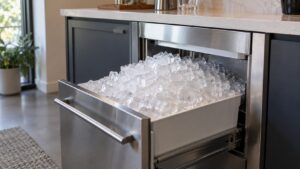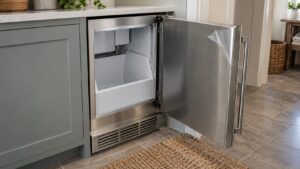
Ice is good at absorbing what is around it, so the bin it sits in deserves a regular wash. To clean U-Line ice bin parts, empty the ice, follow your manual on switching the machine off, wash with mild dish soap and water, rinse thoroughly, dry, and seat the bin back exactly as it was. Our site covers cleaning the machine itself in several guides, but the storage bin gets only a passing mention in them, so this guide covers the bin and the area around it. The exact way to remove the bin differs by model; your owner’s manual shows it.
Why does an ice bin need cleaning at all?
The bin is the part that touches your ice, and ice that sits in it picks up flavors. Our guide on keeping U-Line clear ice odor-free says that ice left in a storage bin for long periods without being used can pick up odors from the bin or taste stale even when the ice-making process works perfectly, and that emptying older ice and giving the bin a light clean keeps new ice tasting fresh. Our nugget guide adds that a quick wipe of the bin interior with a damp cloth every week or two, especially in heavy-use homes, keeps things fresh between full cleanings. This applies to every U-Line ice machine type, whether crescent, clear or nugget.
How do you prepare before you touch the bin?
Take the ice out first, into a clean cooler or a clean sink, so you can see what you are doing and nothing melts onto the floor. Then switch the machine off in the way your manual describes, because you will be reaching into the ice compartment. The exact way to switch off differs by model, so check your owner’s manual; some machines have their own control and some are switched off at the breaker. If you use the breaker, stand on a dry floor. Close the water supply valve if you will be working for a while with the door open and the machine could try to cycle. Do not reach past the bin into the machine, and do not remove any panels to get a better view.
How do you wash the bin step by step?
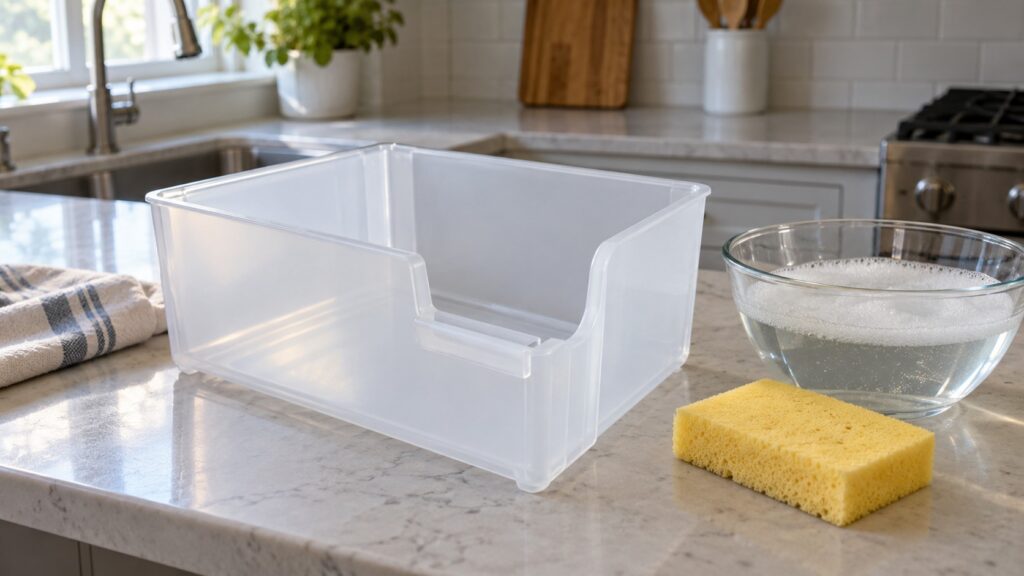
- Remove the bin or scoop as your manual shows, and set it where water can safely drain.
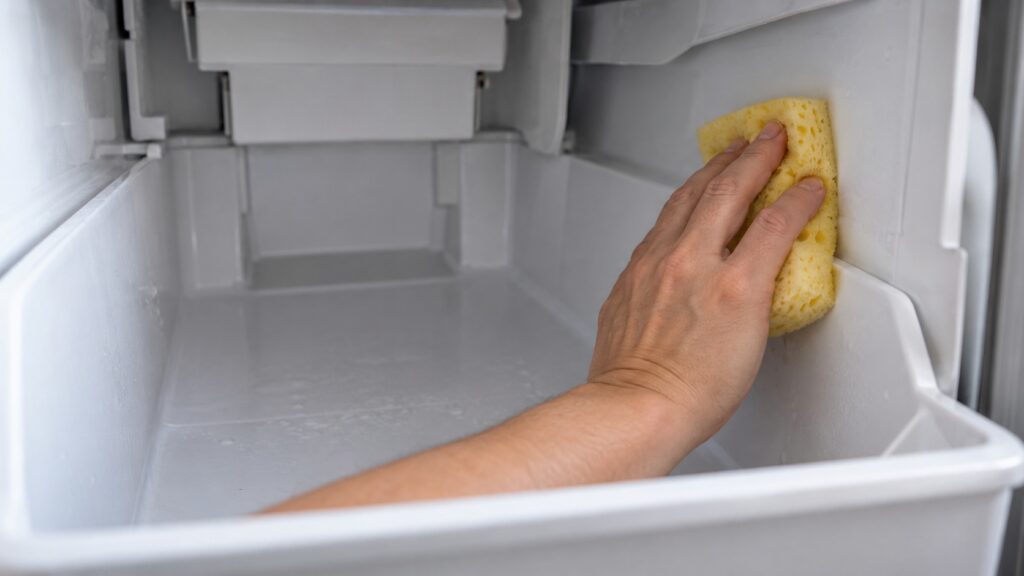
- Wash it with mild dish soap and warm water using a soft sponge or cloth. Pay attention to corners, the base and the lip where residue collects.
- Avoid abrasive pads and strong cleaners that are not made for food-contact surfaces; our maintenance guides warn that a wrong cleaning agent can leave residue or damage the surface.
- Rinse thoroughly until there is no soap smell or slick feel.
- Dry the bin with a clean towel, or let it air dry fully before it goes back.
- Wipe the visible inside walls of the cabinet and the door gasket with a damp cloth.
- Seat the bin exactly as it sat before, so it does not shift or touch the bin arm.
- Restore power and discard the first ice made, since it can carry a trace of soap or cleaning taste.
Whether the bin is dishwasher safe, and how it should be dried, depends on the material and the model, so do not put it in a dishwasher unless your manual says you may.
What about the bin arm and the drain?
Many U-Line machines have a bin control arm, a thin mechanical arm that signals the control board when the bin is full and pauses production until there is room again. Do not bend it, force it or scrub it hard. Our bin arm stuck up guide shows what happens when the arm is stuck: the machine thinks the bin is full and stops making ice. If a clump of ice or a shifted bin is holding the arm, that guide explains the owner-level steps. Meltwater from the bin goes somewhere on every model, either to a drain or to a pan or path described in your manual. If you see water pooling or a drain that seems slow, see our crescent water leak guide or the clear ice drain and pump guide rather than poking at the drain yourself.
How often should you clean the bin?
Our pages suggest a quick wipe every week or two in busy households and a full wash when ice sits unused for a long time. We do not give a fixed interval beyond that, because it depends on how much ice you use, the humidity of the room and how hard your water is. A clean cycle for the machine is separate; run it as your manual and our ice maker maintenance guide describe. Cleaning the bin does not replace it, and a clean cycle does not replace washing the bin.
When does a smell or slime mean a service call?
If a musty smell, slime or a taste returns soon after a good wash, the cause may be somewhere you cannot reach, such as scale or residue in the water path. Our nugget guide says it may indicate buildup inside the water valve or pump, which a technician can inspect and clean. Standing water in the cabinet, a cracked bin, a bent arm or ice that melts constantly also warrant a visit. Call through U-Line ice maker repair, and do not open the machine to investigate. If water ever reaches an outlet, switch the breaker off at the panel while standing on a dry floor and never pull a plug from a wet outlet.