
This guide covers U-Line Crescent Ice Machine Water with practical, technician-backed advice.
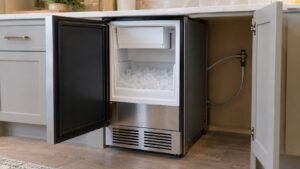
Finding water around or underneath a U-Line crescent ice machine is unsettling, but leaks in built-in ice machines usually trace back to a handful of predictable points along the water path. Because these units are typically installed under a counter with limited visibility, the source isn’t always obvious at first glance, so a methodical check of connections and drainage is the right first step.
Understanding the U-Line Crescent Ice Machine Water
Below, our specialists break down everything you need to know about the U-Line Crescent Ice Machine Water.
Likely causes of a water leak in a U-Line crescent ice machine
- Loose or worn supply line connection — the fitting where the water line connects to the back of the unit can loosen over time or develop a worn washer, allowing a slow drip that pools underneath.
- Drain line clog or misalignment — whether the unit uses a gravity drain or a drain pump, a partially blocked or disconnected line can back up and overflow instead of carrying water away.
- Cracked or split water line — a supply line that’s been kinked, pinched behind cabinetry, or exposed to freezing temperatures can crack and leak intermittently.
- Overfilled reservoir — if the water inlet valve doesn’t shut off at the correct level, the reservoir can overflow during the fill portion of the cycle.
- Condensation from poor clearance or ventilation — in some cases what looks like a leak is condensation forming because the unit doesn’t have the airflow clearance the installation guide specifies.
- Damaged door seal allowing warm, humid air in — a failing gasket lets humid room air reach cold interior surfaces, and the resulting condensation can be mistaken for a plumbing leak.
What you can check yourself
- Unplug the ice machine and, if safe to do so, shut off the water supply valve before inspecting connections.
- Check the supply line fitting at the back of the unit for looseness, mineral crusting, or visible moisture, and gently hand-tighten if it’s accessible without forcing anything.
- Trace the drain line to confirm it isn’t kinked, disconnected, or pitched incorrectly for a gravity drain setup.
- Test a drain pump, if the installation uses one, by checking for standing water in the drain pan and listening for the pump running during a normal drain cycle.
- Inspect the door gasket for gaps or tackiness loss that could let humid air in and cause condensation on interior surfaces.
- Confirm the unit has the manufacturer-specified clearance around the back and sides, since a boxed-in installation can trap moisture.
- Dry the area completely and monitor over a day or two to see whether the leak returns and, if so, where the water first appears.
When to call a technician
If the leak keeps coming back after checking the supply connection, drain path, and door seal, the source may be an internal component such as the water inlet valve, reservoir, or an internal fitting that isn’t visible without disassembly. A technician can pressure-test the water inlet valve, inspect internal tubing and fittings, and verify the drain pump is cycling correctly if the installation uses one. Because water damage to surrounding cabinetry and flooring can escalate quickly, it’s worth shutting off the water supply and calling a qualified technician promptly rather than waiting to see if an unexplained leak resolves on its own.
Protecting cabinetry while you diagnose the source
Because crescent ice machines are almost always installed under a counter surrounded by wood cabinetry and flooring that can be damaged by sustained moisture, it’s worth placing towels or a shallow container under the unit as a temporary measure while you work through the checks above. This isn’t a fix, but it buys time to identify the source without risking water damage spreading to the surrounding structure. Pulling the unit out slightly, if it’s on a slide or can be safely accessed, also makes it much easier to see exactly where water is originating rather than guessing based on where it pools on the floor.
It’s also worth checking whether the leak correlates with a specific point in the machine’s cycle — water appearing only during a fill, only during a harvest, or continuously regardless of cycle stage each point toward a different part of the water path. Watching for that pattern for even one full cycle, with the unit accessible and a light source handy, often narrows down the source enough to tell a technician exactly what to look at first when they arrive, which can meaningfully shorten the visit.
U-Line crescent ice makers are built and documented by the manufacturer in Milwaukee. For the latest product information, see the manufacturer at u-line.com.