
This guide covers U-Line Crescent Ice Machine Not with practical, technician-backed advice.
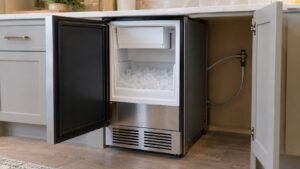
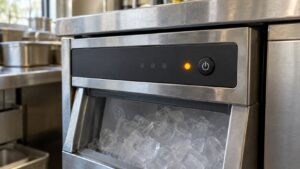
A U-Line crescent ice machine is more sensitive to installation level than most people expect, since crescent ice formation depends on water distributing evenly across a freezing surface or mold before harvest. If the unit isn’t sitting perfectly level, ice can form unevenly, harvest incompletely, or fail to release from the mold at all, leading owners to suspect a mechanical problem when the real issue is how the machine was set during installation.
Understanding the U-Line Crescent Ice Machine Not
Below, our specialists break down everything you need to know about the U-Line Crescent Ice Machine Not.
Likely causes of a leveling-related ice problem
Here’s what typically goes wrong when a crescent ice machine isn’t level:
- Uneven flooring or cabinetry — built-in installations rely on the surrounding cabinet base being flat and consistent; a shimmed or uneven subfloor can throw the whole unit off level even if the appliance itself is fine.
- Leveling legs not adjusted after installation — U-Line units ship with adjustable leveling feet, but if they weren’t fine-tuned during install, the cabinet can settle slightly off level over the following weeks.
- Water pooling or distribution issues — if the unit tilts even slightly, water meant to spread evenly across the ice-forming surface can pool to one side, resulting in partial or misshapen crescents.
- Incomplete ice harvest — an unlevel machine can cause ice to stick to the mold on one side, preventing clean release into the storage bin.
- Door seal complications — an unlevel cabinet can also throw off door alignment, which indirectly affects internal temperature and ice consistency.
What you can check yourself
Unplug the unit before making any adjustments, then work through the following:
- Place a bubble level on top of the machine and check level in both directions — side-to-side and front-to-back.
- Locate the adjustable leveling legs (typically at the front corners, sometimes all four) and turn them evenly to correct any tilt, rechecking with the level after each adjustment.
- Confirm the surrounding cabinet opening is flat; if the machine sits on a riser, shim, or platform, check that it hasn’t shifted or settled unevenly.
- Once leveled, run an ice-making cycle and observe whether ice forms evenly and releases cleanly compared to before.
- Recheck door alignment and gasket contact now that the cabinet is level, since door sealing issues often resolve alongside leveling fixes.
- Keep a note of how the unit was originally installed (shims, spacers, flooring type) in case a technician needs that information later.
When to call a technician
If the machine is confirmed level with a proper bubble level check but ice still forms unevenly or fails to harvest, the issue has likely moved beyond installation and into the water distribution system, harvest mechanism, or sealed refrigeration components — all of which require a qualified technician to diagnose safely. A technician can also assess whether the cabinet opening itself needs modification to support proper leveling long-term, particularly in older or custom-built cabinetry. Because crescent ice machines are less forgiving of small level discrepancies than standard cube makers, it’s worth confirming and correcting level as a first step any time ice quality or output seems off, rather than assuming a part has failed.
It’s worth noting that leveling issues can sometimes reappear even after an initial correction, particularly in homes with older flooring, foundations that are still settling, or cabinetry that shifts slightly with seasonal humidity changes. Building a habit of rechecking level every few months, especially if you notice any change in ice quality or unusual noise during operation, can catch a developing leveling problem before it affects ice production noticeably.
If your installation included any custom platform, riser, or spacer to fit the machine into an existing cabinet opening, pay particular attention to that hardware during any leveling recheck, since these added components are often the first thing to shift slightly over time even when the surrounding cabinetry itself remains stable.
It’s also worth checking level again after any nearby plumbing, flooring, or cabinetry work, even if that work didn’t directly involve the ice machine. Contractors adjusting a section of subfloor, replacing a countertop, or reinforcing cabinetry can inadvertently shift a built-in appliance’s resting position without anyone noticing until ice quality changes days or weeks later. Treating a post-renovation level check as standard practice, rather than something you only do when a problem shows up, can catch this kind of shift early.
U-Line crescent ice makers are built and documented by the manufacturer in Milwaukee. You can confirm model details and manuals on the manufacturer’s site, u-line.com.