A U-Line P1 error code says one specific thing: the control board cannot see a complete electrical circuit to the drain pump. The code page on this site puts it in three words — drain pump circuit open — and that wording is the whole diagnosis. An open circuit is not a complaint about water. The board is not telling you the bin is flooded or the drain is slow; it is telling you that when it switched the pump on, nothing on the other end of that wire answered. On a U-Line clear ice machine that distinction decides whether you are looking at a hose or at a harness.
What does the P1 code mean on a U-Line clear ice machine?
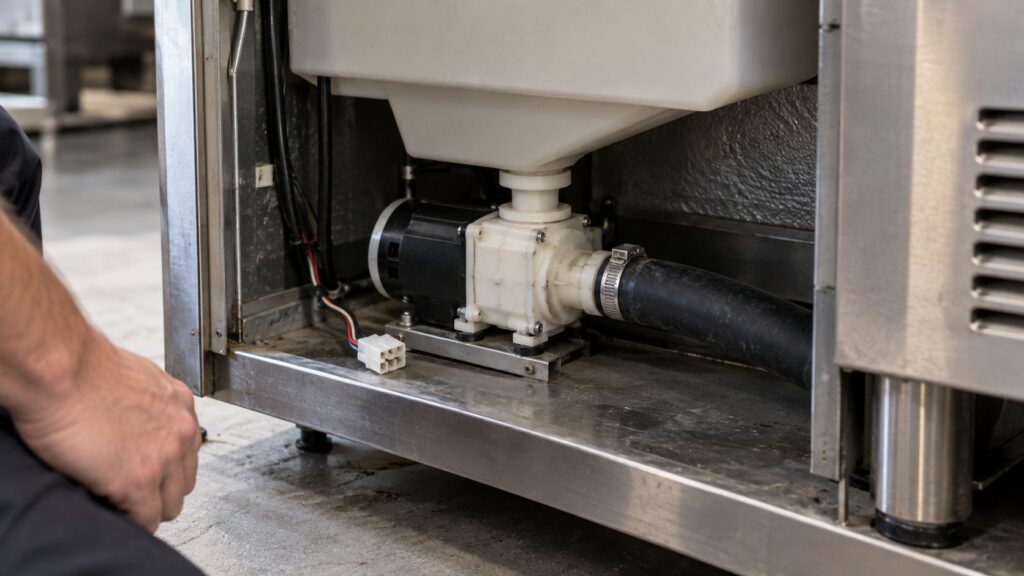
Every U-Line clear ice machine with a factory pump watches that pump the way it watches any other load it switches. The board sends power to the pump, and the circuit has to close: current leaves the output, passes through the pump winding, and returns. If the return never happens, the board has no way to know whether the pump is unplugged, broken internally or simply missing a wire, so it reports the only thing it can prove — the circuit is open — and posts P1.
This is why P1 tends to appear the moment the machine calls for a drain, not gradually. A pump that is wearing out gets noisy and slow first. A pump that has lost its circuit is silent from one cycle to the next. Owners often describe it as the machine stopping mid-cycle with water in the reservoir and no sound at all from underneath.
Which U-Line ice machines even have a drain pump?
Not all of them, and this is the first thing to settle. U-Line lists the pump as a key feature on the models that carry it: the UHCP115-SS01A is described as a 15-inch clear ice machine with pump, while a gravity model of the same width drains through a line that falls away from the cabinet and needs no electrical help. Nugget machines follow the same split, with pump and non-pump versions sold side by side.
If the rating plate on your machine belongs to a gravity-drain model, P1 is not the code you are reading. Look again at the display, because P1 and a thermistor code are easy to confuse on a small panel. Our guide to gravity versus pump drain setups explains which arrangement a given installation uses and why a pump is fitted at all — almost always because the drain point sits above the machine and water has to be lifted.
Why does P1 come back after you clear the water?
Because the water was never the fault. Clearing the reservoir and restarting removes the symptom you can see and leaves the open circuit exactly where it was. Most machines will run through the freeze portion of a cycle normally, reach the point where the harvest water has to be pumped away, find the same missing circuit, and post P1 again. A code that returns at the same moment in every cycle is reporting a live condition, not a stored one.
There is one exception worth knowing. If the machine was moved, serviced or pulled out of the cabinet recently, a connector can be left partly seated. That produces an intermittent P1: a few normal cycles, then the code, then normal cycles again after the machine is nudged. Intermittent is still an open circuit — it is just one that opens and closes with vibration.
What can you safely check yourself?
A short list is worth running before anyone comes out, and none of it requires opening the machine:
- Cut the power for two minutes. Pull the plug or switch off the breaker that feeds the outlet. Some faults are latched, and a code that does not return after a restart was a one-time read.
- Check the machine is on its own supply. A pump output cannot be judged fairly if the machine itself is browning out on a shared circuit with a disposer or a microwave.
- Look at the drain line where you can see it. A pumped line that has been crushed behind the cabinet or lifted higher than it was installed will not cause P1 on its own, but it tells a technician what changed.
- Write down the exact model string. The plate is inside the cabinet on the side wall or behind the toe grille. The letters and digits say whether a pump belongs there at all.
Stop there. The pump, its harness and the board share a compartment with mains wiring and the water circuit, and the pump sits at the wettest point in the machine. Pulling a built-in unit forward on its own also risks the water line and the power cord behind it. This is the point where the checklist ends for an owner.
How is P1 different from a slow drain?
A slow drain is a plumbing problem and it behaves like one. The bin area holds water longer than it should, the machine keeps running, ice quality drifts, and there is no code — or an unrelated one appears later because the cabinet is running warm and wet. P1 is an electrical report and it stops the cycle. If you are looking at standing water with a machine that still runs and still makes ice, read our guide to a clear ice machine drain or pump issue first: that page covers the blocked-line and worn-impeller side of the same component, which is by far the more common call.
The two can also arrive together. A pump that has been fighting a partly blocked line for months runs hot, and heat is what eventually opens a winding. That is the sequence behind most P1 codes on machines that have never been moved: the code is new, but the condition that killed the pump is not.
When does the U-Line P1 error code become a service call?
Immediately, if the code returns after a full power cycle. There is nothing an owner can reach that closes an open circuit, and the three candidates — harness, pump motor and board output — are told apart with a meter, not by trying parts. Replacing a pump that was never the fault is the usual cost of guessing here.
We are an independent repair company and not a factory service arm. Pricing starts from a diagnostic visit and we confirm the estimate before any work begins. Our technicians test the pump output at the board before a pump is ordered, so a machine with a chafed lead does not pay for a pump it did not need.
The P1 code page carries the short definition for reference, the clear ice machine maintenance guide covers the drain habits that keep a pump from working itself to death, and clear ice machine repair is the service to ask for. With the model string and the code to hand you can schedule a visit online.