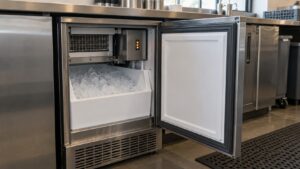

This guide covers U-Line Clear Ice Machine Making with practical, technician-backed advice.
A drop in daily output from a U-Line clear ice machine is one of the more common complaints owners run into, and it’s rarely an all-or-nothing failure. Because Clear Ice Technology works by slowly freezing water in stages to push out impurities and air bubbles, the process is inherently more sensitive to water flow, temperature, and cleanliness than a standard cube ice maker. When output slows down, the cause is usually something upstream of the ice-making cycle itself rather than a failed component.
Understanding the U-Line Clear Ice Machine Making
Below, our specialists break down everything you need to know about the U-Line Clear Ice Machine Making.
Likely causes of reduced clear ice output
Several conditions can cause a U-Line clear ice machine to produce noticeably less ice per day than it used to:
- Mineral scale buildup — hard water minerals can accumulate on the evaporator plate or in the water lines over time, insulating surfaces and slowing the freeze cycle that clear ice production depends on.
- Restricted or dirty water filter — a clogged filter reduces water flow into the machine, which can lengthen freeze cycles and shrink harvest size.
- Condenser airflow blockage — dust and lint on the condenser coils make the compressor work harder and less efficiently, slowing the whole ice-making cycle.
- Poor ambient conditions — placing the unit somewhere too warm, or blocking its ventilation clearance, forces longer run times and less ice per cycle.
- Water supply pressure or temperature issues — low incoming water pressure or unusually warm supply water slows the gradual freezing process clear ice relies on.
- Aging or worn components — as the machine ages, seals, valves, or the pump that circulates water can lose efficiency, gradually reducing output even without an outright failure.
What you can check yourself
Unplug the machine before inspecting or cleaning any part of it, then go through these steps:
- Check the water filter’s replacement schedule and swap it if it’s overdue or visibly discolored.
- Inspect the condenser coils or vents (front or bottom-vented depending on model) and vacuum away dust, lint, or pet hair buildup.
- Confirm the unit has adequate clearance for airflow and isn’t installed in an enclosed space without proper ventilation.
- Look inside the ice-making compartment for visible scale or cloudy mineral deposits on the plate or reservoir and run a cleaning cycle if the machine has one.
- Check that the water supply line isn’t kinked and that incoming pressure seems normal compared to other fixtures in the house.
- Note how long ice has taken to build up over a full day compared to when the unit was new, so you can describe the change accurately if you need a technician.
When to call a technician
If cleaning the condenser, replacing the filter, and running a descale cycle don’t restore normal output, the cause may be a failing water pump, a restricted water valve, or a refrigerant-side issue with the sealed system — all of which require diagnostic equipment and training to isolate safely. A technician can measure actual water flow and cycle times against expected performance and pinpoint whether the fix is a part replacement or a deeper sealed-system repair. Because clear ice production is inherently slower and more sensitive than standard ice, don’t assume the worst before ruling out scale, airflow, and filter issues first — but don’t keep running a machine with a suspected refrigerant problem, since that can worsen with continued use.
It’s also useful to compare output across different times of year, since ambient kitchen or bar area temperature can shift seasonally and affect how hard the compressor has to work. A modest seasonal dip in output during warmer months is often normal and not a sign of a developing problem, whereas a steady decline that persists across seasons is more likely to indicate scale buildup, filter restriction, or a component gradually losing efficiency.
Keeping a rough record of daily ice output over a couple of weeks — even a simple count of harvests per day — gives you and a technician, if one is needed, a clearer picture than relying on impression alone. This kind of tracking can also help confirm whether a cleaning cycle or filter change actually restored output or only partially addressed the issue, which is valuable information if the problem returns later.
Another factor worth ruling out is how consistently the unit is being used. A clear ice machine that sits idle for extended stretches and is then asked to produce a full day’s worth of ice quickly may appear to have reduced output simply because the harvest cycle hasn’t caught up yet, rather than because of an actual mechanical problem. Give the unit a day or two of normal, steady operation before drawing conclusions about a genuine output drop, particularly after any period of disuse, a house move, or an extended power outage.
U-Line clear ice machines are built and documented by the manufacturer in Milwaukee. For the latest product information, see the manufacturer at u-line.com.