U-Line wine storage terms are easier to follow once you know that a wine cooler or wine fridge is a small refrigerator tuned for bottles, so the vocabulary is about zones, temperature range, humidity, vibration and venting rather than about cold alone. This glossary explains each term the way it appears in U-Line manuals and on the wine models in our library, so you can read a spec sheet or a service note without guessing.
What is the difference between a U-Line wine cooler and a wine fridge?
The two names are used loosely, and on U-Line’s site and in our own library they describe closely related products. Both keep wine at a stable, cool temperature and both are designed to be quieter and gentler than a kitchen refrigerator. The difference people usually mean is in the arrangement: a unit labeled as a wine cooler may offer one zone and a simple control, while a unit called a wine fridge often adds a second zone and finer settings. Our wine cooler vs wine fridge guide covers the choice in depth. When a service technician asks which one you own, give the model number from the label and the technician will know.
What do single zone and dual zone mean?
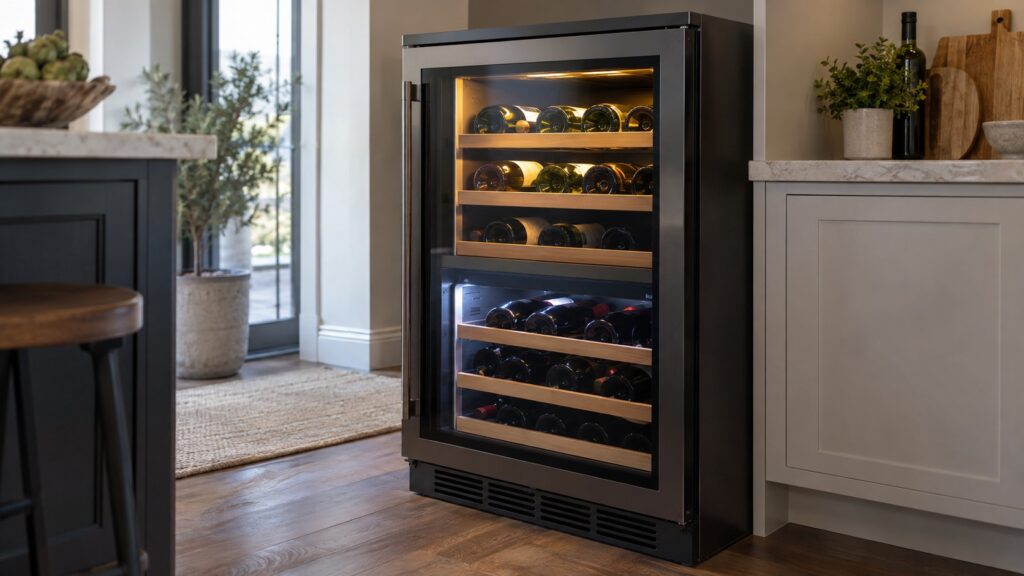
A zone is a compartment with its own temperature control. A single-zone cabinet holds every bottle at the same temperature, which suits a collection of one kind of wine or a cabinet meant for short-term serving. A dual-zone cabinet keeps one compartment cooler for whites and sparkling wine and the other warmer for reds, so bottles can be stored at the temperature they will be served. Dual-zone models also separate the airflow between the compartments, and our guide to how dual-zone cooling works in a U-Line Wine Captain describes the mechanism.
How do serving temperature and storage temperature differ?
Serving temperature is the temperature at which you pour a wine. A white or sparkling wine is poured cooler than a red, and a cabinet with a dual zone lets you keep each close to its serving point. Storage temperature is the steady temperature at which you keep bottles for a longer period. It is typically moderate and steady, because wine ages best without swings. The key idea is steadiness. A wine kept at a slightly higher or lower temperature that never changes is generally better off than one that swings up and down. Our tips for storing wine correctly in a U-Line wine fridge give practical advice.
What are humidity and vibration, and why do they appear in wine terms?
Humidity matters because dry air can shrink corks over a long period, while very damp air can harm labels. A wine refrigerator usually holds a moderate level of humidity with no extra equipment, and the door seal is the main factor in keeping it steady. Vibration matters because constant movement is thought to disturb the sediment in older bottles and to speed chemical changes. A well-built cabinet isolates the compressor, and bottles on racks should not touch each other or the walls. If the racks buzz, see our guide to reducing vibration in a U-Line wine cooler.
What do front venting and the condenser mean?
Many U-Line undercounter models breathe through a grille at the front, which is why they can sit flush between cabinets. The condenser is the coil that sheds the heat removed from the cabinet, and it needs a clear path for air. When the condenser clogs with dust, the unit runs hotter and longer, and the wine area can drift warmer. Cleaning the grille and the coil is the single most useful maintenance task, and our wine cooler maintenance guide shows how.
What other terms show up on wine models?
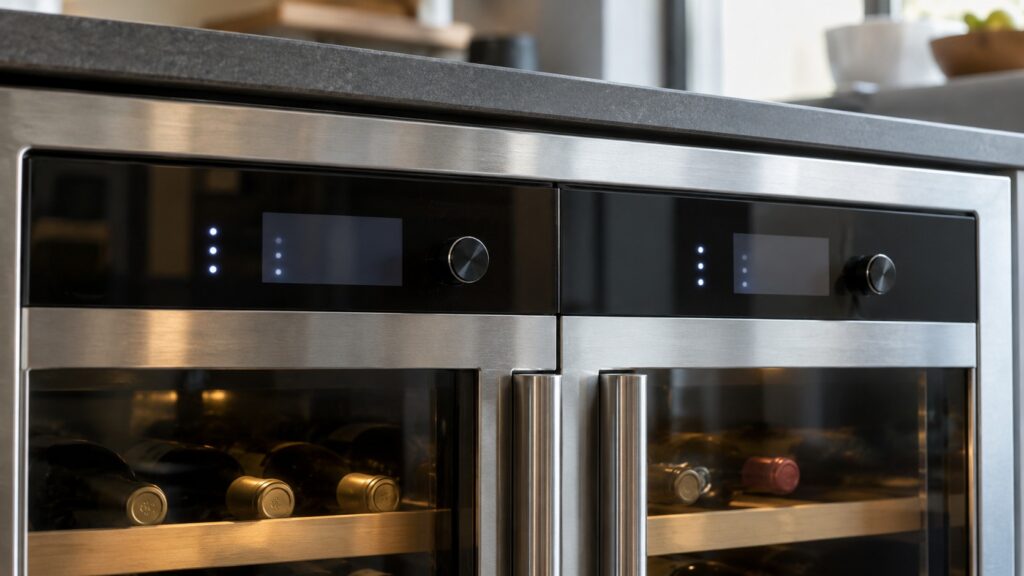
- Setpoint: the temperature you ask the cabinet to hold, shown on the display.
- Door alert: a signal that the door has been open too long.
- Cellaring: keeping bottles for a long time before drinking them.
- Built-in vs freestanding: whether the unit is designed to sit in a cabinet opening or to stand on its own with side clearance.
- Interior light: a low-heat light, often switchable, so it does not warm the bottles.
When a service technician describes a fault, these words let you follow the explanation. If you want to look up refrigeration and ice-making vocabulary beyond wine, see our refrigeration and ice-making glossary, and for repair questions see our wine fridge repair page.
How do these terms show up in a model number?
The wine models on our list, such as the U2218WCS00B, U3036WCWC00B, U2224WCINT00A and the UHWC124SG01A, all carry a short code in which letters hint at the product family and digits often hint at the size. The letters that mark a finish, such as INT for integrated or SG for stainless and glass, tell you how the front is built, but the pattern changes between production years, so treat it as a hint and verify on the data sheet. Our U-Line model number decoder explains the structure in more detail, and having the full number ready makes any service call faster.
It also helps to know which words mean a real difference and which are marketing. Zones, venting and the type of door are real differences that change how the unit fits and how it behaves. Words such as premium or designer rarely describe a measurable feature. If a term in a brochure is unclear, ask what it changes in practice: the temperature range, the number of bottles, the noise or the way the cabinet is installed. That question tends to cut through vague language quickly and leads you to the facts that matter when you buy, install or maintain the unit.