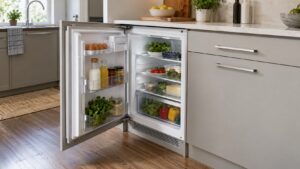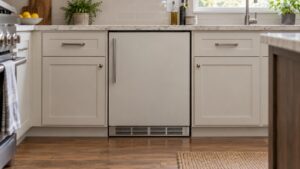
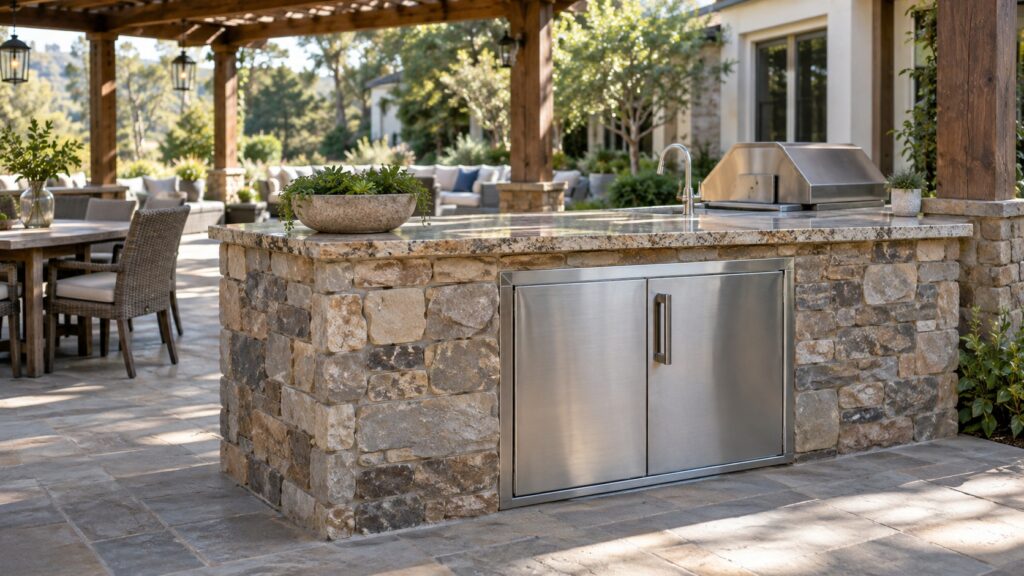
An outdoor kitchen is built once and lived with for twenty years, which means a u-line outdoor refrigerator installation done carelessly is expensive to correct. The cabinet opening is in stone or masonry, the electrical is in a wall, and the drainage was decided when the slab was poured. Almost everything that matters here is settled before the appliance arrives.
Build the opening from the specification
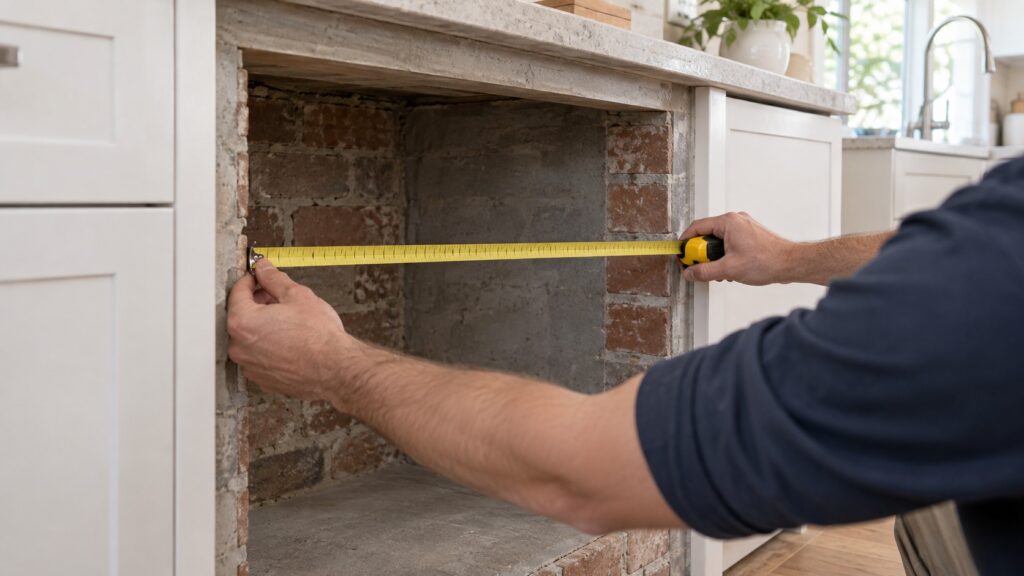
Outdoor cabinetry is usually masonry, tile or a steel frame, and none of it is adjustable afterward. Get the model’s cutout dimensions before construction and build to them, including the depth and the height at the front where the grille sits.
Two mistakes recur. The first is building to the appliance’s dimensions rather than the required opening, which leaves no tolerance and a unit that will not go in. The second is building a decorative lip or a tiled edge that overhangs the grille — the opening measures correctly and the air path is blocked.
Leave yourself a way to remove the unit, too. An appliance sealed into masonry with no removal path turns every future service visit into demolition.
Built-in or freestanding, decided before the mason arrives
This is the decision that ruins outdoor installations more than any other. A freestanding unit rejects its heat out of the back and the sides. Set into a masonry opening, it has nowhere to send that heat, so it recirculates its own exhaust, runs without stopping and never reaches temperature.
The appliance is not defective and no service visit fixes it. The only remedies are removing it from the enclosure or replacing it with a front-venting built-in model, and in an outdoor kitchen the second option means rebuilding the opening.
So confirm the rating on the specification sheet before the cabinetry is designed, not when the unit is delivered. A model rated for built-in installation will say so explicitly, and some are rated for either. Our outdoor collection buying guide covers which models suit which position.
Shade is worth more than any feature
Direct sun on a stainless cabinet in summer raises the surface temperature far above the air temperature, and the appliance has to reject its heat into that. A unit under a pergola, an overhang or a counter with a roof over it lives a completely different life from one in full afternoon sun.
If shade is not possible, the ambient rating matters more and so does orientation — the west-facing position is the punishing one. Rain protection matters similarly. Outdoor rated means the unit tolerates the conditions, not that a driving storm into the grille is good for it.
Electrical
An outdoor refrigerator wants a dedicated circuit, protected by a ground fault interrupter, with a weatherproof outlet in an accessible location. Accessible matters: a GFCI that trips behind a sealed panel means the appliance is dead until someone takes the kitchen apart.
Do not feed it through an extension cord, and do not share the circuit with a grill light, a pump or a socket people plug tools into. Compressor loads and shared outdoor circuits are a recipe for trips that happen while nobody is watching, and the first sign is a cabinet full of warm food.
Have this work done by an electrician. Outdoor circuits are regulated in most jurisdictions and the requirements exist for good reason.
Drainage, and what the slab decided
If the installation includes an ice maker, the drain arrangement is part of the construction rather than the appliance. A gravity drain needs continuous fall from the unit to the drain point, and that fall has to exist in the slab or the cabinet base. Where it does not, a drain pump lifts the water instead.
Decide which before building, because retrofitting a gravity run into finished masonry is not practical. Our drain setup guide covers the trade-offs between the two.
Think about freezing as well. Any water line or drain that runs outdoors needs either protection or a way to be drained down before winter, and the time to arrange that is during construction.
Setting it in place
- Check the opening against the unit before sliding it in, including the depth to the electrical outlet.
- Route the cord and any water line so nothing is pinched behind the appliance.
- Level it in both directions on its feet. Outdoor counters are built with a slight fall for water, so a unit that looks level against the counter often is not.
- Confirm the grille is clear of tile edges, trim and the cabinet face.
- Check the door swing against the traffic route, and reverse the hinge now if it is wrong.
- Run it empty until it reaches temperature before loading anything.
The first season
Watch the unit through its first hot spell and its first cold one, because that is when an installation problem shows itself. Continuous running in July with a clean condenser means either the ambient rating is being exceeded or the venting is restricted. A unit that behaves strangely as the weather turns cold is running below its rated ambient, and that is a winterizing conversation rather than a repair one.
Clean the condenser more often than you would indoors. An outdoor grille collects pollen, leaf debris and dust at a rate a kitchen never does. Our condenser cleaning guide covers the routine.
When to call
Call when a newly installed unit will not reach temperature, when it runs continuously in moderate weather, when the GFCI trips repeatedly, or when water appears where it should not. Our undercounter installation guide covers the indoor version of the same job.
We are an independent repair company and not a factory service arm. Pricing starts from a diagnostic visit and we confirm the estimate before any work begins. U-Line refrigerator repair covers controls, fans, sensors and sealed systems, and you can schedule a visit online.