U-Line undercounter terms are the installation words that decide whether a cabinet fits, breathes and looks right: toe grille, front ventilation, panel-ready, ADA height, door swing, rough opening and clearance. This glossary of U-Line undercounter terms defines each one in plain language, shows how it affects installation and service, and points you to the guide that goes deeper, so a spec sheet or a contractor’s list stops being a puzzle.
What does undercounter mean for a U-Line cabinet?
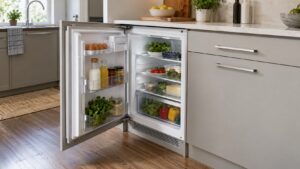
An undercounter cabinet is built to slide into the space below a countertop, between base cabinets, with its top at or just below counter height. U-Line makes refrigerators, freezers, wine cabinets, ice machines and beverage centers in this format, in widths such as 15, 18 and 24 inches. The format drives most of the other terms on this page, because a cabinet that lives inside cabinetry has to shed its heat, open its door and be serviced in a tight space. Our undercounter refrigerator size guide compares the common widths.
What is a toe grille, and why must it stay clear?
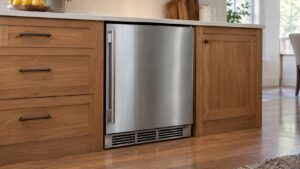
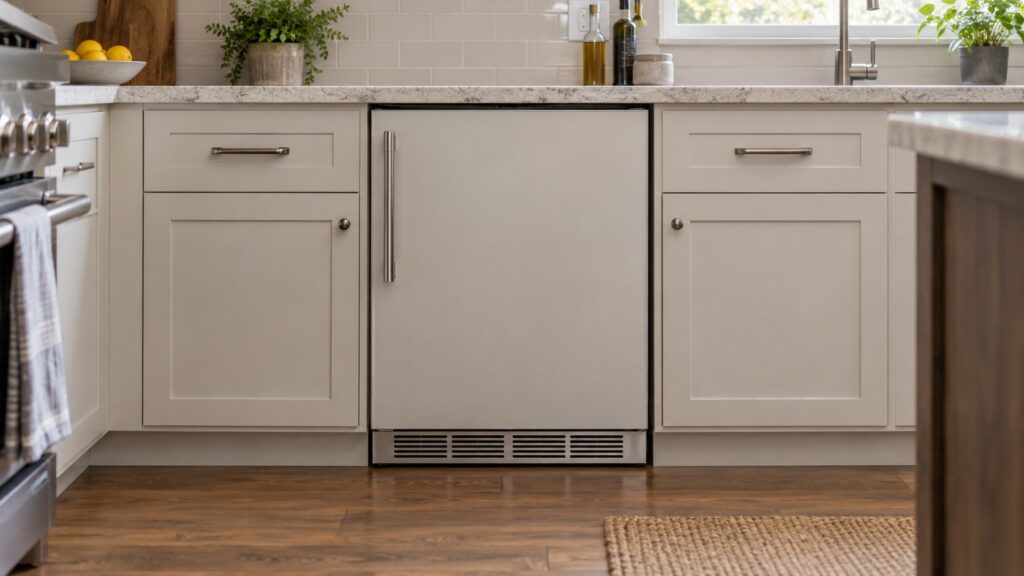
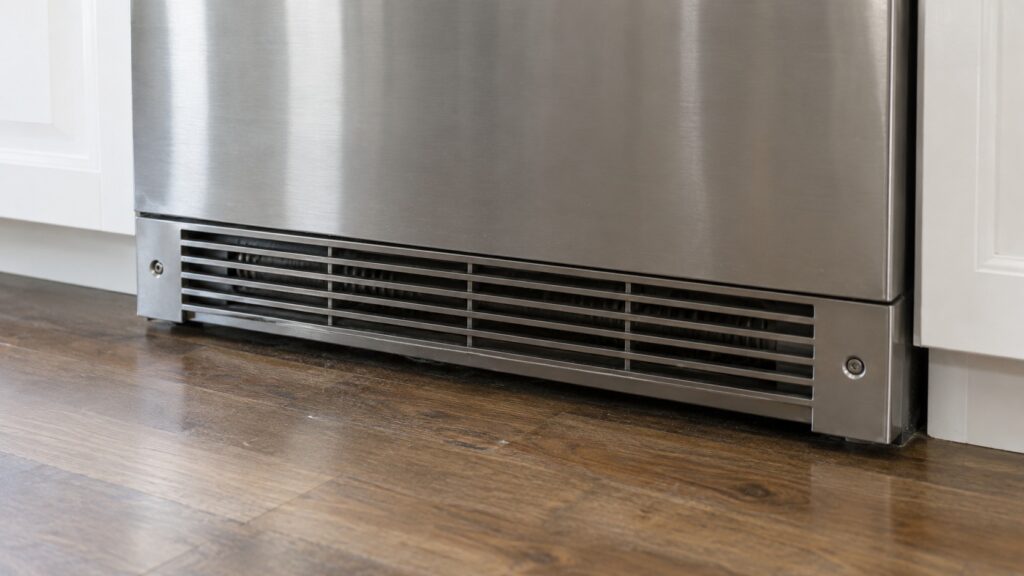
The toe grille is the vented strip across the bottom front of the cabinet. On a built-in unit, the compressor and condenser pull in room air through it and push warm air back out, so the grille is the cabinet’s way of breathing. That is different from a freestanding refrigerator, which vents from the back or sides. Because the air path runs through the front, a built-in cabinet needs a clear toe space and cannot be boxed in with a solid kick plate.
Blocking the grille makes the compressor run longer and hotter, which wears it out early. Dust and pet hair gather there too, and a dirty condenser behind the grille is one of the most common causes of a cabinet that runs constantly. Our guide to a U-Line refrigerator condenser that needs cleaning explains the symptoms.
What do panel-ready, INT and IS mean?
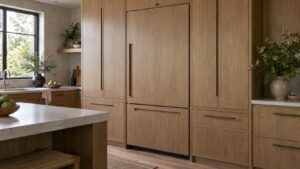
Panel-ready describes a cabinet whose front is made to accept a custom panel that matches your cabinetry, so the appliance disappears into the kitchen. On U-Line model numbers the integrated fronts are marked with letters such as IS or INT, which our model number decoder explains alongside the rest of the string. A panel-ready cabinet has no finished door of its own: it needs a panel, a handle and a gap set to the installation sheet. If you are comparing a stainless front with a panel-ready one, check the panel weight limit and the hinge clearance first.
What does ADA height mean?
ADA height is a lower overall cabinet height, so the counter above it can sit at an accessible level. On U-Line numbers the placement letter A marks an ADA model, as in UANB115-SS01A. The lower height changes the clearances and sometimes the interior volume, so do not swap a standard cabinet for an ADA one, or the reverse, without checking the opening against the installation sheet.
What are door swing and a reversible door?
The door swing is the side the door hinges on and the arc it sweeps when it opens. A cabinet beside a wall or a dishwasher needs a swing that opens toward open space. Many built-in U-Line cabinets have a reversible hinge, so the door can be changed from left to right during installation. Plan the swing before you set the cabinet, because changing it in place is harder than doing it on the floor. Our guide to door reversal and leveling shows the steps on a freezer.
What is a rough opening, and what counts as clearance?
The rough opening is the cutout in the cabinetry that the appliance must fit: its width, height and depth, and the position of the outlet and any water line. Clearance is the gap the installation sheet requires around the cabinet for airflow and for sliding it in and out. A cabinet that fits the opening on paper can still fail if the clearances are ignored, so measure the opening, read the sheet for your exact model, and leave the space it asks for. Our guide to installing a built-in undercounter refrigerator walks through the order of the work.
How does freestanding differ from built-in?
A freestanding cabinet is designed to stand alone, with ventilation to the sides and back. A built-in cabinet is designed to sit inside cabinetry and breathes through the front. Some U-Line wine cabinets can be installed either way, and some cannot, so the label matters. If you are not sure which type you own or plan to buy, read our built-in versus freestanding guide before you box the cabinet in.
Three of these terms come up again and again in service calls: the toe grille, the clearance and the door swing. A blocked grille causes overheating, ignored clearances cause constant running, and a door that cannot open fully gets knocked, bent and eventually stops sealing. When you describe a problem to a technician, mention how the cabinet is installed, whether it is built in or freestanding and whether anything covers the grille. Those few facts often point to the cause before anyone opens a panel.