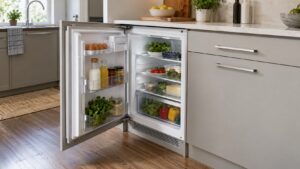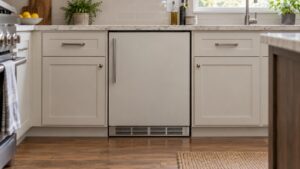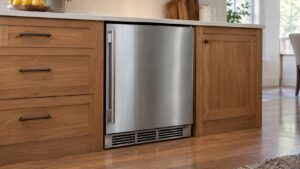
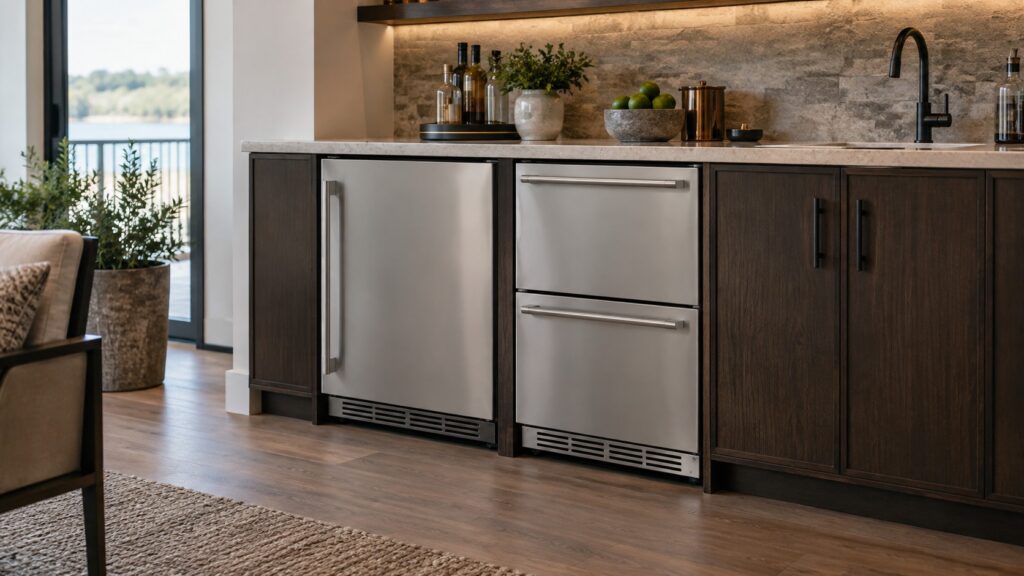
A U-Line two door refrigerator-freezer combo and a single-door undercounter refrigerator solve different problems, and the difference is not just capacity. A two-door combo unit gives you a dedicated freezer compartment behind its own door, alongside a separate refrigerated section — each with its own door switch and, on U-Line’s error-code system, its own numbered door (door 1 and door 2). A single-door undercounter refrigerator is refrigeration only, with no built-in freezer section at all. Choosing between them comes down to whether you actually need frozen storage at the same location, and how much you are willing to give up in refrigerated capacity to get it. Neither option is a straight upgrade over the other — they are built for different jobs, and the wrong choice usually shows up later as either wasted freezer space you never use or a lack of frozen storage you keep wishing you had.
What does a two-door combo actually give you that a single-door unit doesn’t?
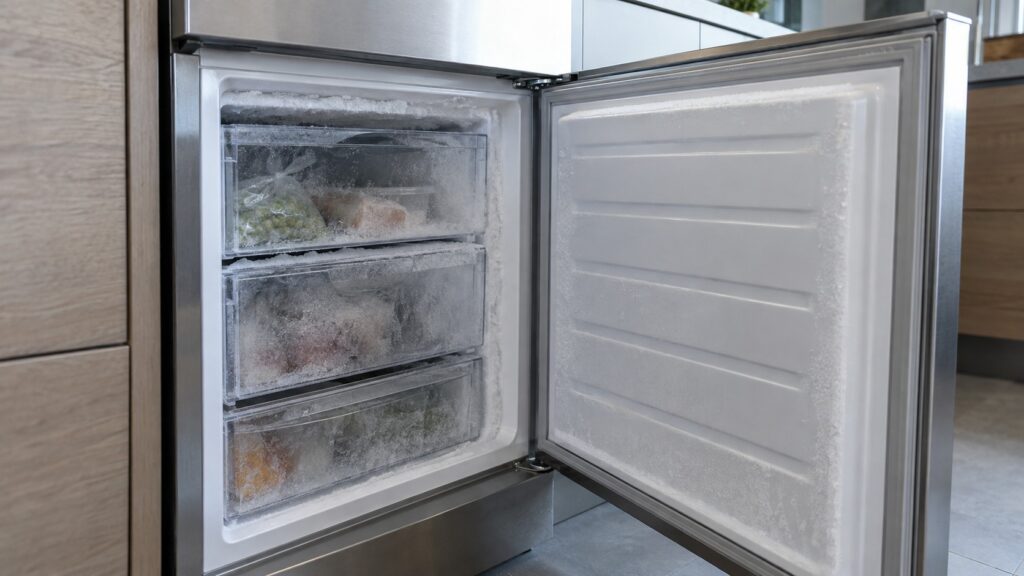
The core advantage of a U-Line two door refrigerator-freezer combo is having genuine frozen storage without installing a second, separate freezer unit elsewhere. That matters most in secondary kitchen zones — a wet bar, a home theater room, a pool house — where running a second appliance line for a standalone freezer is not practical, but you still want ice cream or frozen appetizers on hand without a trip back to the main kitchen. The tradeoff is that the freezer section inside a combo unit is meaningfully smaller than either a comparable standalone undercounter freezer or the refrigerated space you would get from a single-door refrigerator of the same overall size, because the cabinet has to fit both sections behind one footprint.
When does a single-door undercounter refrigerator make more sense?
If the location already has freezer access nearby — a kitchen with a full-size freezer, or a garage with a chest freezer — a single-door undercounter refrigerator usually serves the space better, because every inch of the cabinet goes to refrigerated capacity instead of splitting it with a freezer section you may rarely open. This is also the simpler choice for beverage storage, overflow refrigeration during entertaining, or a bar area where frozen storage was never really the point. A single-door unit is also generally easier to keep at one consistent temperature, since there is no internal divider between two different target temperature zones to manage.
How do the two doors get reported differently when something goes wrong?
U-Line’s own error-code system treats the two doors on a combo unit as separate items: door 1 reports as E0 and door 2 reports as E9, each tied to its own magnetic switch and frame alignment rather than to a single shared sensor. That distinction is genuinely useful during troubleshooting — if only one door is triggering an alert, you know immediately which compartment’s switch or gasket to check, rather than searching the whole cabinet. A single-door refrigerator has only one door to monitor, so this kind of code-by-door detail simply does not apply to it.
Does a combo unit cost more to run than two separate appliances?
Usually not, and often the opposite. A single combo compressor and cabinet is generally more efficient than running two fully separate small appliances, because there is only one compressor cycling and one cabinet’s worth of insulation losing heat to the room. The freezer section in a combo unit will not match a dedicated standalone freezer’s capacity or, in some cases, its coldest achievable temperature, so if you are storing something that genuinely needs deep-freeze performance — long-term meat storage, for example — a dedicated standalone freezer is still the better tool even though a combo unit is more convenient for everyday use.
Does the combo layout affect how easy the unit is to service?
Servicing is slightly more involved on a combo unit simply because there are two separate compartments, each with its own door switch, gasket, and internal sensor, sharing one compressor and one set of refrigerant lines. That is not a reliability problem on its own — U-Line’s combo units are built to run both sections off a single sealed system for years — but it does mean a technician diagnosing a temperature complaint on a combo unit has to confirm which section is actually affected before assuming the whole sealed system is at fault. A single-door refrigerator has one compartment, one door, and one sensor to check, which tends to make a service visit faster simply because there are fewer possible locations for the same symptom to originate from.
This is also worth factoring into the decision if the unit will be installed somewhere hard to access, like a built-in location under a bar counter with limited clearance to pull the unit forward. A simpler single-door cabinet is easier to service in place, while a combo unit’s extra internal complexity is a reasonable tradeoff only if you are genuinely using both compartments regularly. If you already know the install location is tight to work around, it is worth mentioning that specifically when comparing the two options, since the harder access compounds the combo unit’s already longer diagnostic process during any future service visit.
What should guide the final decision?
- Do you need frozen storage at this specific location, or is a nearby freezer already good enough?
- How much refrigerated capacity can you give up to get a built-in freezer section in the same footprint?
- Will the space run entertaining or overflow duty, where a single-door refrigerator’s larger single-zone capacity wins?
- Is the freezer section for everyday convenience rather than long-term deep storage, where a combo unit’s smaller compartment is genuinely fine?
Whichever you choose, our outdoor refrigerator installation guide and our undercounter refrigerator size guide cover the clearances either style needs before you commit to a cabinetry opening. If you already own a combo unit and want to know which door is triggering an alert, our door error codes guide breaks down E0 and E9 by door. You can schedule a visit if you need help sizing a unit for your space before buying.