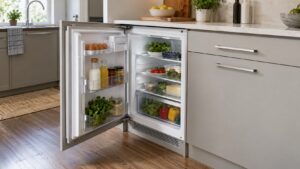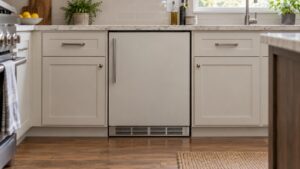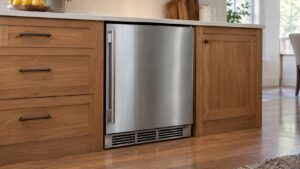
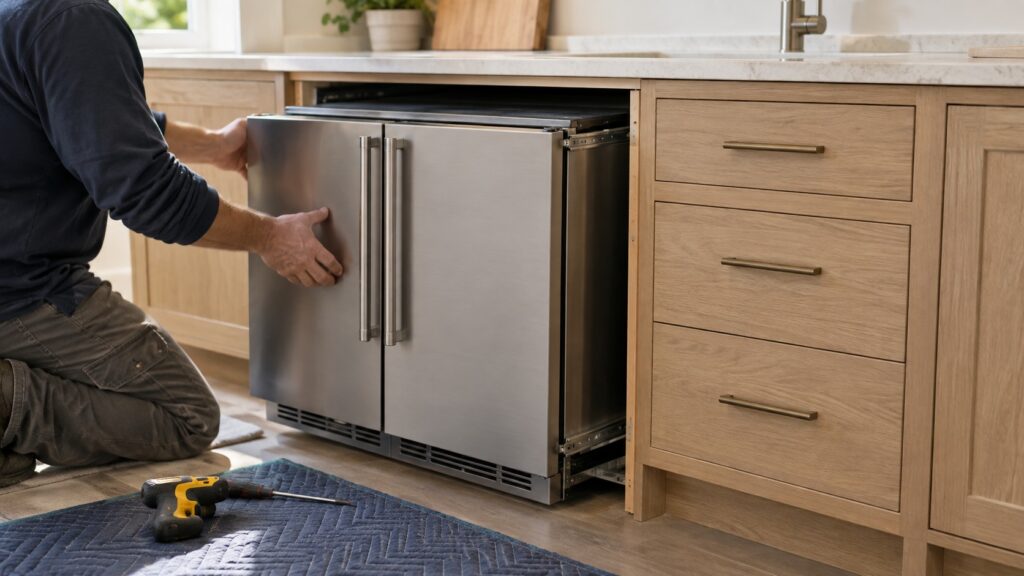
A U-Line two-door refrigerator-freezer combo setup follows the same general built-in process as a single-door undercounter refrigerator, but the two separate compartments add a few clearance and leveling details worth getting right the first time. Because the freezer section shares one compressor and one refrigerant path with the refrigerator section, a leveling or clearance mistake tends to show up as one compartment underperforming rather than an obvious total failure, which makes it easy to miss during the initial install and only notice weeks later, once frost or a temperature complaint finally draws attention to it.
What makes a two-door combo’s clearances different from a single-door unit?
A single-door undercounter refrigerator has one compartment, one door, and one seal to get right during installation. A combo unit doubles that concern without doubling the space you have to work with, since both compartments still have to fit inside a standard undercounter footprint. This means the internal margin for error is smaller — a slightly uneven install that a single-door refrigerator would tolerate without issue can be enough to throw off the freezer section’s seal or airflow on a combo unit, because that section is already working with less internal volume to buffer small problems.
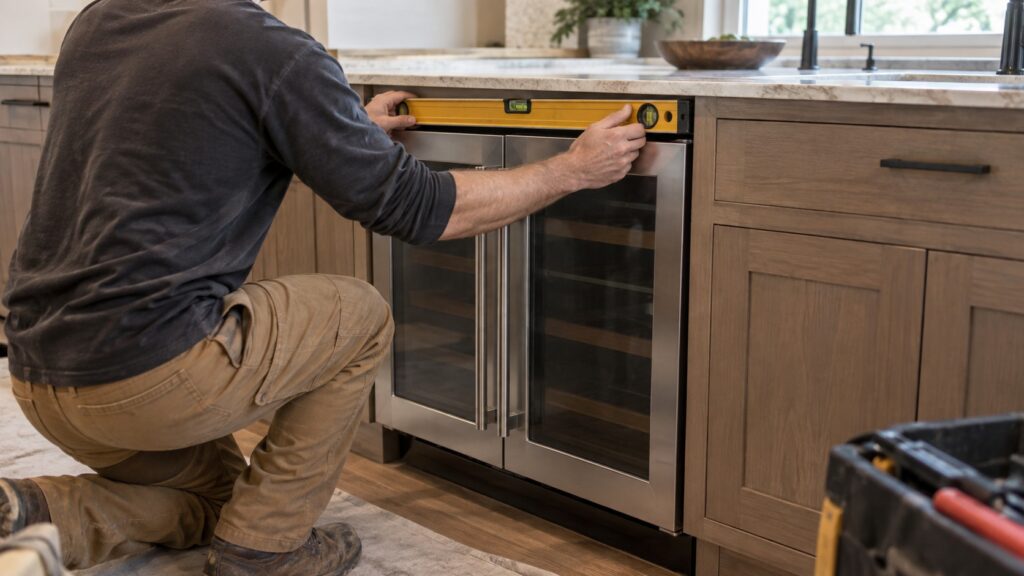
Why does leveling matter more for the freezer section specifically?
The freezer section of a combo unit runs at a much lower target temperature than the refrigerator section, and that colder environment is less forgiving of small gaps or misalignment at the door seal — a gap that would cause mild inefficiency on the refrigerator side can cause visible frost buildup and struggling temperature on the freezer side. An unlevel installation puts uneven pressure on both door seals, but the freezer seal is the one most likely to show a problem first, usually as frost accumulating unevenly around one edge of the door rather than a uniform thin layer.
Check level side-to-side and front-to-back with an actual level tool once the unit is in its final position, not just by eye, and recheck after the unit has been pushed fully into place — cabinets can shift slightly during the final push-in even when the floor underneath was level to begin with.
How should you plan for the two separate door swings?
Combo units vary in door configuration — some stack a smaller freezer door below a larger refrigerator door, others place them side by side — and each configuration needs its own swing clearance confirmed before the cabinetry opening is finalized. A door that cannot open past a certain angle because of an adjacent cabinet or island will make it harder to reach items stored in the back of that compartment, which is a usability problem more than a mechanical one, but it is much easier to fix during planning than after the unit is installed and the surrounding cabinetry is finished.
What about the electrical requirements?
A combo unit draws power for both compartments through one connection, so the circuit needs to be sized for the model’s full combined electrical draw, not just what a single-door unit of similar overall size would need. Running the unit on a dedicated, grounded circuit — not shared with other kitchen appliances — reduces the chance of nuisance breaker trips when the compressor starts under load, which can happen more noticeably on a combo unit’s compressor than on a smaller single-compartment unit. If the installation location is on an older circuit shared with other kitchen loads, it is worth having an electrician confirm the existing wiring can actually carry the combo unit’s full draw before installation day, rather than discovering a nuisance trip the first time both compartments’ compressors demand power at once.
Does the install order matter if you are fitting a combo unit alongside other appliances?
If a combo unit is going in as part of a larger built-in run — next to an ice machine or a wine cooler, for example — it helps to plan the whole run’s clearances together rather than fitting each appliance to its own opening independently. Shared venting paths, a shared electrical panel run, and a shared countertop overhang above the units all need to accommodate whichever appliance in the run has the strictest clearance requirement, and a combo unit’s dual compartments often make it the one with the least margin for error. Fitting it last, once the rest of the run’s openings are confirmed against their own units, tends to catch mismatches before they become a problem for the combo unit specifically.
It is also worth confirming the delivery path into the kitchen before the install day itself. A combo unit is typically no larger overall than a comparable single-door refrigerator, but its slightly greater height on some models can catch installers off guard if a doorway or hallway turn was measured against a different unit’s dimensions.
What should you check before loading either compartment?
- Confirm the cabinetry opening matches the model’s exact height and width before delivery, not after.
- Level the unit in both directions once it is in its final position, and recheck after the final push-in.
- Test both door swings against surrounding cabinetry before it is finished and hard to adjust.
- Let both compartments run empty for several hours to reach their target temperatures before loading food or drinks into either one.
Once installed, our undercounter refrigerator size guide is useful background if you are still finalizing the cabinetry opening, and our door error codes guide explains what E0 and E9 mean if either door later triggers an alert. For guidance choosing between a combo unit and a single-door refrigerator before you buy, see our single-door versus two-door combo guide. You can schedule a visit if you would like an installation checked after the fact, especially if one compartment seems to be underperforming compared to the other.