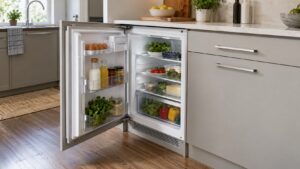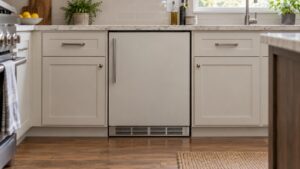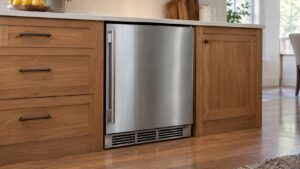
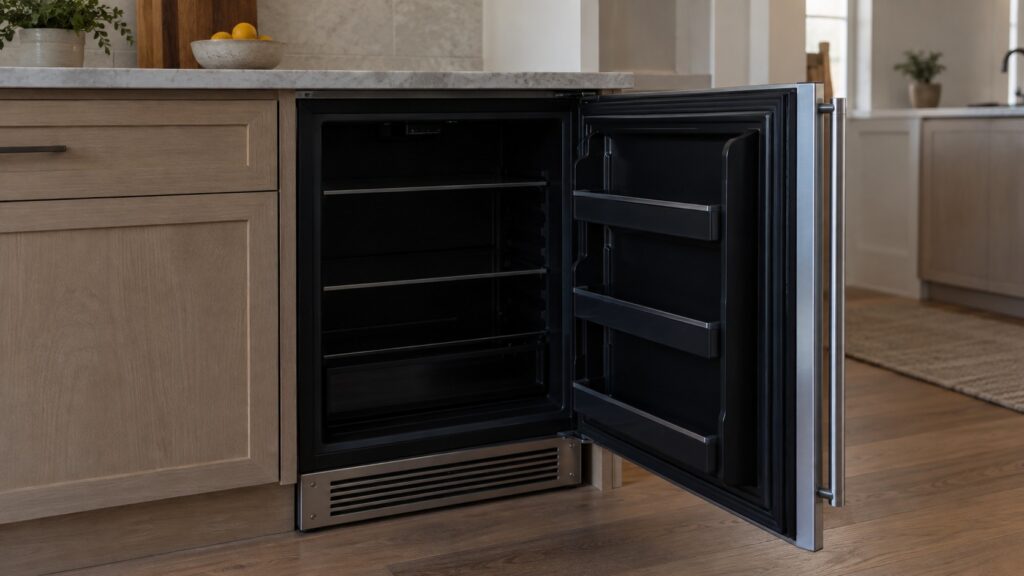
When you have a U-Line refrigerator not turning on at all — no display, no compressor hum, no interior light — the cause is almost always electrical rather than refrigeration-related, and it is different from every other U-Line troubleshooting scenario because there is no error code to read. A unit that is throwing an E-code or a door alert is at least telling you something specific through its control board; a completely dead unit means the control board itself may not even have power, which points the troubleshooting process in a different direction from the start. Working through the checks in the right order — power source first, appliance itself last — saves time and avoids the common mistake of assuming a major internal failure before the simple explanations have been ruled out.
Why does a totally dead unit point away from refrigeration and toward electrical?
A refrigerator’s control board, display, and interior lighting all run on standard household power delivered through the appliance’s cord and internal wiring, completely separate from the sealed refrigeration system that includes the compressor and refrigerant lines. If the unit shows absolutely no sign of power anywhere — no display, no light when you open the door, no sound at all — the refrigeration system was never even given the chance to fail, because it never received power in the first place. This is why a dead unit is treated as a different category of problem from a unit that is running but not cooling, or a unit displaying a specific fault code.
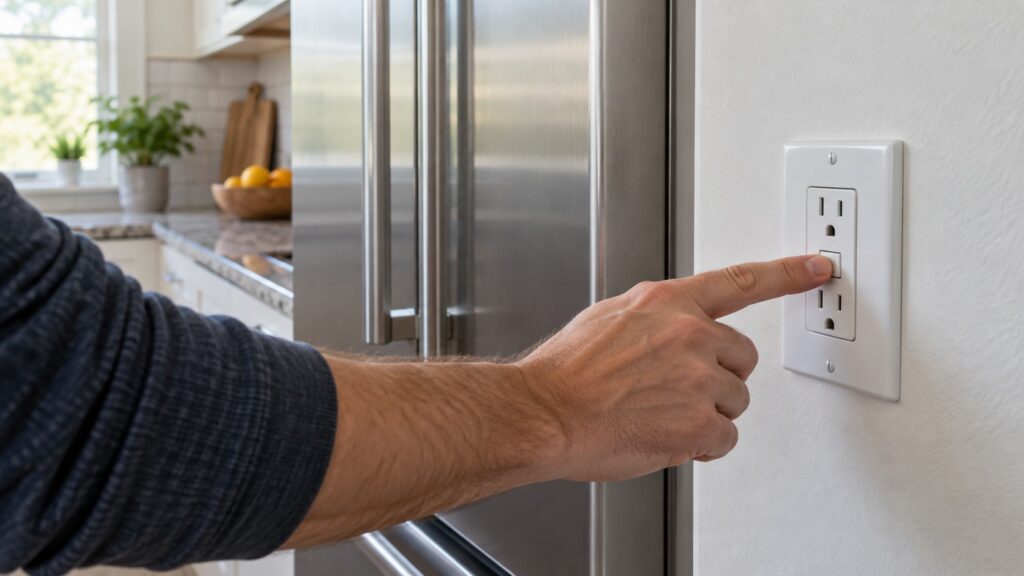
What should you check first, before assuming the worst?
Start at the outlet, not the appliance. Plug a different device — a phone charger, a lamp — into the same outlet to confirm it is actually delivering power. Kitchens, wet bars, and outdoor installations are commonly wired with GFCI protection, and a GFCI outlet or breaker that has tripped will cut power completely without any obvious sign at the appliance itself. Resetting the GFCI, usually a small button on the outlet itself or a breaker in the panel, resolves a surprising number of “dead unit” calls without any appliance repair being needed at all.
If the outlet is confirmed to have power, check the cord itself next — a visibly damaged cord, a loose connection where it enters the back of the unit, or a cord that has been pinched during a recent move or cabinetry adjustment can all interrupt power before it ever reaches the control board.
What if the outlet and cord both check out fine?
If power is confirmed at the outlet and the cord looks undamaged, the fault has likely moved inside the unit itself — an internal fuse, a failed power supply component, or a control board fault are the most common causes at this point, and none of them are something to diagnose further without opening the unit, which is not a homeowner-level repair on a sealed refrigeration appliance. This is also the point where continuing to plug and unplug the unit repeatedly stops being useful; if the first attempt did not restore power, further attempts rarely do, and they do not provide any new diagnostic information. It is worth noting whether the unit made any sound at all the last time it did work — a brief click or hum right before it went silent can be a useful clue for a technician about whether the fault is in the power supply or further along in the control circuit.
Could a recent power surge or storm be the cause?
Yes, and it is worth asking specifically about this if the unit went dark around the same time as a storm, a brief neighborhood outage, or any other event that could have caused a power surge. Some appliances have an internal fuse specifically to protect the control board from exactly this kind of event, sacrificing itself rather than letting a surge reach more expensive components. If the timing lines up, mention it when you describe the problem — it points a technician toward the fuse and the power supply circuit first, rather than a broader search through the unit’s electronics.
Is a completely dead unit more urgent than a code-based fault?
It depends on what is inside. If the unit has been without power long enough for its contents to warm significantly, treat it with the same urgency as a cooling failure — move perishable food or sensitive wine to alternate storage if the fix will take more than a few hours. The electrical fault itself is not inherently more dangerous than any other appliance fault, but the loss of temperature control while you troubleshoot is the same real risk as any other complete stoppage, and it deserves the same quick response.
If the unit is a wine cooler or wine refrigerator rather than a food refrigerator, the same electrical checks apply first, but the urgency calculation is a little different — a serving wine unit losing power for a few hours rarely causes real harm to the bottles inside, while an aging or long-term wine collection deserves the same prompt attention as perishable food, since a sustained temperature swing has more time to affect wine that will sit for years than wine that will be opened soon anyway.
What should you do next?
- Test the outlet with another device before assuming the appliance itself has failed.
- Check for a tripped GFCI or breaker, especially in a kitchen, bar, or outdoor location.
- Inspect the cord for visible damage or a loose connection at the back of the unit.
- Stop trying to power-cycle repeatedly once you’ve confirmed the outlet is fine — that points at an internal fault a technician needs to open the unit to diagnose.
If the outlet, breaker, and cord all check out and the unit is still completely unresponsive, our refrigerator not cold enough guide and our door error codes guide cover the more common scenarios where the unit is at least partially powered. For a unit with genuinely no power anywhere, schedule refrigerator repair or book a visit directly so a technician can check the internal fuse and control board.