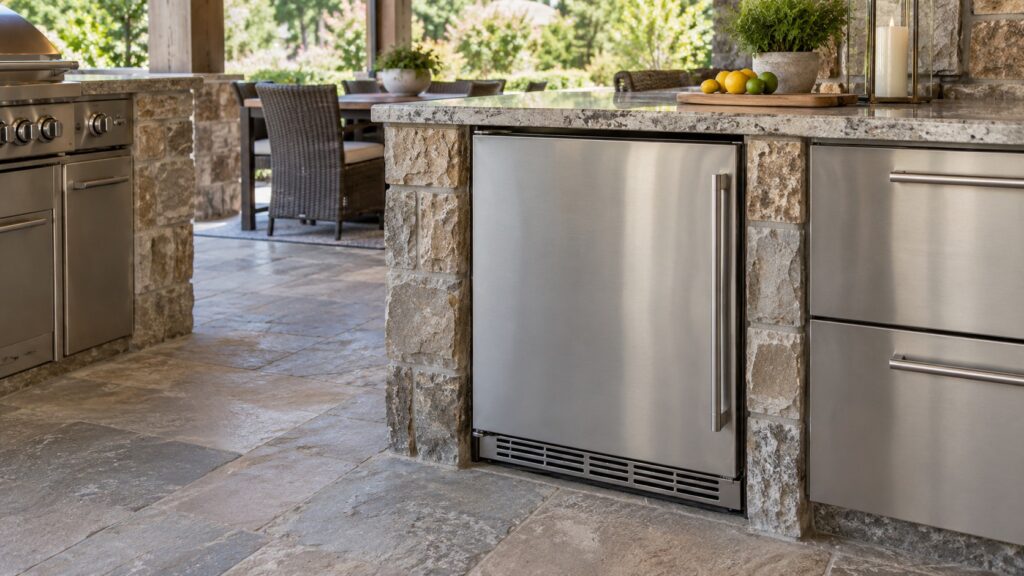
The U-Line outdoor refrigerator repair or replace decision turns on what weather did to it: surface rust, a worn gasket, a clogged condenser or a failed fan are normally worth repairing, while a rusted-through cabinet, a corroded sealed system or repeated water damage to the electronics usually points toward replacement. An outdoor unit ages faster than an indoor one, so the age of the refrigerator and the condition of its cabinet matter even more than the first symptom you notice.
Why do outdoor refrigerators wear out differently?
An outdoor U-Line is built for the weather, with a sealed cabinet and materials chosen to resist moisture, but it still sits in conditions that an indoor unit never meets. Sun heats the cabinet and the condenser, rain and sprinklers reach the hinges and the base, salt air attacks metal near the coast, and winter freezes stress seals and water-bearing parts. Over the years, those conditions accumulate. A gasket hardens in the sun, a fan bearing seizes, dust and pollen clog the condenser, and rust starts in the places where water collects. These are all signs of age, and they appear in a pattern that differs from an indoor unit of the same year.
Because the wear is cumulative, a single failure is often the first sign of several. When a technician visits an older outdoor unit, the diagnosis is more than finding the failed part; it is also judging how soon the next one will follow. Our outdoor collection buying guide explains what a new unit offers by comparison.
Which problems are worth repairing?
A worn door gasket is a small repair that restores the seal and the efficiency of the unit. A failed condenser fan, a bad thermistor or a defective control board can usually be replaced without trouble, and each has a clear symptom: a unit that runs warm, a unit that reports a sensor fault, or a unit that refuses to start. Cleaning the condenser can fix a unit that is simply overheating. These repairs are well within reason for a unit that is otherwise sound and not very old, and they are normally much cheaper than a new outdoor-rated refrigerator.
Which problems point toward replacement?
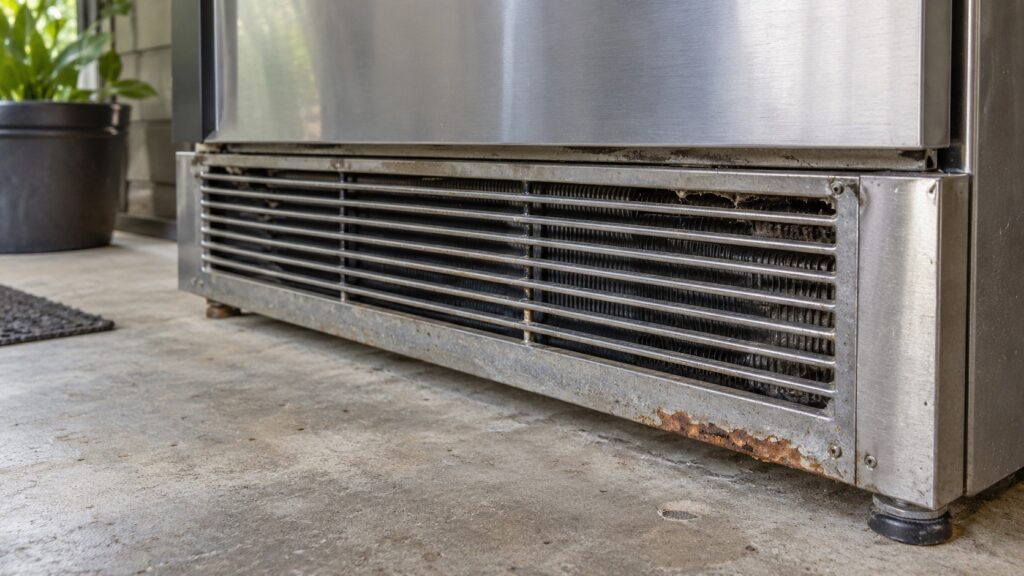
A cabinet that has rusted through at the base or around the hinges is a structural problem, and no amount of new electronics will make it right. A condenser or evaporator that has corroded may leak refrigerant, and a leak in the sealed system is a major repair. Repeated water damage to the control board suggests that moisture is reaching places it should not, and each new board will be exposed to the same risk. If a compressor fails on an old outdoor unit, our compressor failure repair or replace guide sets out how to think about the sealed system.
Age is the quiet factor. An outdoor refrigerator more than about a decade old that needs a major repair is normally a better candidate for replacement than the same repair on an indoor unit, because other parts are likely close behind. A newer unit with the same repair is a better candidate for fixing. This is a rule of thumb, not a verdict, and the condition of the cabinet decides in the borderline cases.
How should you inspect the unit yourself?
- Check the base and the lower edges for rust, flaking paint or soft metal.
- Look at the hinges and the door edges for corrosion and for a door that no longer closes square.
- Inspect the gasket for cracks, hardness or gaps.
- Look at the condenser area for dirt, nests, leaves and rust.
- Listen for a fan that rattles, grinds or does not spin.
- Note how the unit has behaved over the last season: warm spells, frost, or sweating.
Take photos before the visit. A technician can then compare what you saw with what they find, and photos of rust help to decide whether the cabinet is sound. You can also use the notes to compare the repair against a replacement. Our guide to built-in refrigerator repair vs replace gives a broader checklist.
What does winter do to the decision?
If you live where winters freeze, a unit left running or full in cold weather can suffer damage that appears only in spring. Water in a drain line freezes and splits the fitting, a cold compressor struggles to start, and a door gasket stiffens and loses its seal. Preparing the unit for winter protects the repair investment, and our winterizing tips for outdoor U-Line units list the steps. If you are weighing a repair, ask whether the failure is linked to a winter problem that can be prevented in future, because a repaired unit that is protected will last far longer than one that repeats the damage.
How should you make the decision?
Start with a diagnosis, so you know the real fault. Compare the repair to the age and the cabinet condition. If the cabinet is sound and the fault is a part, repair. If the cabinet is rusting and the fault is major, replace. If a replacement means rebuilding an outdoor cabinet opening, the installation itself can be the bigger project, and our outdoor refrigerator installation guide shows what is involved. For the repair path, read about our refrigerator repair service.