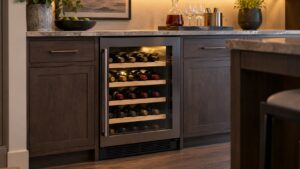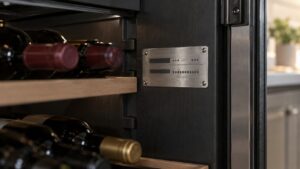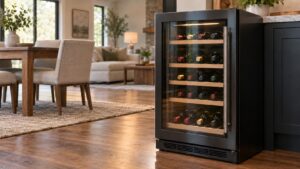
A U-Line wine cooler too cold usually means the setpoint is lower than you think, a bottle is touching the cold rear wall, or a sensor is reading wrong and telling the compressor to keep running. Check the display and the setpoint first, move the bottles forward, give the cabinet a day to settle after any change, and only then suspect a thermistor or control board fault that needs a technician.
Why would a wine cooler run too cold?
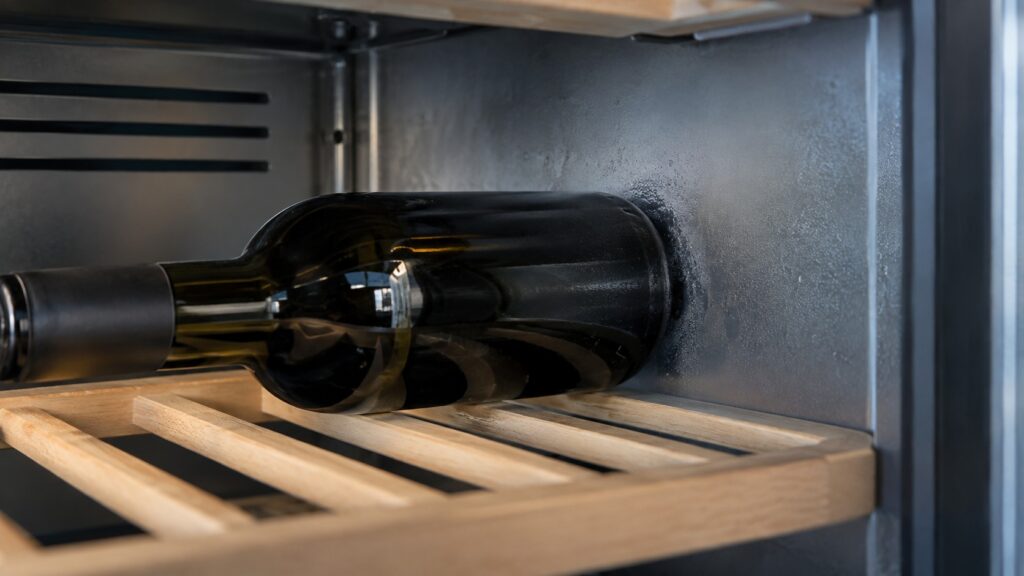
A wine cooler is designed to hold a steady temperature, usually within a narrow band. When it runs colder than the setpoint, either the setpoint is lower than you think, or something is making the cabinet or the bottles colder than the display suggests. The display shows the target and, on many models, the current air temperature. It does not show the surface of a bottle that sits against the rear wall, which can be several degrees colder than the air in the middle of the cabinet. So the first job is to separate a true cabinet problem from a local one.
It is also worth comparing the two sides of the problem. Our wine fridge running warm guide covers the opposite fault. A cabinet that is too cold and one that is too warm can share causes, such as a sensor error, but the checks differ.
Is the setpoint right?
Read the display and compare it with what you intended. A child, a cleaning cloth or a previous setting can change it. For long-term storage, a moderate steady temperature is better than a cold one. For serving, a lower setting can be useful in the cold zone of a dual-zone model, but even there, a cabinet pushed to the bottom of its range may freeze the surface of a bottle or make the labels sweat. Raise the setpoint by a small step and leave it alone for a day. Changing it several times in an afternoon confuses the result, because the cabinet takes hours to settle.
Are bottles touching the back wall?
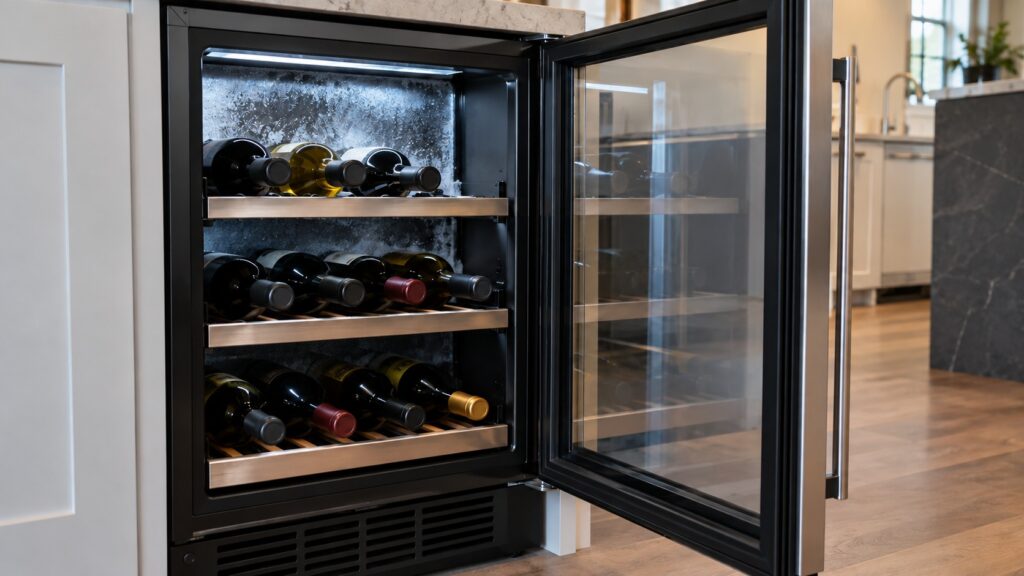
In many wine units the cooling element sits in or behind the rear wall, and bottles that touch it pick up cold directly. Slide the bottles forward so they sit on the racks without touching the back, and avoid stacking bottles against the evaporator area. On a dual-zone model, check the cold zone in particular, since that is where the temperature is lowest. Our guide to how dual-zone cooling works in a U-Line Wine Captain explains why one zone is colder than the other.
Is the room colder than the cabinet?
A wine cooler is made to keep bottles cooler than the room around it. If the room is colder than the setpoint, such as a garage in winter or an unheated basement, the cabinet cannot behave as designed. Some units rely on the room being warmer than the cabinet, and in a very cold space, the compressor may cycle strangely or the temperature may drift. Check where the unit sits and how cold the room becomes. If you must keep wine in an unheated space, read the manual for the allowed ambient range, or move the cabinet. Our outdoor and winter advice in the winterizing tips is also helpful for any unit exposed to cold.
Could a sensor or the control board be at fault?
If the setpoint is right, the bottles are clear of the wall and the room is not cold, a fault in the sensor circuit may be telling the compressor to keep running. A thermistor that reads too warm makes the board over-cool the cabinet, and a board that misreads its inputs can do the same. Signs include a compressor that rarely switches off, frost on the back wall, a display that shows a temperature far from the setpoint and, on some models, an E-series code. Do not try to repair the sensor yourself. A technician can measure the sensor and the board and decide which part to replace. Our wine cooler repair page explains how a visit works.
What can too much cold do to wine?
A short dip below the intended temperature is rarely a problem, but a cabinet that is persistently too cold can harm wine. Very cold storage slows the maturation of some wines, can cause tartrate crystals to form and, in extreme cases, can freeze a bottle, which can push out the cork or crack the glass. A bottle that has frozen should be handled gently, and the wine should be tasted before it is served. For ordinary storage, steady moderate temperatures give the best results, as described in our tips for storing wine correctly in a U-Line wine fridge.
How can you keep the cabinet from over-cooling?
- Set the target to the temperature you want and write it down.
- Keep bottles away from the back wall.
- Do not overload the cabinet, because crowded shelves block airflow and create cold spots.
- Keep the unit out of rooms that fall below its allowed range.
- Clean the condenser and gasket on schedule, as in our wine cooler maintenance guide.
If a bottle has partly frozen. Take it out slowly and let it thaw in a cool place, not in warm water or on a hot surface. Check the cork: if it has pushed up, the bottle should be treated carefully and opened soon. Taste the wine before serving it, because a freeze can mute the aroma without ruining the wine. Use the bottle for cooking if the cork or the glass is damaged.