U-Line door gasket care is quick and cheap: wipe the gasket every month with warm water and a drop of mild soap, dry it, check it for tears or flat spots, and make sure the door closes against it all the way around. A clean, supple gasket keeps cold air in, keeps the compressor from running too long and prevents the sweating and frost that tell you a door is leaking.
Why does the gasket matter so much on a U-Line?
A U-Line unit is a compact appliance in a tight space, and many models are installed under a counter where the room air around them is warm. The gasket is the only barrier between that warm air and the cold inside. When it leaks, the compressor works longer, the cabinet may drift warm, and moisture enters and turns to frost on the evaporator or drips on the shelves. On wine and beverage units, a leaking gasket also swings the humidity and the temperature around the bottles. It is one of the most common causes of a unit that seems to run constantly.
The gasket is also one of the easiest parts to look after. It does not need tools, it takes a few minutes, and it can add years to the life of the compressor, as our tips for extending the life of a U-Line compressor explain.
How do you clean a U-Line door gasket?
- Unplug the unit or switch it off at the control, then empty the shelves nearest the door if needed.
- Mix warm water with a drop of mild dish soap.
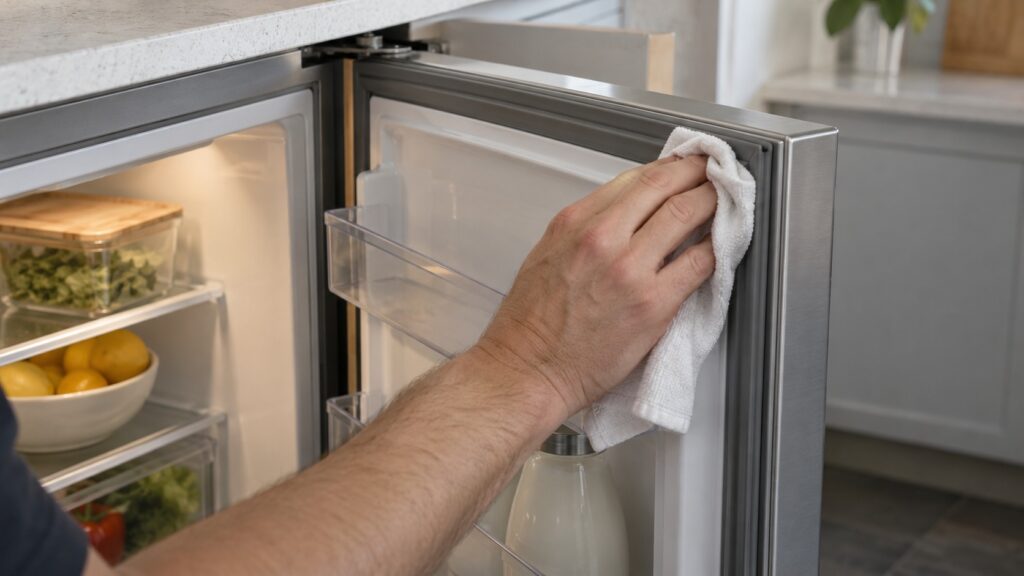
- Wipe the whole gasket with a soft cloth, pulling the folds open gently so you reach inside the pleats where grime collects.
- Wipe again with a cloth dampened in clean water to remove soap.
- Dry the gasket completely with a clean towel, then restore power.
Use a soft toothbrush on stubborn spots in the corners, and never use bleach, solvents or sharp tools. Petroleum jelly and similar products can soften the rubber over time, so leave them out. A thin film of food-safe silicone or the product named in your manual can help a dry gasket stay flexible, but only if the manual allows it.
How do you check whether the gasket still seals?
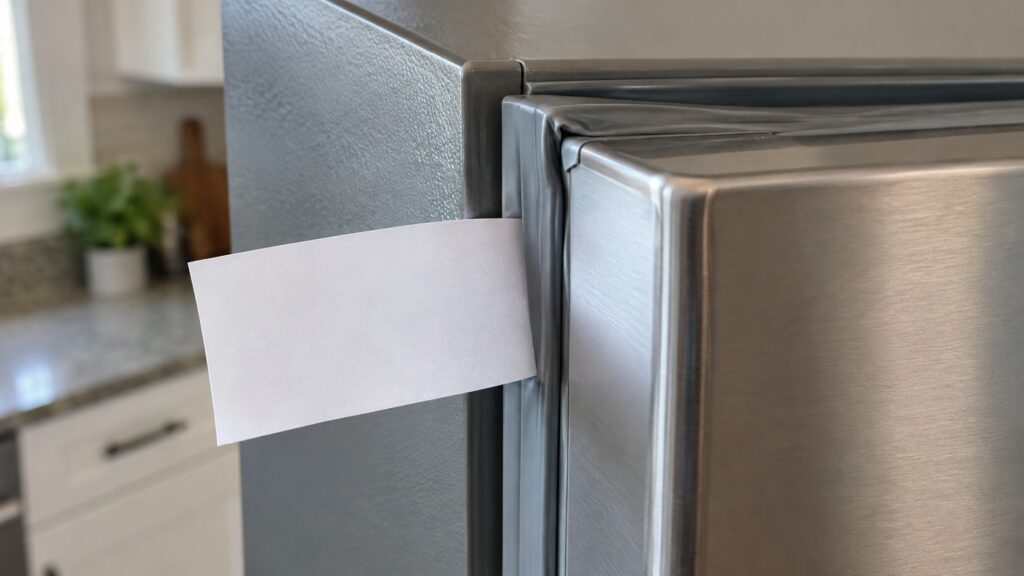
Close the door on a sheet of paper so that half of it sticks out, then pull. You should feel a clear resistance. Repeat the test at several points around the door, including the corners and both sides of the hinge. A spot where the paper slides out easily is a leak. A visual check helps as well: look for a gap along the edge, a gasket that has flattened or folded, and a door that does not sit square against the cabinet. On a door that opens to the left or right, the hinge side often wears first.
If the paper test fails in only one place, the cause may be a dent or a fold in the gasket that you can warm and reshape, or a cabinet that is not level. Make sure the unit is level and that the door is aligned. Our guide to a U-Line refrigerator door that is not sealing properly covers the steps.
What about wine, ice and freezer units?
The same care applies to every U-Line category, with small differences. A wine unit with a glass door has a gasket that shows its dirt, and a quick wipe keeps it looking good. A freezer gasket collects frost and ice, which you should melt and wipe rather than chip away. An ice machine gasket meets humid air and benefits from drying. In all cases, the gasket is only as good as the door it presses against, so check that the door closes freely and that nothing prevents it from sealing, such as a bottle or a shelf that sticks out. Our guide to the wine cooler door not sealing properly covers glass-door units.
When does a gasket need replacing?
Replace the gasket when it is torn, cracked, permanently flattened or stiff enough that it will not grip the cabinet, or when cleaning does not restore the seal. Some gaskets snap or screw in, while others are held by a channel, and the correct part depends on your exact model number. A wrong gasket will not seal, so read the label inside the cabinet and have the number ready. A technician can supply and fit the right gasket, and it is usually a modest repair compared with the cost of running a leaking unit. See our refrigerator repair page for how a visit works.
How can you keep a gasket supple for longer?
Heat, grease and dryness are the enemies of rubber. Keep the unit away from direct heat sources, wipe grease off the gasket as soon as it appears and avoid slamming the door, which stresses the corners where the gasket folds. Do not load the shelves so that items push against the door and keep it slightly open. A door that is held open by a bottle or a tray lets warm air in and puts a permanent kink in the gasket. If you notice the door is slow to close or does not latch, check the hinges and the leveling feet as well, because a unit that leans away from the door will never seal evenly. Small checks like these every few months catch problems while they are still a quick fix.