U-Line power outage tips start with one rule: keep the doors closed. A closed under-counter unit holds its temperature for some time on its own, and every opening lets that cold out. After the power returns, wait before you judge the contents, let the unit settle, and check the temperature before you restock or serve anything. Wine, ice and refrigerated food each need slightly different handling.
What should you do while the power is out?
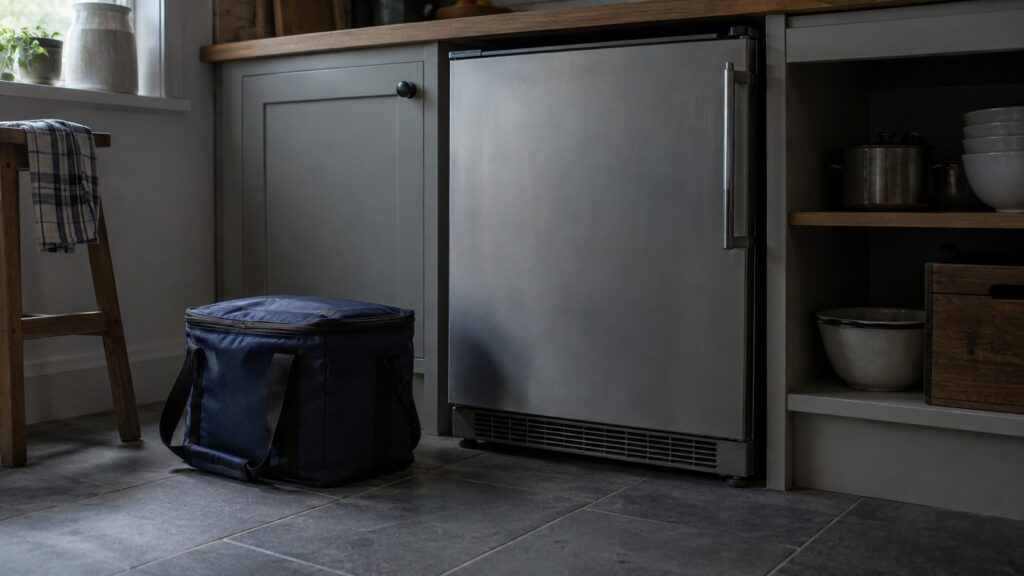
Resist the urge to look inside. A small U-Line unit is well insulated for its size, but it has less thermal mass than a full-size refrigerator, so each opening costs a large share of the stored cold. Close any open doors and drawers, turn the controls to their normal setting if they have been changed and wait. If you expect a long outage, plan to move perishable food to a cooler with ice rather than leave it in a warming cabinet. If the unit is outdoors, shade it from the sun, since the cabinet warms faster in heat.
Protect the unit from electrical surprises. When the power returns, it can arrive in a series of surges and drops. Consider unplugging the unit during a storm that is still active, or use a surge protector rated for refrigerators. A compressor that restarts too quickly after a loss of power can struggle, and many controllers include a delay to prevent that, so do not be alarmed if the compressor waits a few minutes before it starts.
How do you decide whether refrigerated food is safe?
Food safety guidance generally links safety to temperature and time, and the exact limits are published by food safety authorities. As a simple approach, check the temperature of the food when the power returns. Food that is still cold to the touch and well below room temperature is usually fine. Food that has been warm for a long time, smells wrong or looks wrong should go. Dairy, cooked leftovers, meat and fish are the most sensitive, and fruit and hard vegetables are the most forgiving. When in doubt, throw it out is the correct rule, because no meal is worth the risk. Keep a thermometer in the cabinet so you always know the starting point.
What about frozen food in a U-Line freezer?
A closed freezer keeps food frozen for a while, but a small under-counter freezer has less mass than a chest freezer, so it warms sooner. When the power returns, look at the food. If it still contains ice crystals or feels cold and firm, it can usually be refrozen, although the quality of some items will suffer. If it has fully thawed and warmed, it should be treated as perishable. Do not refreeze food that has been warm for a long time. After the outage, check that the unit has returned to its set temperature before filling it again. Our guide on a U-Line freezer not holding temperature helps if the freezer fails to recover.
How does an outage affect wine?
Wine tolerates a short temperature rise better than a violent swing. A cabinet that drifts a few degrees during a brief outage and then returns slowly is generally not a concern. A long outage in a hot room, or a repeated pattern of warming and cooling, is harder on wine, especially older bottles. Keep the doors closed, keep the room as cool as you can and let the cabinet recover on its own afterward. Avoid moving bottles around unless you must, because movement stirs sediment. Our tips for storing wine correctly explain what matters most for the long term.
What should you do with an ice machine after an outage?
Ice in the bin will melt during a long outage, and the water will drain or sit in the bin. Discard any ice that has melted and refrozen into a block, wipe the bin and run a cleaning cycle if the manual describes one. Check that the water supply valve is still open and that the drain is clear, because a power cut can leave water standing in places that are normally dry. If the machine does not restart or makes no ice afterward, our ice maker no ice production guide covers the usual causes.
When should you call a technician after an outage?
Call if the unit does not restart after a reasonable wait, if it shows a code that does not clear, if the compressor clicks without starting or if the temperature does not recover over a day. A power surge can damage a control board or a sensor, and these faults sometimes show up days later. Our U-Line no power guide lists what to check first, and the refrigerator repair page explains how a visit works.
How can you prepare before the next outage?
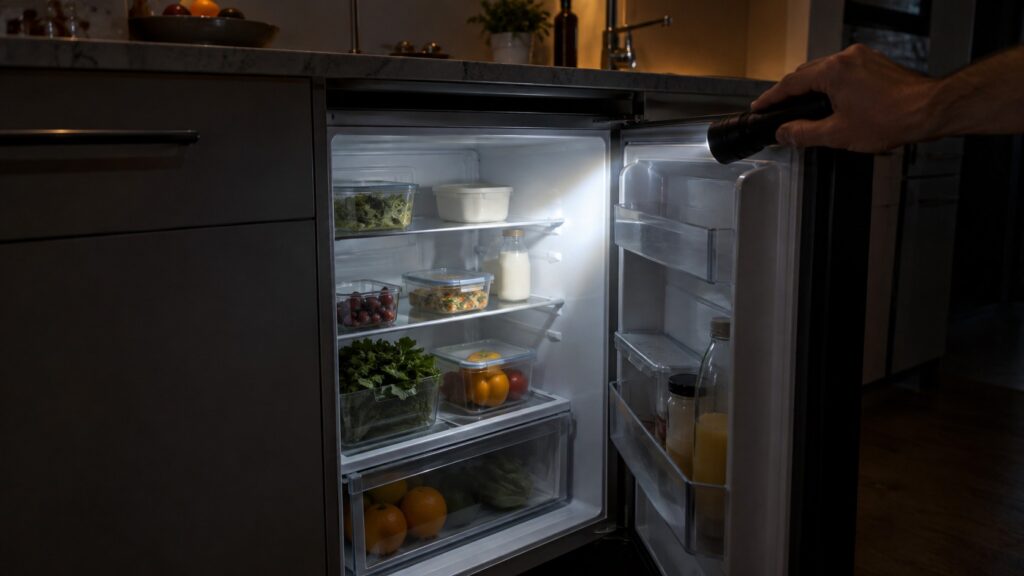
Keep a thermometer in each cabinet so you always know the temperature, and keep a cooler and a few ice packs where you can find them. Know where the breaker for the unit is and keep a flashlight nearby so you do not have to open the door to see inside. If outages are common where you live, consider a small backup power source rated for the refrigerator, and ask an electrician about a dedicated circuit and surge protection. Make a habit of not overstocking the unit before a storm, since a moderately full cabinet holds cold well but a packed one is hard to move in a hurry.