Two undercounter cabinets, the same width, the same finish, similar price. One is sold as a beverage center and one as a refrigerator, and the difference is not marketing. The beverage center vs undercounter refrigerator choice comes down to what temperature range each is built to hold and what the interior is shaped to carry — and choosing wrong produces an appliance that works perfectly and disappoints you daily.
The temperature question decides most of it
A refrigerator is designed to hold food-safe temperatures, and it is built so that it can do that reliably in the range of rooms it is rated for. A beverage center is designed to hold drinks at a pleasant serving temperature, which is a less demanding target.
That has a practical consequence people meet after installation. A beverage center will keep sealed drinks cold perfectly well. Asked to store dairy, deli meat or leftovers safely, it may or may not hold the temperature required, and in a warm room it will more often not.
So the first question is not about shelves or looks. It is whether food will live in this cabinet. If the answer is yes, or might be yes, buy the refrigerator.
Interior layout, which you live with daily
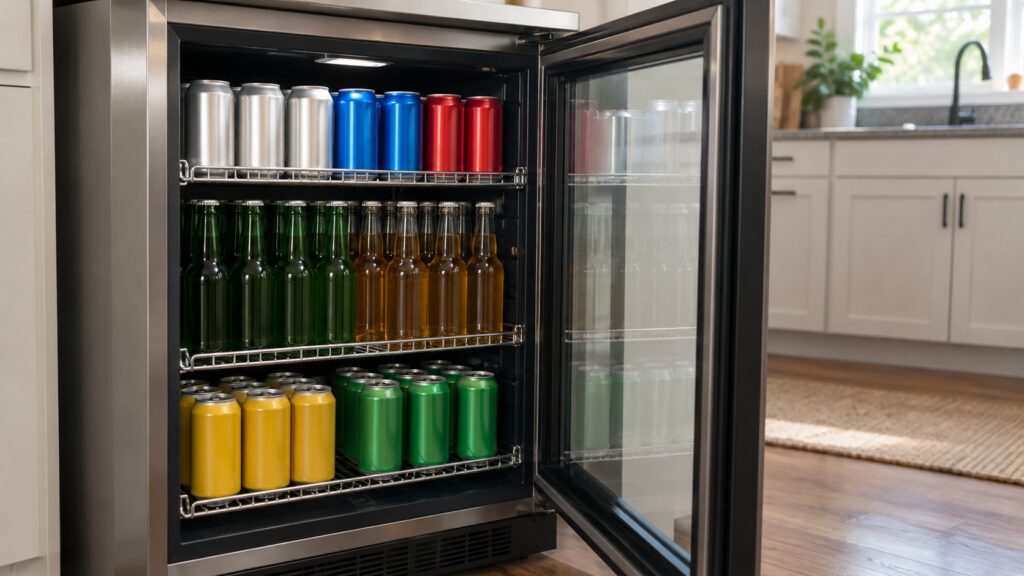
Beverage centers are shaped around cans and bottles: shallower shelves, sometimes contoured or wire racks that hold cans in rows, occasionally a divided layout for different drink types. It is genuinely better at that job than a flat shelf is.
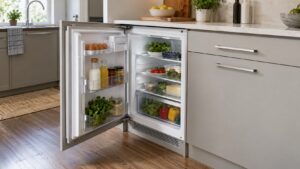
An undercounter refrigerator has flatter, deeper shelving and usually a drawer or a bin, because it is expected to carry containers, packages and produce. Bottles lie awkwardly on it and cans roll.
Think about what will actually be in there most of the time. A cabinet in a home bar holding mixers and beer wants the beverage layout. A cabinet in a kitchen island holding lunch things and a bottle of milk wants the refrigerator.
Glass or solid door
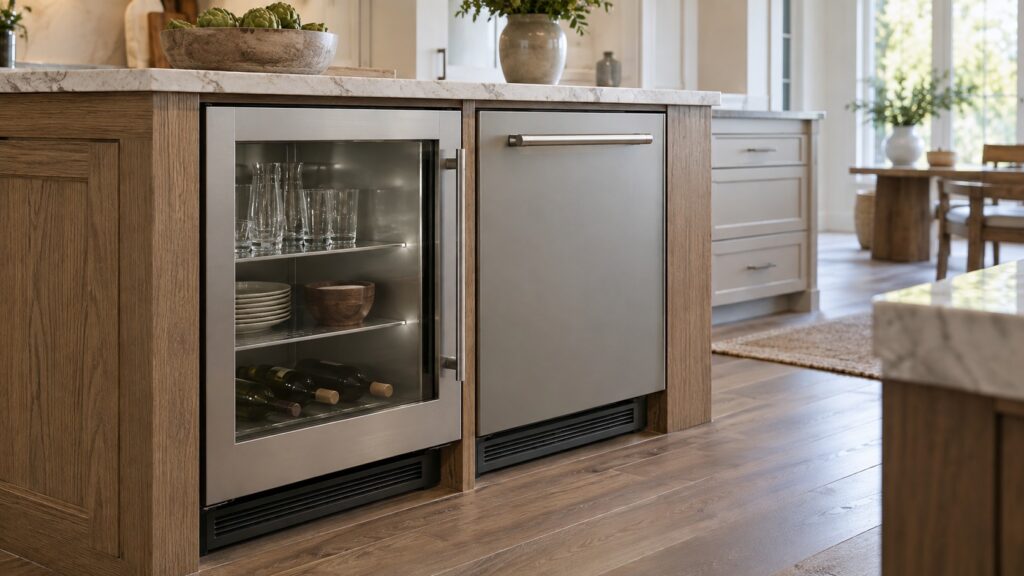
Glass doors look better in a bar and let you see what is there without opening. They also lose more heat, admit light, and demand a door heater to control condensation. In a warm or humid room that combination makes the appliance work harder.
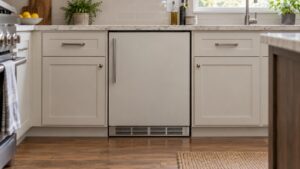
Solid doors are more efficient, keep light off the contents, and suit a kitchen run where you want the appliance to disappear. If the cabinet will hold food rather than sealed drinks, a solid door is usually the better answer for both reasons.
Our door heater guide explains what a glass door commits you to.
Where the wine cabinet fits
It is worth naming the third option, because people frequently buy a wine cabinet expecting a beverage center. A wine cabinet runs considerably warmer, deliberately holds more humidity so corks do not dry, and has racking designed for bottles lying on their sides.
Put cans and mixers in one and they will be warmer than you want. Put wine in a beverage center and it will be colder than it should be and drier than it should be. Our wine cooler against wine fridge guide covers the distinctions inside that family.
Capacity, and the number that misleads
Both categories quote capacity in cubic feet, and the figure is honest — but it describes an empty box, not what you can get into it. A beverage center’s racking takes up volume and dictates how the space is used, so a nominally larger beverage cabinet can hold fewer awkward items than a smaller refrigerator with flat shelves.
Manufacturers also quote can counts, which is more useful for the beverage case and completely useless for the other. If you are choosing between the two categories, ignore both numbers and look at photographs of the interior instead.
Noise, which matters more under a counter
An undercounter appliance sits at knee height in a room people use, often in a bar or a kitchen island where they sit and talk. That is a different acoustic situation from a refrigerator against a wall.
Two things drive it. A variable speed compressor runs at part load rather than switching fully on and off, which is both quieter and steadier. And a unit that is level and properly seated in its opening does not transmit vibration into the cabinetry — an appliance rocking slightly on one foot turns the whole counter into a soundboard.
Both are worth attention at purchase and at installation. Our variable speed compressor guide covers the first.
What both share, and where installations go wrong
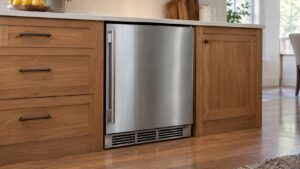
Whichever you choose, the venting question is identical and it is the one that causes most trouble. A built-in model vents at the front through the base grille and can sit flush in a cabinet opening. A freestanding model vents at the back and sides and must have air around it.
A freestanding unit fitted into an opening runs continuously and never holds temperature, and the appliance is not at fault. Our built-in against freestanding guide covers the consequences, and our size guide covers matching the unit to the opening you have.
Practical questions worth asking before buying
- Will food ever live in it? If yes, refrigerator.
- Is the room warm or humid? That argues for a solid door and a higher ambient rating.
- Is it going into a cabinet opening? Then it must be a built-in rated model.
- Which way should the door open? Check whether the hinge is field reversible.
- Is it outdoors or in an unconditioned space? Then it must be outdoor rated, which is a separate specification from stainless steel.
- How will you get it out again? Service access matters on a built-in appliance.
When to call
Call when an installed cabinet will not hold the temperature you need, when it runs continuously, or when you are not sure whether the unit you have is rated for the position it is in. That last question is worth answering before the appliance answers it for you.
We are an independent repair company and not a factory service arm. Pricing starts from a diagnostic visit and we confirm the estimate before any work begins. U-Line refrigerator repair covers controls, fans, sensors, doors and sealed systems, and you can schedule a visit online.