The best U-Line temperature settings depend on what the cabinet holds: about 37 to 40 degrees F for a refrigerator or beverage center, 0 degrees F for a freezer, and roughly 50 to 58 degrees F for long-term wine storage. Set the cabinet once, change it in small steps of a degree or two, wait a full day before judging the result, and confirm the real temperature with a separate thermometer instead of trusting the display alone.
What temperature should a U-Line refrigerator hold?
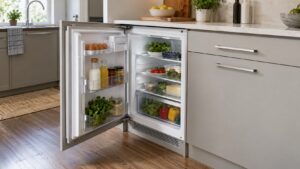
A refrigerator should hold food at 40 degrees F or below, and most people find 37 to 38 degrees F gives a margin without freezing lettuce or milk at the back. Set it near the middle of the range, load it and leave it. If items near the back freeze, raise the setting by one or two degrees. If milk spoils early or the door shelf feels warm, lower it by the same amount. Our guide to a U-Line refrigerator cabinet that is not cold enough covers the checks to do before you assume the setting is wrong.
Remember that a cabinet is warmer near the door than at the back, and warmer on the top shelf than on the bottom, so test where your most perishable food sits.
How should you set a beverage center?
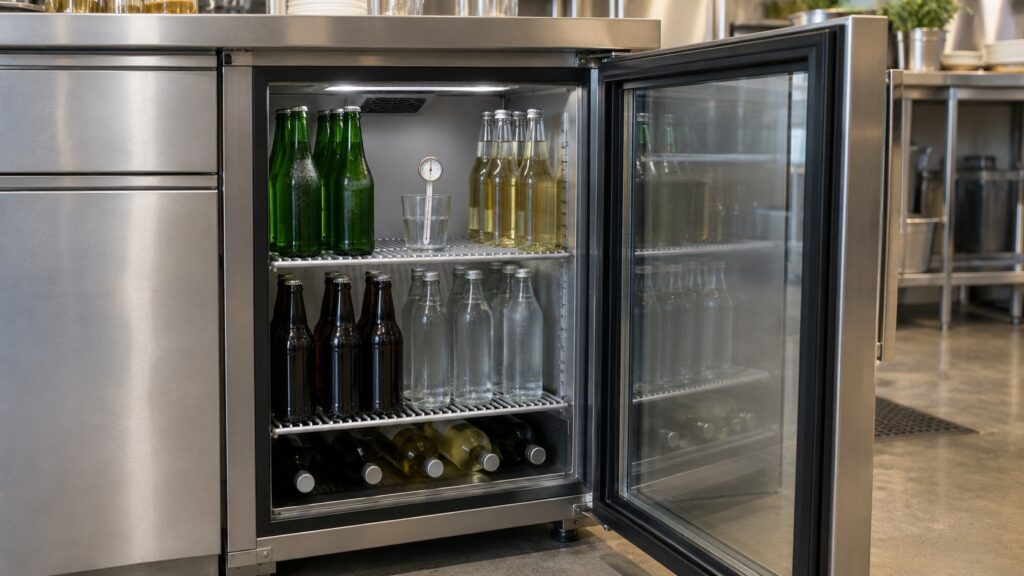
A beverage center is a refrigerator with a narrower job: cold drinks, served cold. Many owners set it a few degrees colder than a food refrigerator, in the mid-30s, so a can or bottle is properly chilled when it is taken out. Do not go so low that bottles or cans freeze and burst; carbonated drinks are the first to do so. If you also store food in it, remember that it is built for beverages and may not hold the steadiness a food refrigerator does. Our comparison of a beverage center and an undercounter refrigerator explains the difference.
What is the right temperature for wine?
For long-term storage, steadiness matters more than the exact number. Around 55 degrees F suits most wines, and anywhere from 50 to 58 is acceptable if the temperature stays constant. Large swings do more harm than a slightly high or low setting. For serving, whites and sparkling wine are better cooler and reds a little warmer. On a dual-zone cabinet, use one zone for each, and our guide on how dual-zone cooling works explains how the zones are kept apart. Our tips for storing wine in a U-Line wine fridge add the storage habits that go with the numbers.
If the two zones refuse to hold different temperatures, see our guide to wine fridge zones that are not holding separately.
How should you set a freezer or a convertible freezer?
A freezer belongs at 0 degrees F. A warmer setting shortens the life of the food and encourages frost, and a colder one costs energy for little benefit. A convertible freezer can also run as a refrigerator, so the setting depends on the mode, and our guide to how a convertible freezer switches modes shows what the switch changes. After a mode change, give the cabinet a full day to settle and check the contents, because food from one mode can be unsafe or spoiled in the other.
If a freezer drifts warm, check the door seal and the frost first; our guide on a U-Line freezer not holding temperature lists the causes.
How do you make changes without chasing the number?
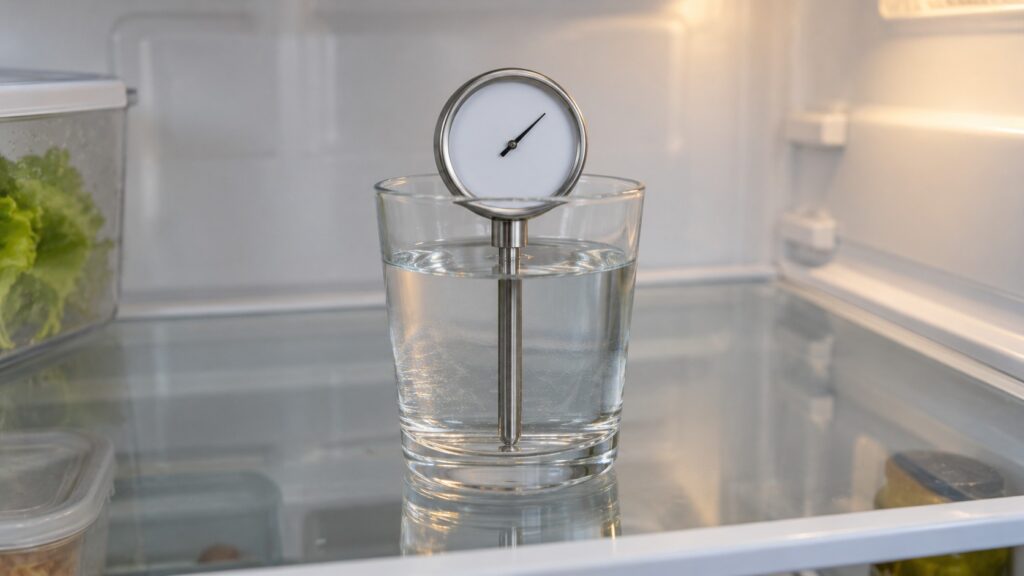
The most common mistake is adjusting every few hours. A cabinet needs many hours to respond, and a setting changed again before it settles sends the temperature up and down. Change one setting by one or two degrees, then leave it for a day. Put a small thermometer in a glass of water on the shelf, since the water responds slowly like food does and a reading from it tracks the food better than a reading from the air. Compare it with the display after twenty four hours.
The display shows the temperature the control thinks the cabinet is at, usually from a sensor in one spot. It is a good guide, not a measurement of every shelf. If the two disagree by a few degrees, trust the thermometer and adjust to it.
What else changes the temperature you get?
Several things matter more than the dial. A hot room makes the cabinet work harder and can stop it reaching the setting. A door that is opened often, or does not seal, lets warm air in. Loading a large warm batch pushes the temperature up for hours. A blocked front grille holds heat in. If the cabinet cannot reach its setting despite sensible use, it is time to look at those causes, and the guide to a U-Line wine fridge running warm works through them in order.
If everything checks out and the cabinet still drifts, book a visit with our refrigerator repair service so a technician can test the sensors and the sealed system.